
Flowers
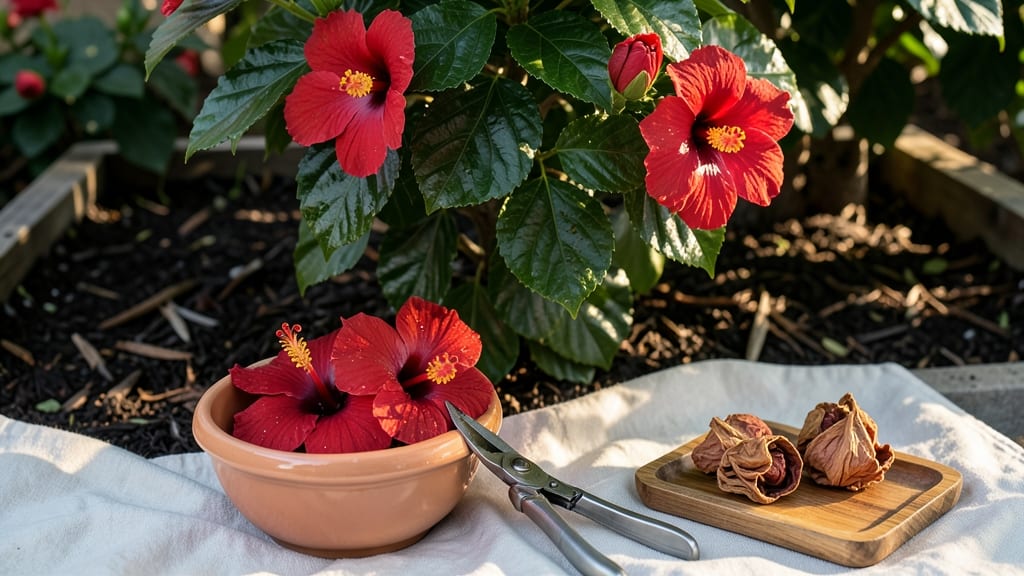
Harvest hibiscus flowers for tea when they’re fully open and vibrant 🌸 — usually in mid-morning after the dew dries but before the sun peaks.
That’s the golden window for flavor, but timing matters more than you’d think. Pick them too early, and the tartness fades; wait too long, and bitterness creeps in. Even the variety matters—Hibiscus sabdariffa, for example, needs a slightly different approach than tropical types.
You’ll also want to avoid wilting stems and know how to dry them properly to lock in that bright, tangy taste. Skip these steps, and your tea might end up tasting more like disappointment than a bold brew.
Below, I’ll walk you through the exact color stages to watch for, the best tools to use, and how to store your harvest so every cup turns out bold and refreshing.

Hibiscus flower color stages: which one yields the best tea flavor?
Harvesting hibiscus flowers for tea isn’t just about picking any bloom—it’s all about timing and color. The flavor profile of your hibiscus tea shifts dramatically depending on which color stage you harvest.
From tart and tangy to deep, earthy notes, each hue tells a different story. Understanding these stages ensures you’re brewing tea with maximum vibrancy and complexity, not bitterness or blandness.
Hibiscus flowers transition through distinct color phases, each offering unique flavor and caffeine characteristics. The bud stage is often overlooked, but it holds hidden potential for tea enthusiasts.
As the flower matures into pink, red, and deep crimson hues, its chemical composition evolves, directly impacting the tea’s taste, aroma, and even caffeine content. Let’s break down each stage so you can harvest like a pro.
If you’re harvesting bud-stage hibiscus flowers, you’re tapping into a herbal, grassy flavor that’s perfect for experimental teas or infusions. These flowers contain minimal caffeine and offer a mild aroma, making them ideal for those who prefer a lighter cup.
However, they lack the tartness and depth that tea lovers crave, so they’re best used in blends or for those with sensitive palates.
The pink stage is where hibiscus flowers truly shine for tea. At this phase, the flavor profile becomes noticeably tart and citrusy, with hints of floral sweetness. The aroma intensity ramps up, making it ideal for bright, refreshing iced tea.
This is the sweet spot for most tea enthusiasts, offering a balanced caffeine kick without overpowering bitterness. Harvesting at this stage ensures your tea will have that signature hibiscus tang everyone loves.
When hibiscus flowers reach the red stage, they’re at their peak for classic tea. The tartness intensifies, taking on a cranberry-like quality that’s both familiar and complex.
The aroma becomes stronger and more floral, while the caffeine content rises, giving your tea a noticeable energy boost. This is the stage most commercial hibiscus teas are harvested at, and it’s easy to see why—it delivers the perfect balance of flavor and potency.
For those who prefer a bold, earthy cup, the deep crimson stage is where hibiscus flowers deliver their most intense flavor. At this point, the tartness mellows into a deep, slightly bitter note, with spicy undertones that add complexity.
The aroma is rich and robust, and the caffeine content is at its highest. This stage is best for strong-brewed tea or those who enjoy a deep, almost wine-like flavor profile. However, it’s not for the faint of heart—over-harvesting at this stage can lead to bitterness.
Harvesting hibiscus flowers at the wrong color stage can drastically alter your tea’s taste and quality. For example, picking flowers that are too green or wilted will result in a bland, watery brew, while waiting too long can make the tea overly bitter.
Pay close attention to the petal crispness and stem firmness—these are key indicators that your flowers are ready for harvest. By mastering the color-stage timing, you’ll unlock the full flavor potential of your hibiscus tea.
Pro tip: If you’re growing Hibiscus sabdariffa (the variety commonly used for tea), focus on harvesting the calyces (the red, fleshy part below the flower) when they’re fully deep red and slightly soft to the touch.
This part of the plant is what gives hibiscus tea its iconic tartness and vibrant color. For ornamental hibiscus varieties, stick to the fully open red or pink flowers for the best results.
Now that you know which color stage to harvest for the best flavor and aroma, your next step is to time your harvest correctly. Early morning is always the best time to pick, as the dew enhances flavor and the flowers are at their peak freshness.
Avoid harvesting after rain or in the late afternoon
Step-by-step harvesting guide: when and how to pick hibiscus for tea
Timing matters more than you might think when harvesting hibiscus flowers for tea. The difference between a bright, tart cup and a muted, bitter brew often comes down to when you pick them.
For the best flavor, aim to harvest when flowers are fully open but still crisp—typically in the early morning when dew is present and temperatures are cooler.
Using the right tools makes all the difference. Grab a pair of clean, sharp pruning shears or scissors to avoid crushing stems. Cut stems at a 45-degree angle just above a leaf node to encourage new growth.
Avoid pulling flowers by hand, as this can damage the plant and reduce future blooms. Always work gently to preserve the delicate petals for optimal tea quality.
🌸 Step-by-Step Harvesting Guide
- 1 Pick at peak freshness: Harvest flowers in the early morning (6-9 AM) when petals are fully open and dew-covered. Avoid harvesting after midday when petals may wilt or lose flavor.
- 2 Use clean tools: Sterilize your pruning shears with rubbing alcohol to prevent disease. Cut stems at a 45-degree angle 1-2 inches below the flower to maintain plant health.
- 3 Check for readiness: Gently touch petals—if they feel crisp but not brittle and fall off easily, they’re ready. Avoid flowers with yellowing edges or drooping petals, as these indicate overripeness.
- 4 Handle with care: Place harvested flowers in a paper bag or mesh container to allow airflow. Avoid plastic bags, which trap moisture and cause mildew. Process flowers within 24 hours for best results.
- 5 Store properly: For short-term use, refrigerate flowers in a sealed container with a paper towel to absorb excess moisture. For long-term storage, dry flowers in a dark, well-ventilated space for 3-5 days before brewing.
After harvesting, act fast to preserve flavor. Rinse flowers briefly under cool water to remove dust or debris, then pat them dry with a clean towel.
If you’re drying flowers for later use, spread them in a single layer on a screen or rack in a shady, dry location. Proper drying removes moisture and intensifies the tart, citrusy notes essential for great hibiscus tea.
For immediate use, steep 1-2 tablespoons of fresh or dried hibiscus flowers in 8 oz of boiling water for 5-10 minutes. The longer you steep, the stronger and darker the tea becomes. Strain and enjoy your homemade brew, knowing you’ve harvested at the perfect moment for peak flavor.
Remember, consistency is key. Harvesting hibiscus flowers at the same time each day—ideally in the morning—ensures a steady supply of high-quality blooms for your tea. With these steps, you’ll transform your garden into a flavor-packed tea source all season long. ☀️✂️🌺