
How To
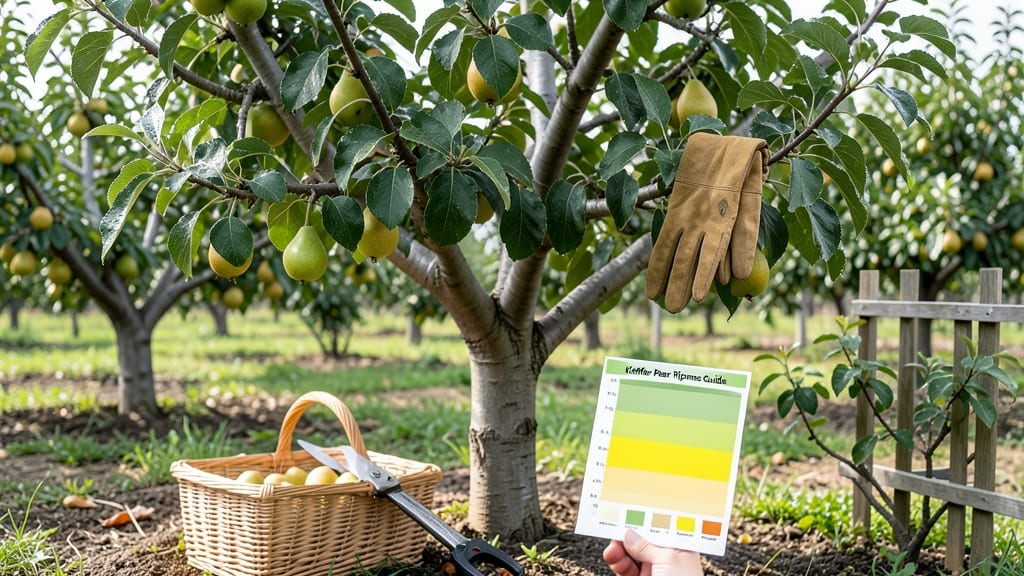
Harvesting Kieffer pears at the right time ensures you get their signature sweetness and texture—not too early (mealy) and not too late (mushy).
Picture this: you’re reaching up to pluck a 🍐 that’s just right—golden, fragrant, and yielding slightly when you squeeze it. Miss that window, and you’re left with either underripe pears or ones that collapse in your hand.
The good news? These pears give you three clear signals to nail the perfect harvest.
First, check the color: ripe Kieffer pears shift from green to a deep yellow or golden hue, sometimes with a blush. Next, test firmness—gentle pressure should make the fruit give just a little, like a ripe peach.
Finally, the stem twist test is the ultimate litmus: if the pear detaches easily with a slight twist, it’s ready.
Below, I’ll walk you through these cues, plus the best time of day and season to pick for maximum flavor—so you can enjoy pears that taste like summer in every bite.

3 Key signs Kieffer pears are ready for harvest (firmness, color, stem twist)
Harvesting Kieffer pears at the right moment transforms them from bland to bursting with sweetness. Unlike some fruits that ripen off the vine, these pears need precise timing. Miss the window, and you’ll end up with mealy texture or overripe squish.
The good news? Nature gives you three clear cues—firmness, color change, and a stem twist—to know when to pick.
I’ve learned the hard way that gentle testing is key. A firm squeeze isn’t enough—you need to feel the slight give that signals ripeness. And that color shift from green to golden?
That’s your visual green light. But the real magic happens when you twist the stem just right. Let’s break down each sign so you never miss harvest season again.
- 🤏 1. Firmness Test: Gently press—ripe pears yield slightly but don’t bruise
- 🟡 2. Color Shift: Skin turns deep yellow-gold with possible red blush
- 🌀 3. Stem Twist: Fruit separates with 1/4 turn—no force needed!
Let’s start with firmness, because this is where many gardeners go wrong. A hard pear means it’s not ready, but a squishy one? Too late. The trick is to find that just-right softness.
Use your thumb and forefinger to press gently—you should feel resistance that gives way like a ripe peach. If it leaves an indent, wait a few days. If it feels rock-hard, it’s not there yet.
For the color test, look for a uniform golden hue across most of the pear’s surface. Kieffer pears often develop a rosy blush on sun-exposed sides, but the base color should be bright yellow, not green.
Pro tip: Check the stem end first—it often changes color before the rest of the fruit. If you see green patches, the pear needs more time on the tree.
The stem twist test is my favorite because it’s foolproof. Grasp the pear near the stem and give it a quarter-turn. If it detaches cleanly with minimal effort, it’s ready. If the stem snaps or the fruit doesn’t budge, it’s not time yet.
This test works best in the morning when the fruit is coolest and firmest—avoid testing after a hot day when pears might feel softer than they are.
Here’s a critical mistake I see often: gardeners confuse ripe pears with overripe ones. Once harvested, Kieffer pears won’t ripen further like bananas do. That means if you pick them too late, they’ll turn mushy within days.
Always prioritize the stem twist over color alone—it’s the most reliable indicator of true ripeness.
One more harvesting hack: Use a fruit picker or clean pruning shears to avoid damaging the tree. But if you’re harvesting by hand, always twist gently—never pull. The stem should separate cleanly at the base.
If you tug and the fruit resists, it’s not ready, and you risk tearing the stem, which can lead to rot.
After harvesting, store your Kieffer pears in a cool, dark place (like a root cellar or paper bag) for 1-2 weeks to maintain freshness. But eat them soon—they’re at their peak flavor when harvested at the perfect moment.
And remember: patience pays off. Waiting for all three signs ensures pears that are sweet, fragrant, and firm—not a mushy disappointment.
Next time you’re in your orchard, grab a few pears and test them using these three methods. You’ll quickly develop a knack for timing that makes every harvest season a success. Happy picking! 🌱
Best time of day and season to pick Kieffer pears for maximum flavor
Timing your Kieffer pear harvest isn't just about the season—it's a delicate balance of morning sweetness and afternoon warmth. These pears thrive in USDA Zones 5-9, but their ideal harvest window shifts dramatically between cooler northern climates and warmer southern regions.
In Zones 5-6, aim for late August to early September, while gardeners in Zones 7-9 can extend harvests until mid-October. The key? Watch for consistent daytime highs of 75-85°F—this temperature range unlocks their signature honeyed sweetness.
Morning is your golden window for harvesting Kieffer pears. Why? Cooler overnight temps preserve their natural sugars and aromatic oils, which can dissipate by afternoon. Pick between 7-9 AM when dew has evaporated but heat stress hasn't begun.
Pro tip: Harvest after a light frost in Zone 6—the cold enhances sugar concentration without damaging the fruit. Just avoid humid afternoons, when pears are more prone to fungal rot during handling.
| Climate Zone | Ideal Harvest Month | Best Time of Day | Temperature Range (°F) | Sweetness Peak |
|---|---|---|---|---|
| Zones 5-6 | Late August - Early September | 7-9 AM (post-frost) | 65-75°F | High (cold enhances sugar) |
| Zones 7-8 | Early September - Mid-October | 6-8 AM (avoid humidity) | 70-80°F | Moderate (heat dilutes sugars) |
| Zone 9+ | Mid-September - Early November | 5-7 AM (early light) | 60-70°F | Variable (requires two-stage harvest) |
Some gardeners swear by a two-stage harvest for Kieffer pears, especially in warmer climates. Here's how it works: First, pick 70% of the fruit when 70% ripe (using the stem twist test), then let the remaining pears ripen off the tree over 10-14 days.
This method extends your harvest window by 2-3 weeks and ensures you always have peak-flavor fruit. The trade-off? You'll need to monitor daily for overripening, which shows as soft spots or fermented aromas.
Don't ignore the moon phase—it subtly affects pear sweetness. Harvest during the waxing gibbous (7 days before full moon) for maximum sugar content. This old gardener's trick works because moon gravity influences plant sap flow, concentrating natural fructose levels in the fruit.
Pair this with morning harvests during the waxing gibbous, and you'll get Kieffer pears that taste like liquid sunshine.
After harvesting, store pears at room temperature for 3-5 days to let residual starches convert to sugars. Then move them to a cool, dark place (like a root cellar) where temps hover around 32-40°F.
This post-harvest ripening process deepens flavor and extends shelf life by up to 3 months. Skip refrigeration until after this initial 3-day room-temperature phase, or you'll lock in tartness instead of sweetness.
Remember: Kieffer pears are climate-sensitive. If you're in Zone 5 and get an early frost, harvest all remaining pears immediately—even if they're not fully ripe. Bring them indoors and place in a paper bag with a banana or apple to speed ripening using ethylene gas. With the right timing, you'll turn frost-bruised pears into des