
How To
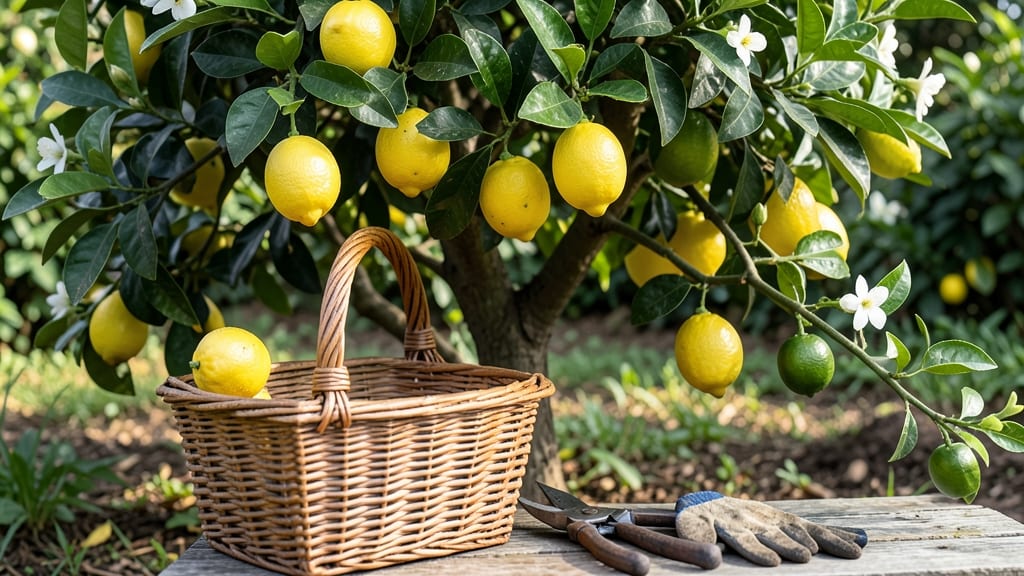
Harvesting lemons at the right time means the difference between tart, zesty fruit and something bland or mealy—so knowing when to harvest lemons is the key to unlocking their full potential.
Picture this: you twist a lemon from your tree, and it snaps free with a satisfying pop, the peel is thick enough to resist a gentle squeeze, and the color is a bright, even yellow—not a patchwork of green and gold.
That’s your cue. But miss it, and you’re left with fruit that’s either too sour or too soft, wasting weeks of growth.
Beyond color and firmness, climate plays a role too. In USDA Zone 9b, where frost isn’t a concern, your 🍋 lemon tree can produce year-round, but timing still matters.
A 3-step test—color, texture, and taste—will tell you exactly when to pick for peak flavor, whether you’re making fresh lemonade or storing them for months.
In this guide, I’ll walk you through those tests, plus how to adjust for different uses—like cooking or long-term storage—so you never harvest too early or too late again.

How to identify lemon ripeness by color, size & shape
Lemons ripen gradually, and their color, size, and shape all signal when they're ready to pick. Unlike some fruits, lemons don't ripen further after harvest, so timing is everything. I’ve learned that visual cues are the easiest way to judge ripeness without tasting every fruit.
Start by examining the color transition. Young lemons are bright green, but as they mature, they develop yellow patches. In ideal conditions, a fully ripe lemon will be bright yellow all over, though some varieties like Meyer lemons may retain a slight greenish tint.
This color change happens faster in warm climates like USDA Zone 9b.
Next, check the size and shape. A ripe lemon typically measures 2-3 inches in diameter and feels heavy for its size. Its shape should be round to slightly oblong, never lopsided. If lemons are smaller than a golf ball, they’re likely still developing.
The peel thickness is another key indicator. A ripe lemon’s peel should be thick and slightly leathery, not thin or papery. Gently press the skin—if it gives slightly but doesn’t dent, it’s ready. Thin skin often means the fruit was picked too early or is overripe.
| Ripeness Stage | Color | Size | Shape | Peel Thickness | Harvest Tip |
|---|---|---|---|---|---|
| Unripe | Bright green | Small (<1.5 inches) | Round or irregular | Thin, tender | Wait 4-6 weeks |
| Partially Ripe | Green-yellow mix | 1.5-2 inches | Round to slightly oblong | Medium thickness | Test for firmness |
| Fully Ripe | Bright yellow (or variety-specific) | 2-3 inches | Round or slightly oblong | Thick, leathery | Harvest immediately |
| Overripe | Dull yellow or brown spots | Same or slightly larger | May soften or wrinkle | Thin or spongy | Use for cooking only |
Climate plays a big role in ripening speed. In cooler regions like Zone 8, lemons may stay green longer and ripen more slowly. Meanwhile, in hotter climates like Florida or California, color changes happen faster.
If your tree is in a container, ripening can also be delayed due to temperature fluctuations.
Pay attention to the stem attachment. A ripe lemon should detach easily when gently twisted from the stem. If it resists, it’s not ready yet.
This test is especially useful for Meyer lemons, which often ripen unevenly. Twist a few test lemons to confirm before harvesting the whole batch.
Finally, consider the seasonal timing. In most citrus-growing areas, lemons ripen year-round but peak in late winter to early spring. If you’re in a frost-prone zone, harvest before the first frost to avoid damage. Even in warm climates, late autumn can bring cooler temps that slow ripening.
Pro tip: Harvest lemons in the morning when temperatures are cooler. This helps preserve their flavor and texture longer after picking. Store them in a cool, dry place away from direct sunlight to extend freshness for up to 2 weeks.
Remember, every lemon tree—and even every variety—has slight differences. The more you observe your tree, the better you’ll recognize the perfect moment to harvest for the juiciest, most flavorful lemons. 🍋
Texture & taste tests: the 3-Step method to confirm harvest readiness
Once your lemons have reached their ideal color, it’s time to put them through a quick sensory evaluation to confirm they’re truly ready. Unlike some fruits that soften as they ripen, lemons stay firm—so you’ll need to focus on peel thickness, detachment ease, and flavor development.
These three tests will help you avoid picking lemons too early (which means bitter, watery fruit) or too late (when they’ve lost their peak flavor).
The key is to test lemons without damaging them. A gentle approach ensures you can still use the fruit for cooking, storage, or fresh eating. Start by selecting a few lemons from different branches—this gives you a better sense of the tree’s overall ripeness.
Avoid testing lemons that show signs of pests or disease, as these can affect your results. Remember, every lemon tree has slight variations, so testing multiple fruits is always best.
The Firmness Test
Gently squeeze the lemon between your thumb and forefinger. A ripe lemon should feel firm but slightly yielding—like a slightly overripe avocado. If it feels too hard, it’s underripe; if it feels soft or mushy, it’s overripe. For best results, apply light pressure around the equator (not the stem end).
The Twist Test
Grasp the lemon near the stem end and give it a gentle twist. A ripe lemon should detach easily from the tree with minimal force. If it resists or the stem breaks off cleanly, it’s not ready yet. This test also helps you avoid damaging the fruit—unlike cutting, twisting mimics natural detachment and keeps the lemon intact for storage.
The Taste Test
Cut a small slice from the equator of the lemon (avoid the stem end, which can be bitter). A ripe lemon should have a balanced flavor—sweet, tangy, and aromatic. If it tastes overly bitter, it’s underripe; if it’s too sweet or bland, it’s overripe. The peel should also be thick and easy to remove—thin or papery peels indicate the lemon is past its prime.
Pro tip: If you’re harvesting for long-term storage, aim for lemons that pass all three tests but are still slightly firmer than ideal. Overripe lemons bruise easily and spoil faster.
For immediate use, like making fresh lemonade, prioritize the taste test—you’ll want that perfect balance of sweet and tart. Always harvest on a dry morning to prevent mold growth from excess moisture on the fruit.
Remember, lemons don’t ripen further once picked, so timing is everything. If you’re unsure, test one lemon and wait a few days before harvesting the rest. Patience pays off with juicier, more flavorful lemons that shine in everything from cocktails to baked goods. Happy harvesting!