
How To
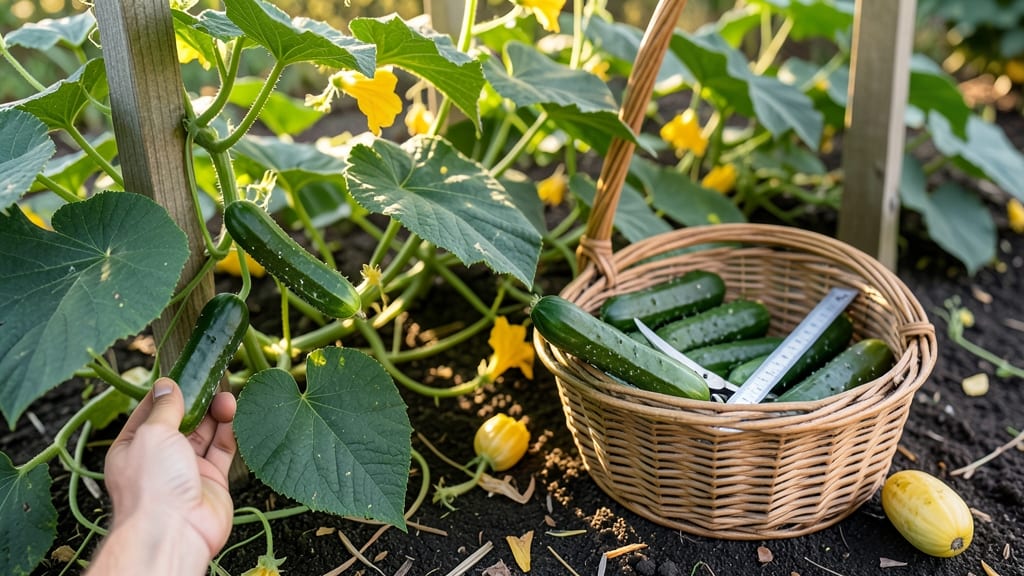
Harvesting pickling cucumbers at the right time means the difference between crisp, tangy spears and sad, rubbery slices.
Picture this: you’ve spent weeks tending to your 🥒 plants, and now the moment of truth arrives. One wrong move, and your homemade pickles turn out mushy instead of perfect. But here’s the good news—nailing the timing is simpler than you think.
You’ll learn the three tactile tests (size, firmness, and stem snap) that guarantee peak flavor, plus the best days of the week to harvest for maximum yield. No more guessing—just science-backed cues to turn your garden into a pickle powerhouse.
From July through August in Zone 6a, these tips will keep your harvests coming like clockwork. Ready to master the art of the perfect pickle?
3 Tactile tests to harvest pickling cucumbers at peak flavor
Harvesting pickling cucumbers at the right moment transforms your garden bounty into crisp, tangy gems perfect for fermenting. The key lies in using your senses—especially touch—to detect the ideal texture and firmness.
Unlike slicing cucumbers, pickling varieties need to be harvested when they're small but not underripe, ensuring the perfect balance of crunch and flavor.
Overripe pickling cucumbers develop a waxy, bitter taste and thick skin that resists even the best brine. But how do you know when they're just right? Science shows that firmness, size, and stem integrity are the three most reliable indicators.
These tactile tests take seconds but save hours of disappointment in the jar. Let's dive into the hands-on methods that will have you harvesting like a pro.
🔍 numbered highlights
Gently press a cucumber with your thumb. Ideal firmness yields slightly but doesn't dent. Overripe cucumbers feel rubbery, while underripe ones stay rock-hard.
Hold the cucumber next to your thumb and index finger. Perfect pickling cucumbers span about 1.5–3 inches. Anything larger risks becoming too seedy or bitter.
Gently twist the cucumber's stem. A clean snap means it's ready. If the stem bends without breaking, wait another day. This test reveals internal maturity.
Start with the thumb pressure test—this is the fastest way to gauge readiness while walking through your garden. I always do this first because it helps me quickly identify cucumbers that need immediate harvesting.
Press firmly but gently near the middle of the cucumber. If it springs back slightly when you release pressure, it's perfect. Think of it like testing a ripe avocado: you want just the right give.
Next, use the size comparison method to eliminate any guesswork. Pickling cucumbers should be no longer than your palm's width when cupped. For reference, that’s roughly 1.5–3 inches.
I keep a small ruler nearby during harvest season to double-check, but my hand works just as well after a few harvests. Larger cucumbers often have thicker skins that resist brining, while smaller ones may lack the tangy flavor you crave in pickles.
The stem twist test is my favorite because it reveals what’s happening inside the cucumber. Grasp the stem between your fingers and give a firm twist. A clean break means the cucumber is at peak maturity. If it bends instead of snapping, it’s not ready yet.
This test is especially useful for bush varieties, which can be harder to spot visually. Pro tip: Perform this test in the morning when cucumbers are fully hydrated for the most accurate results.
Timing matters too—harvest in the early morning when temperatures are cooler. This ensures cucumbers are at their firmest and most flavorful. I set a reminder on my phone for every 2-3 days during peak season to check my plants.
Consistency is key: the more frequently you harvest, the more your plants will produce. Neglecting this can lead to a sudden flood of overripe cucumbers that spoil quickly.
Common mistakes include harvesting based on color alone or waiting too long for "bigger is better." Pale green or uneven coloring signals underripeness, while dark green with yellowing ends means it’s past its prime.
Always combine these tactile tests for the most reliable results. I’ve learned this the hard way—once, I waited too long and ended up with cucumbers so tough they couldn’t be pickled properly!
For bush varieties, which produce cucumbers closer to the vine, focus extra on the stem twist test since they’re easier to miss. Vining types, on the other hand, benefit most from the thumb pressure test because their cucumbers dangle where you can feel them easily.
No matter the variety, always use clean, sharp pruners or shears to avoid damaging the plant. A clean cut encourages faster healing and more production.
Remember, the goal is crisp, tangy pickles that hold their shape through fermentation. By mastering these three tactile tests, you’ll develop an intuitive sense for the perfect harvest window. Start practicing now—your future jar of dill spears will thank you!
The more you harvest at peak readiness, the more your plants will reward you with consistent production all season long.
Size matters: exact dimensions for perfect pickling cucumbers
Harvesting pickling cucumbers at the right size ensures crisp, tangy flavor instead of bitter, overgrown disappointment. The ideal range is between 1.5 to 3 inches—any longer, and they become too tough for pickling.
I’ve learned the hard way that waiting too long turns my prized cucumbers into slimy, seedy monsters that no jar of dill spears can save.
Visual cues are just as important as measurements. Look for deep green color and a smooth, firm skin that yields slightly when pressed with your thumb. These signs indicate the perfect window for harvesting. Overlooking size can mean sacrificing that prized crunchy texture that makes homemade pickles worth the effort.
Here’s how to compare sizes and avoid common mistakes:
| Stage | Size (Inches) | Skin Texture | Harvest Tip |
|---|---|---|---|
| Too Early | Under 1.5" | Very firm, no give | Wait 2-3 days for growth |
| Perfect Pickling | 1.5"–3" | Firm with slight give | Harvest immediately for best flavor |
| Overgrown | Over 3" | Tough, bumpy skin | Use for slicing, not pickling |
Avoid the temptation to harvest smaller-than-1.5-inch cucumbers—these won’t develop the full flavor needed for pickling. I once picked a batch at 1 inch thinking they’d grow bigger, only to end up with underdeveloped, bland pickles. Patience is key, but so is timing—wait too long, and you’ll regret it.
Use a ruler or measuring tape for accuracy, especially if you’re new to pickling cucumbers. I keep one clipped to my gardening apron for quick checks while harvesting.
For bush varieties, check cucumbers every 2-3 days—they grow faster than vining types. Consistency in harvesting keeps your plants productive and prevents overgrowth.
If you miss the window and your cucumbers exceed 3 inches, don’t toss them! They’re still edible but better suited for slicing or stir-frying. The key is to harvest frequently—this encourages your plants to produce more cucumbers in the ideal size range.
Think of it like pruning: regular maintenance leads to better results.
Pro tip: Harvest in the morning when cucumbers are cool and firm. This ensures you’re picking at their peak freshness. Overheated cucumbers (picked in the afternoon) can lose some of their crispness. Trust your senses—if a cucumber feels too soft or smells slightly off, it’s past its prime for pickling.