
How To
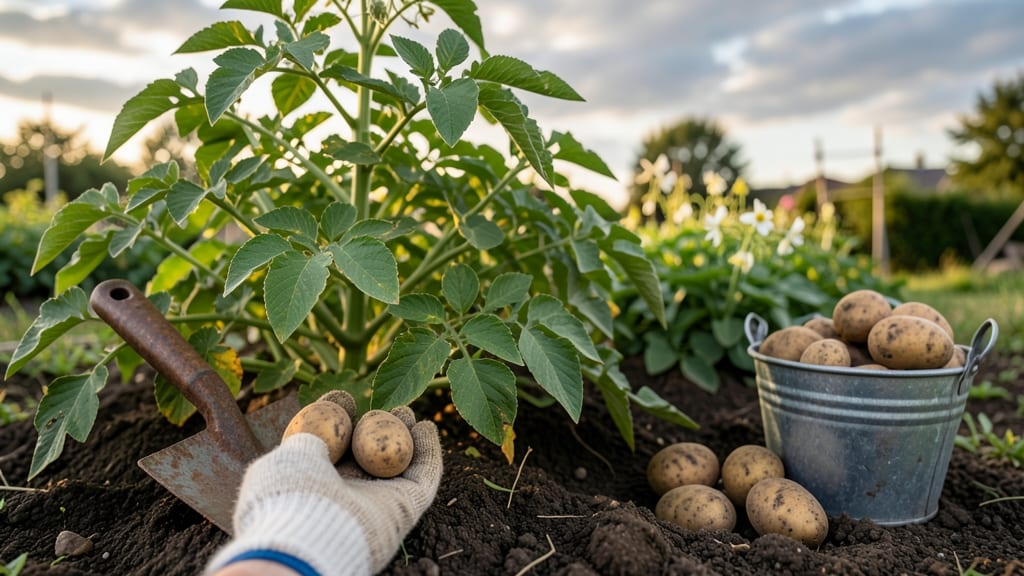
Harvesting potatoes in Idaho at the right time means the difference between buttery, crisp tubers and mealy, flavorless ones — and the key is knowing when to pull them from the soil.
If you’ve ever dug up a potato only to find it shriveling in the bag or still green and underdeveloped, you’re not alone. Idaho’s cool mountain climates and variable frost dates throw off even the most experienced gardeners.
But with the right cues — like soil temperature and foliage changes — you can time it perfectly every season.
Most Idaho gardeners wait until mid-to-late summer (July–September), but the exact moment depends on your variety and elevation. New potatoes can be harvested as early as 60 days, while mature spuds need 90–120 days.
I’ll show you how to use a soil thermometer and other tricks to nail the harvest window, even in Zone 4–7 conditions.
Ready to go from guesswork to golden potatoes? You’ll learn the three foolproof signs your spuds are ready, how to adjust for Idaho’s late-spring frosts, and what to do if you harvest too early (or too late). Let’s get started.

Idaho-specific potato harvest timing by variety and weather conditions
Timing your potato harvest in Idaho isn’t one-size-fits-all—it depends on whether you’re after new potatoes (tender, baby spuds) or mature potatoes (fully developed tubers). Idaho’s diverse microclimates, from Boise’s hot valleys to cooler mountain regions, further complicate the equation.
Understanding these factors ensures you harvest at peak flavor and texture, avoiding the pitfalls of overripe or underdeveloped potatoes.
New potatoes can be harvested as early as 4-6 weeks after planting, while mature potatoes typically require 90-120 days to reach full size. However, Idaho’s first frost dates (ranging from early October in Zone 4 to late October in Zone 7) often dictate the final harvest window.
For example, high-altitude areas like McCall may have a shorter growing season, while Twin Falls can extend harvests later into fall due to warmer temperatures.
Here’s how to align your harvest with Idaho’s unique conditions, variety by variety:
For new potatoes, focus on harvesting when tubers are 2-3 inches in diameter and the plant’s foliage shows signs of stress (yellowing leaves). In Idaho’s hotter valleys, this often happens 4-6 weeks after planting, while cooler mountain regions may take an extra week.
Use a garden fork to gently loosen soil and check for tubers without damaging the plant—this method lets you harvest a few potatoes while leaving the rest to mature.
Mature potatoes, on the other hand, should be harvested when the foliage yellows and dies back, typically 90-120 days after planting. In Idaho, this usually aligns with late summer to early fall, but watch for first frost warnings.
Areas like Coeur d’Alene (Zone 6) can safely harvest until early October, while Moscow (Zone 4) may need to harvest by late September. If frost is imminent, use a black plastic mulch to extend the season by 2-3 weeks.
Idaho’s soil temperature is another critical factor. Potatoes grow best in soils between 55-65°F, but harvest timing shifts if temperatures drop too quickly. For example, in high-altitude areas, soil cools faster, so mature potatoes may need harvesting by mid-September. Always check the
How to use a soil thermometer to perfect your Idaho potato harvest
A soil thermometer is your secret weapon for Idaho’s unpredictable growing seasons. Unlike relying on foliage alone, soil temperature gives you precise data to harvest potatoes at their peak—whether you're growing new potatoes or full-sized tubers.
Idaho’s high-altitude zones (like those in the Panhandle) can swing from 40°F mornings to 70°F afternoons, so a thermometer helps you avoid harvesting too early or too late.
For new potatoes, aim for soil temps between 45–55°F—this range signals ideal growth conditions without stressing the tubers. Mature potatoes, however, prefer slightly warmer soil at 55–65°F. These ranges account for Idaho’s cool nights and warm days, ensuring your potatoes develop the perfect texture and flavor.
Without a thermometer, you might harvest too soon (small, mealy potatoes) or too late (shriveled, diseased tubers).
⚠️ callout warning
Idaho’s dry, rocky soil in some regions (like the Snake River Plain) can give inaccurate readings. Always take measurements 2–3 inches deep—where potato tubers form—and avoid direct sunlight or wet soil, which skew results. For high-altitude areas (above 5,000 ft), add 5°F to your reading to account for cooler air temps.
💡 Pro Tip: Calibrate your thermometer in boiling water (212°F) before use to ensure accuracy.
Start by checking soil temps weekly after planting. If temps drop below 45°F for more than a few days, growth slows, and tubers may develop hollow hearts.
For new potatoes, harvest when soil temps consistently stay in the 45–55°F range—this usually aligns with 4–6 weeks after planting. For mature potatoes, wait until soil temps hit 55–65°F and foliage begins to yellow, typically around 90–120 days after planting.
In Idaho’s mountain regions, like those near McCall, soil temps can lag behind valley areas by 5–10°F. Adjust your harvest timeline accordingly—don’t rush! Use your thermometer to confirm readiness, especially if nights remain chilly.
For example, if your thermometer reads 50°F in the morning but jumps to 65°F by afternoon, your potatoes are likely ready if foliage is yellowing.
Once you’ve confirmed the right soil temp, harvest on a dry, sunny day to let tubers dry slightly before storage. Gently dig around the base of the plant with a fork, being careful not to puncture the tubers themselves.
Brush off excess soil and inspect for firmness—if they’re soft or shriveled, they’re past their prime. Store harvested potatoes in a cool, dark place (like a root cellar) to maintain quality.
For gardeners in Zone 4 (northern Idaho), where first frosts can arrive as early as October, prioritize soil temp readings over calendar dates. If temps drop below 50°F for mature potatoes, harvest immediately, even if foliage isn’t fully yellow.
In Zone 7 (southern Idaho), you have more flexibility, but don’t wait until soil temps exceed 70°F—this can cause sprouting and bitter flavors.