
How To
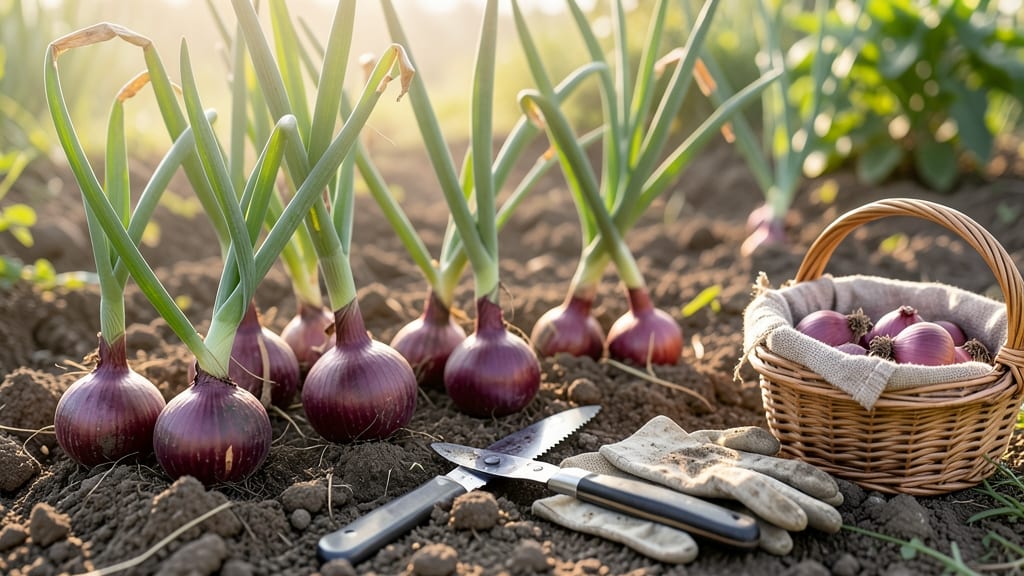
Harvest red onions when their tops yellow and flop over 🧅 — that’s the clearest sign they’re ready to pull.
Timing is everything: miss this window, and you risk tough, pungent bulbs. Get it right, and you’ll enjoy sweet, flavorful onions straight from your garden.
Look for bulbs about 1–2 inches in diameter with papery, dry skin that resists gentle pressure. These visual cues mean your onions are at peak flavor and storage readiness.
Below, I’ll walk you through the exact signs to watch for, common mistakes that ruin your harvest, and how to store them so they last all winter.


How to identify when red onions are ready by bulb size and skin color
Harvesting red onions at the right time ensures maximum flavor and storage potential. Unlike green onions, mature red onions develop papery skins and firm bulbs—key visual cues that tell you when they're ready.
Waiting too long can lead to bitter, pungent flavors, while harvesting too early means small, underdeveloped bulbs. Let’s break down the exact visual signals to watch for.
First, focus on the bulb diameter, which is the most reliable indicator. Mature red onions typically reach 1 to 2 inches in diameter when fully developed. You’ll also notice the neck of the onion (the stem area) beginning to dry out and shrink slightly.
This is your plant’s way of signaling that it’s redirecting energy from leaf growth to bulb maturation.
Skin color is another critical clue. While red onions maintain their signature hue, the outer layers will develop a thicker, papery texture. Gently squeeze the bulb—if the skin feels firm and resistant, it’s ready. Soft or spongy skin means it needs more time in the soil. Pro tip: The top leaves will also start to yellow and flop over, a classic sign of maturity.
| Stage | Bulb Size | Skin Condition | Top Leaves | Action |
|---|---|---|---|---|
| Early Growth | <1 inch | Thin, green | Green and upright | Wait; not ready |
| Developing | 1-1.5 inches | Semi-papery | Green, slightly curved | Monitor closely |
| Mature (Ready) | 1.5-2 inches | Thick, papery | Yellow, flopping | Harvest now! |
| Overripe | >2 inches | Dry, splitting | Brown, crispy | Use immediately |
Timing matters too—red onions thrive in cool-season growing, so aim to harvest them in late summer to early fall (around 100-120 days after planting). If you’re in a warmer climate, they may mature earlier.
Pay attention to your local frost dates: Harvest before the first frost, or the bulbs may spoil in the ground.
For container gardeners, check bulb size more frequently since space is limited. In pots, onions often mature faster due to warmer soil temperatures. If you notice the bulbs touching or the soil drying quickly, it’s time to harvest sooner.
Use a small hand fork to gently loosen the soil before pulling to avoid damaging the bulbs.
One common mistake is waiting until the tops are completely brown and crispy. While this indicates maturity, the bulbs may have already started to split or rot in the soil. Instead, harvest when the tops are just starting to yellow—this ensures the best texture and flavor.
Store harvested onions in a cool, dry place with good airflow to extend their shelf life.
If you’re unsure whether your onions are ready, perform the "squeeze test". Hold the bulb firmly—if it feels heavy for its size and the skin doesn’t dent easily, it’s harvest-ready.
Lightweight bulbs with soft skin still need time. Remember, red onions are sweeter when harvested earlier in the season, so don’t wait too long!
Finally, consider harvesting a few test bulbs to check their readiness. Cut one open to inspect the inner layers. If they’re firm and dry with minimal moisture, your onions are perfect.
If they’re still juicy or hollow, give them another week or two. This hands-on approach takes the guesswork out of harvesting.
With these visual and tactile cues, you’ll never miss the ideal harvest window for red onions again. Happy gardening—and enjoy those flavorful, homegrown bulbs in your favorite dishes! 🧅✂️
Common mistakes that cause red onions to bolt or split before harvest
Red onions are finicky little plants—harvest them too early, and you’ll get tiny, pungent bulbs. Let them linger too long, and they’ll split or bolt, turning bitter and unusable.
The key lies in understanding the three critical factors that trigger these common mistakes: watering habits, sunlight exposure, and soil conditions. I’ve learned from years of trial-and-error gardening that even small missteps in these areas can ruin an entire crop.
One of the biggest culprits is overwatering, which causes onions to split or rot before they’re ready. Too little water, on the other hand, stresses the plants and can lead to premature bolting—when the onion sends up a flower stalk instead of developing a bulb.
Then there’s the sunlight struggle: red onions need at least 6 hours of full sun daily, but partial shade can slow bulb development and encourage bolting. Even the soil pH plays a role—too acidic or alkaline, and your onions won’t thrive.
⚠️ callout warning
Red onions are ready when their tops yellow and flop over, and the bulb reaches 1-2 inches in diameter. Harvesting before these signs means small, pungent onions, while waiting too long causes split bulbs or bolting. Check the neck of the onion—it should feel dry and papery, not green or soft.
🚨 Pro Tip: If your red onions bolt, they’ll send up a flower stalk and develop seeds instead of bulbs. This happens when days get too long or temperatures spike—so keep them in consistent conditions!
Let’s start with watering, the most common mistake I see in home gardens. Red onions need consistent moisture, but their roots are shallow, so they’re sensitive to both drought and excess water.
I once lost an entire row because I watered them every day—overwatering causes the bulbs to split as they expand too quickly. Instead, aim for 1 inch of water per week, adjusting for rain.
Use a drip irrigation system or soaker hose to deliver water directly to the soil, avoiding wet foliage, which can lead to fungal diseases.
Next, sunlight is non-negotiable. Red onions require full sun—at least 6 hours daily—to develop properly. If they don’t get enough light, they’ll grow long, leggy stems and bolt prematurely.
I’ve seen gardeners plant them in partial shade, thinking it’s fine, only to end up with tiny, weak bulbs. If your garden lacks full sun, consider growing them in containers near a south-facing window or under grow lights during the shorter days of spring and fall.
Don’t overlook soil conditions, either. Red onions prefer well-draining, loose soil with a pH between 6.0 and 7.0. Heavy or clay soil can suffocate roots, leading to poor bulb formation. I once planted mine in compacted soil, and the bulbs never grew larger than a marble!
To fix this, amend your soil with compost or aged manure before planting. Also, avoid fresh manure—it can burn the roots and cause bolting.
Finally, overcrowding is a sneaky mistake that many gardeners overlook. Red onions need space to breathe—plant them 4-6 inches apart in rows 12-18 inches apart. When they’re too close, they compete for nutrients and water, leading to small, underdeveloped bulbs.
Thin them early if needed, and always harvest in the morning when the soil is cool to prevent stress. With these adjustments, you’ll avoid the most common pitfalls and enjoy plump, sweet red onions every season.