
How To
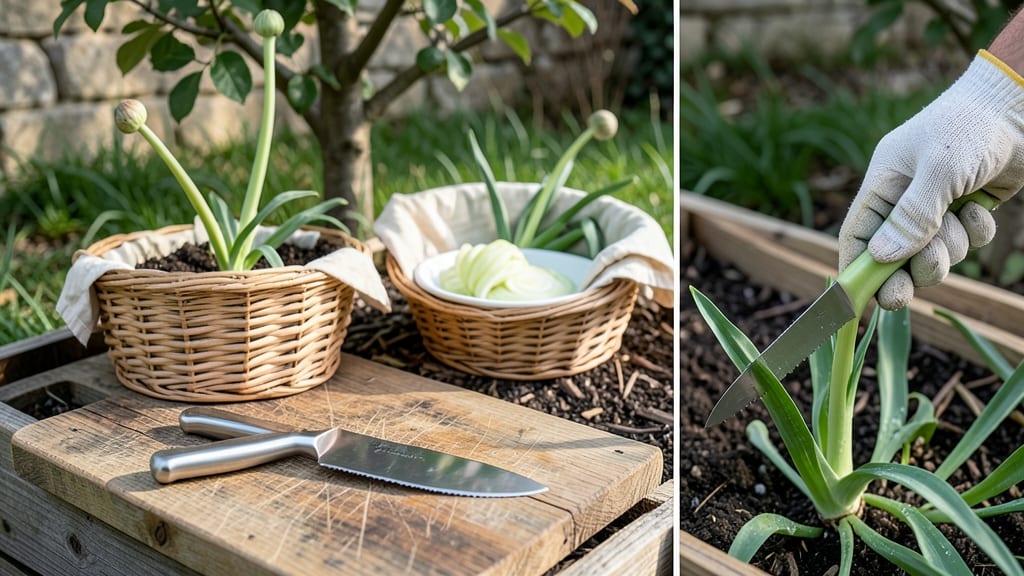
Harvesting garlic scapes at the right time boosts your yield and flavor—wait too long, and you’ll miss both the harvest and next year’s bulb.
Picture this: your 🧄 garlic scapes are curling into tight loops, the stems snap cleanly when bent, and the leaves stay bright green. That’s your cue—harvest now, or risk bitter flavor and stunted bulbs.
Most gardeners in Zone 6a should watch for these signs in late spring (May–June), but regional timing matters. A few weeks too early means wasted scapes; too late, and the plant shifts energy to bulb growth.
Below, I’ll break down the exact visual cues—stem thickness, leaf color, and growth stage—to nail the harvest window every time.

The exact visual cues to harvest scapes (stem thickness + leaf color)
Harvesting garlic scapes at the perfect moment transforms them from bitter, woody stems to tender, flavorful greens. The key lies in two visual cues: stem thickness and leaf color.
When you spot these signs, you’re ready to harvest—before the plant diverts energy to bulb development instead of your scapes.
Most gardeners use the 10-inch rule for stem thickness: harvest when the scape reaches about 10 inches tall but hasn’t started straightening. This ensures the stem is still flexible and crisp, not tough or hollow.
Think of it as the "golden window" where flavor peaks and future bulb growth stays strong.
Leaf color is your second clue. Healthy scapes have bright green leaves with no yellowing or browning. If you see even a hint of yellowing at the tips, the plant is signaling it’s shifting energy to bulb formation.
This means the scape will toughen up quickly—waiting just a few days can turn a perfect harvest into a regret.
| Stage | Stem Thickness | Leaf Color | Action |
|---|---|---|---|
| Early Growth | Thin, flexible (<1/8 inch) | Bright green | Wait for curl |
| Ideal Harvest | 10 inches, firm but bendy | Uniform green | Harvest now! |
| Over-Mature | Thick, woody (>1/4 inch) | Yellowing/browning | Too late; discard |
Pay close attention to the stem’s curl pattern. When the scape forms a tight, question-mark shape, it’s ready. This curl happens when the stem reaches its peak tenderness.
If you wait until it straightens out, the flavor becomes harsh and bitter, and the bulb below will suffer from reduced energy.
Another trick I use is the stem snap test. Gently bend the scape near the base—if it snaps cleanly (not breaks woody), it’s prime for harvesting.
This test works because a mature stem becomes fibrous and less flavorful. Think of it like testing a carrot’s crispness: snap = perfect; bend = past prime.
Leaf color isn’t just about green vs. yellow. Look for vibrant, glossy leaves with no spots or wilting. Even a single brown leaf signals stress, which can make scapes tough and unpalatable.
I’ve learned the hard way—once I ignored a few brown tips, and my scapes turned out chewy and disappointing.
Regional differences matter too. In warmer climates (Zones 8-10), scapes mature faster—sometimes in just 6-8 weeks—so check stems weekly. In cooler zones (4-7), the growing season stretches longer, giving you more time to monitor. Always adjust your timing based on your local last frost date.
One common mistake is harvesting when the flower bud forms at the stem’s tip. By this stage, the scape has already diverted energy to bulb growth, making it less flavorful and tougher.
Cutting before the bud appears ensures you get the best of both worlds: great scapes and healthy bulbs for next year.
Pro tip: Harvest scapes on a dry, sunny morning. This reduces stress on the plant and makes the stems easier to clean. Store harvested scapes in the fridge for up to 5 days, or freeze them for later use in pesto, stir-fries, or roasted dishes.
The fresher you use them, the sweeter the flavor.
Remember, the 10-inch rule and bright green leaves are your best friends. Master these cues, and you’ll never miss the perfect harvest window again. Happy scaping!
How to harvest scapes without damaging your garlic bulbs (step-by-step)
Harvesting garlic scapes at the right time ensures you get tender, flavorful stems while protecting your garlic bulbs for next year’s harvest. The key is precision—cut too early, and you’ll miss out on flavor; wait too long, and your bulbs may shrink.
I’ve perfected my technique over years of gardening, and here’s exactly how I do it.
Timing is everything. Scapes should be 6–10 inches long, curled like a question mark, and still bright green. If you see yellowing leaves or a woody stem, you’ve waited too long.
The best time to harvest is typically late spring to early summer, depending on your climate zone.
Step-by-Step Guide to Harvesting Scapes
-
Step 1: Choose the Right Tool
Use a clean, sharp pair of pruners or a knife to avoid crushing the stem. Dull tools can damage the plant and invite disease. -
Step 2: Locate the Scapes
Find the curled scapes (they’ll resemble a tight loop). Avoid cutting straight stems—they’re not ready yet. -
Step 3: Cut at the Base
Hold the scape firmly and cut 1–2 inches above the ground. This prevents the plant from diverting energy to seed production, which weakens bulb growth. -
Step 4: Leave 4–6 Healthy Leaves
Never remove more than half the leaves. Leave at least 4–6 green leaves to photosynthesize and feed the developing bulb. -
Step 5: Store or Use Immediately
Rinse scapes gently and store them in a paper bag in the fridge for up to 1 week. Use them in pesto, stir-fries, or as a garlic substitute.
After harvesting, give your garlic plants a light drink of water to help them recover. Avoid fertilizing immediately—wait until new growth appears in 4–6 weeks. This ensures your bulbs continue to develop without competition from the scapes.
Pro tip: If you miss the harvest window, don’t panic. Some gardeners report that hardneck garlic can still produce smaller bulbs even after scapes flower, though flavor and size may be reduced. Always prioritize timing for the best results!
With this method, you’ll enjoy fresh scapes while ensuring your garlic bulbs grow plump and flavorful for next year’s harvest. Happy gardening!