
Vegetables
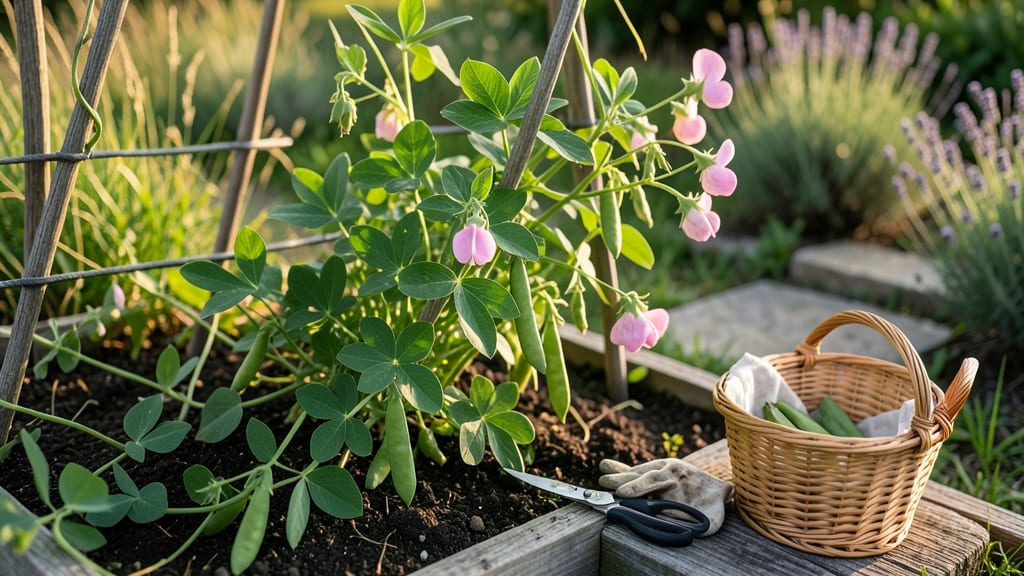
Harvest sweet peas when the pods pop under gentle pressure 🌸 — that’s the sweet spot between tender and tough, where flavor and texture shine.
Picture this: you’re pinching a pod, and it gives just enough to feel firm but still yields slightly. That’s your cue to snip it off—any later, and the peas inside turn mealy and tough.
Miss that window, and you’ll end up with a garden full of overripe pods that taste like disappointment.
Timing isn’t just about days after planting; it’s about the pod’s readiness, which shifts with your climate. In cooler zones like 6a, you’ll harvest as early as June, while warmer regions might wait until August. But don’t rely on the calendar—listen to the plant.
Below, I’ll break down the three tactile tests to nail perfect timing, plus how to adjust for heatwaves or early frosts. By the end, you’ll know exactly when to harvest for those sweet, fragrant pods that make every bite worth the wait.

3 Tactile tests to determine perfect sweet pea harvest timing
Sweet peas are one of nature's sweetest rewards, but harvesting them at the wrong time can turn delicate pods into tough, bitter disappointments. The key lies in using your senses—especially touch and sight—to pinpoint the ideal moment.
Unlike many vegetables, sweet peas rely on subtle physical cues rather than color alone, making these tactile tests your secret weapon for garden success.
I’ve spent years perfecting these methods in my own garden, and once you master them, you’ll never second-guess when to pick again.
The pod pop test, seed visibility check, and flower drop signal work together like a symphony, ensuring you harvest pods that are tender, flavorful, and packed with sweetness. Let’s dive into each test so you can transform your sweet pea vines into a harvesting powerhouse.
- 1 Pod Pop Test: Gently press a pod between your thumb and forefinger. If it pops open with a slight resistance, it’s ready. If it’s too hard or mushy, wait a day or two.
- 2 Seed Visibility: Look inside the pod through a tiny slit. If seeds are visible but not pressing against the sides, the pod is perfect. Overripe pods will have seeds touching the edges.
- 3 Flower Drop Signal: When flowers naturally fall and leave behind a tiny pod, check its size. If it’s pea-sized (½ inch) and firm, that’s your cue to harvest nearby pods.
Let’s start with the pod pop test, my go-to method for determining sweet pea readiness. This simple touch-based trick works because sweet peas reach their peak tenderness just before their pods fully harden.
When you press a pod and feel it give slightly—like a ripe avocado—you’ve hit the sweet spot. I learned this trick from a master gardener who swore by it, and I’ve never looked back. The test is foolproof because it combines firmness and maturity into one easy action.
Next, the seed visibility check is a visual cue that saves you from harvesting pods that are either too young or past their prime. Sweet peas are unique because their seeds don’t fill the pod until they’re overripe.
When you see seeds floating inside with space around them, that’s your green light. Pro tip: Use a small knife to make a tiny slit in the pod—just enough to peek inside without damaging it.
This method is especially useful for dark-colored pods, which can be harder to judge by touch alone.
Don’t overlook the flower drop signal, a natural indicator that your sweet peas are ready for harvest.
When a flower falls and leaves behind a tiny pod, it’s your plant’s way of saying, “Pay attention!” Check the size of this pod—if it’s about ½ inch long and firm to the touch, nearby pods are likely ready too.
This signal is particularly helpful for heavy-producing varieties like ‘Cupani’ or ‘Perfume’, where pods mature at different rates on the same vine.
Timing is everything with sweet peas, and these tests work best when combined. For example, if a pod passes the pop test but fails the seed visibility check, it’s not ready yet. Conversely, if a pod looks perfect visually but feels mushy, it’s overripe.
I’ve found that morning harvests yield the best results because pods are firmer and cooler after a night’s rest. Always harvest on a dry day to prevent mold and ensure clean pods.
One common mistake I see is waiting until pods turn yellow or brown, thinking that’s a sign of ripeness. That’s a big no-no—by then, the pods are often tough and stringy. Sweet peas are best when harvested green and tender, so trust your senses over color.
Another pro move? Harvest regularly to encourage more production. When you pick pods frequently, your sweet pea vines will reward you with a continuous bounty all season long.
If you’re new to growing sweet peas, start by harvesting just a few pods to test their readiness. Once you’ve mastered the tactile tests, you’ll develop an instinct for knowing exactly when to pick. I still use these methods every year, and they’ve never failed me.
The best part? These tests work for both edible-pod varieties (like ‘Sugar Sprint’) and flowering types (like ‘Blue Moon’), making them versatile tools for any sweet pea lover.
Remember, sweet peas are delicate creatures. Handle them with care, and they’ll repay you with a harvest that’s as sweet as it is satisfying. Now grab your gardening gloves, head to the vines, and put those tactile tests to work—your taste buds (and your garden) will thank you! 🌸
Sweet pea harvesting schedule by variety and climate zone
Timing your sweet pea harvest depends on both variety maturity and your USDA climate zone. Early-season types like 'Cupani' ripen in 60-70 days, while late bloomers such as 'Blue Moon' take 80-90 days. In cooler zones (3-5), expect harvests 4-6 weeks earlier than in warmer regions (8-10).
Daylight length also plays a role: sweet peas in northern zones (3-6) benefit from extended cool-season growth, while southern zones (7-10) may experience heat stress if harvested too late. Understanding these factors ensures you pick pods at peak tenderness.
🌸
| Variety Type | Days to Maturity | USDA Zones | Harvest Window | Climate Notes |
|---|---|---|---|---|
| Early (e.g., 'Cupani', 'Tom Thumb') | 60-70 days | 3-7 | Late May-July | Cool nights speed ripening; avoid heatwaves |
| Mid-Season (e.g., 'Perfume', 'Blue Moon') | 70-80 days | 4-8 | June-August | Peak in zones 5-7; extend with shade cloth in 8-10 |
| Late (e.g., 'Spencer', 'Chrysler') | 80-90 days | 5-9 | July-September | Sow early in zones 3-5; avoid fall frost in 6-10 |
In USDA zones 3-5, aim to harvest sweet peas between late May and July for early varieties, as cooler temperatures slow growth. For zones 6-8, your harvest window stretches from June through August, aligning with longer daylight hours.
Gardeners in zones 9-10 should prioritize morning harvests to avoid heat-induced pod toughening.
Pro tip: Sow succession crops every 2 weeks in zones 5-10 to stagger harvests. This ensures a continuous supply of fresh pods while preventing overripe pods from developing on the vine. A well-supported trellis also helps maintain pod quality by reducing stress on vines.
Remember that temperature swings can delay ripening. If nights drop below 45°F, sweet peas may pause flowering until conditions improve. Monitor your plants closely and adjust your harvest schedule accordingly to avoid missing the optimal 3-5 day window between pod firmness and seed development.
Once harvested, store pods in the fridge for up to 5 days or freeze them for long-term preservation. This extends their shelf life while maintaining their delicate flavor and aroma—perfect for fresh eating or culinary use.