
Vegetables
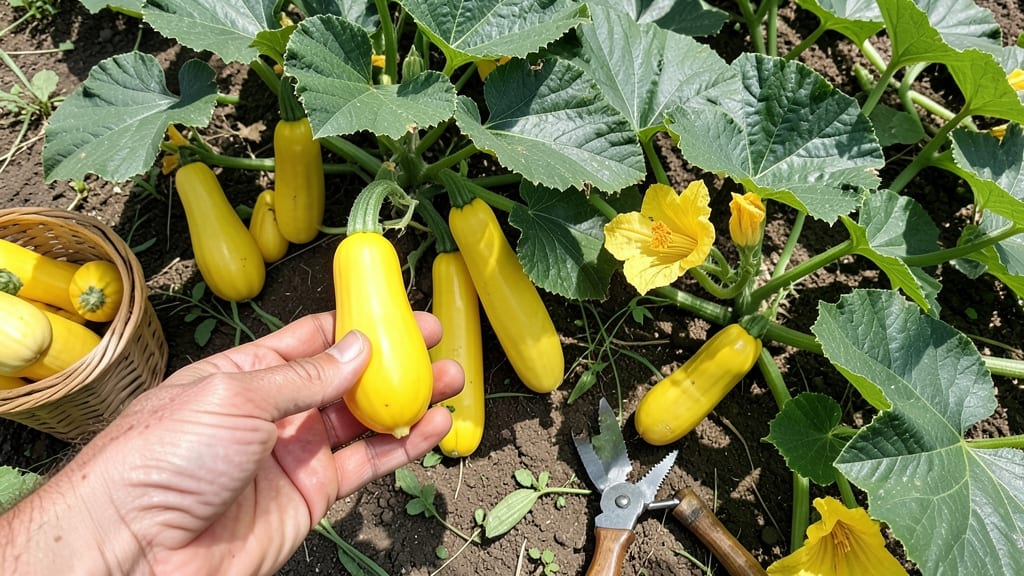
Harvest yellow summer squash 🎃 when they reach 6-8 inches and the skin yields slightly under gentle pressure—this is the sweet spot between tender and tough.
Picking too early means small, seedy disappointment, while waiting too long turns your garden bounty into a woody, flavorless mess. I’ve lost count of the squash I’ve overripe—don’t let that happen to you.
Look for deep, even yellow color and a stem that snaps cleanly when bent. These visual and tactile cues are your shortcut to peak tenderness and maximum flavor.
Below, I’ll walk you through the 3-touch test, seasonal timing tips, and how to keep your harvest coming all summer long.


The 3-Touch Test: how to determine perfect harvest ripeness
Yellow summer squash is at its best when harvested at the peak of ripeness, but timing is everything. One day too early, and you'll get tough, underdeveloped fruit. One day too late, and you'll end up with seedy, fibrous squash that's past its prime.
My foolproof 3-Touch Test eliminates guesswork by combining size, color, and texture checks—all you need is your fingers and eyes.
This tactile method works for all yellow summer squash varieties, including 'Golden Zucchini' and 'Straightneck.' The key is consistency: check your squash every 2-3 days once they reach 4 inches in length.
Early harvesting also encourages the plant to produce more fruit, so you'll enjoy a continuous harvest all season long.
Step-by-Step 3-Touch Test for Yellow Summer Squash
- 📏 Step 1: Check Size
Look for squash between 6-8 inches in length. Measure from blossom end to stem end—anything smaller is likely underripe. - 🤏 Step 2: Test Skin Firmness
Press your thumbnail into the skin. If it leaves a slight dent but doesn't puncture, it's ready. If it springs back completely, wait 1-2 days. - 🎨 Step 3: Examine Color
The skin should be a deep, even yellow with no green patches. Pale yellow means it needs more time, while dull or mottled skin signals overripeness. - 🌱 Bonus: Stem Test
Gently twist the squash at the stem. If it snaps cleanly with minimal force, it's perfect. A stubborn stem means it's not ready yet.
Pro tip: Harvest in the morning when the squash is cool and firm. This is when the starch-to-sugar ratio is at its peak for maximum flavor.
Use a sharp knife or pruners to cut the squash 1 inch above the blossom end—this prevents the stem from tearing and reduces rot risk.
If you miss the window and your squash grows too large, don't despair. Overripe yellow summer squash can still be used for baking or roasting, but the texture becomes mealy and the seeds harden.
For best results, aim to harvest when the squash is 6-8 inches long—this ensures tender flesh and minimal seeds.
One common mistake I see is waiting until the squash is fully yellow before harvesting. While color is important, texture and size are equally critical. A squash that's deep yellow but oversized will have tough skin and a woody center.
Always prioritize the 3-Touch Test over color alone for foolproof results.
For continuous harvests, pick squash every 2-3 days during peak production. This encourages the plant to produce more fruit and prevents overcrowding, which can lead to stunted growth or disease. Keep an eye on the youngest squash first—they'll reach harvest size before the larger ones.
If you're growing multiple varieties, like both yellow and green summer squash, use the same test for consistency. The principles apply across the board, though green varieties may have slightly different color cues.
Always harvest when the squash feels firm yet tender—this is your golden ticket to perfect texture every time.
Remember, the 3-Touch Test isn't just about one perfect harvest—it's about consistent quality all season. By mastering this method, you'll enjoy sweet, tender squash straight from your garden to your table, week after week.
Key visual and physical signs of overripe vs underripe yellow summer squash
Yellow summer squash is delicate—harvest too early, and you’ll get bland, underdeveloped fruit. Wait too long, and you’ll end up with woody, seedy squash that’s tough to eat. The key lies in visual cues and physical tests that reveal the perfect moment to pick.
Let’s break down what to look for so you never miss peak flavor again.
Start with size—ideal yellow summer squash typically measures 6-8 inches in length. Anything smaller than 6 inches is likely underripe, while squash larger than 8 inches may already be overripe. But size alone isn’t enough; you’ll also need to check the color depth and skin texture to confirm readiness.
Next, examine the skin texture. Run your thumb over the squash—if it feels hard and resistant, it’s underripe. Perfectly ripe squash will have a smooth, slightly yielding skin that gives just a little when pressed.
Overripe squash, on the other hand, often feels rough or leathery and may even develop a slightly waxy coating.
Don’t forget to check the seeds inside! Cut a small slice to peek at the seed cavity. In an underripe squash, seeds are tiny or invisible. At peak ripeness, seeds are small but soft, while overripe squash will have large, hard seeds that dominate the cavity.
This is your best indicator of flavor—soft seeds mean tender, sweet flesh.
Finally, perform the stem test. Gently twist the squash at its stem—if it snaps cleanly, it’s ready to harvest. If the stem resists or pulls away with the squash, it’s still attached to the vine and not quite ripe.
Overripe squash often detaches with effort, leaving a rough stem end.
Mastering these signs ensures you’ll always harvest yellow summer squash at its peak tenderness and flavor. The sooner you practice these checks, the more consistently you’ll enjoy homegrown squash that’s sweet, tender, and seedless—just the way it should be! 🌱