
Picking
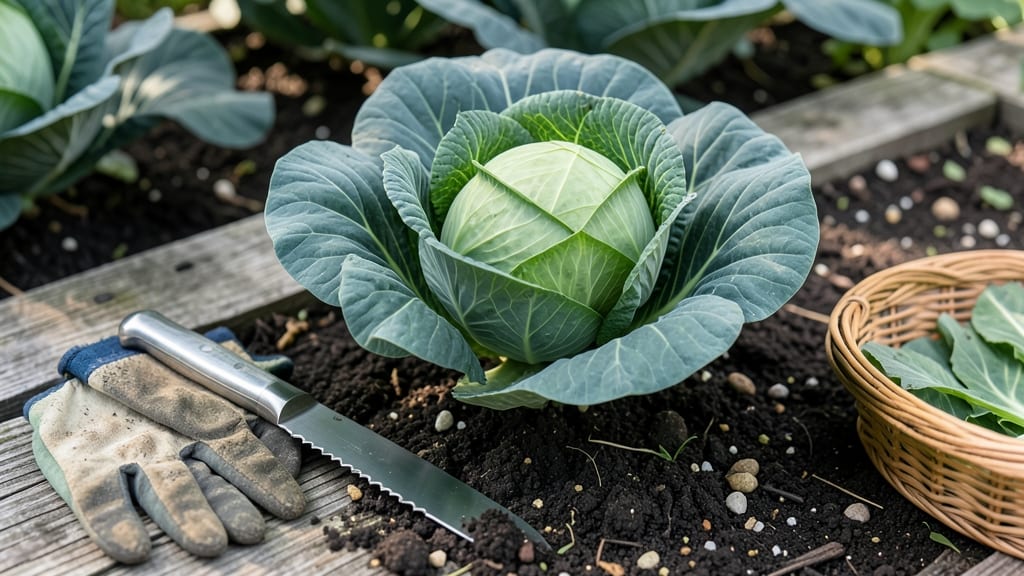
To pick cabbage at the perfect time means crisp, flavorful heads that store well and avoid the bitter, tough leaves that come from waiting too long.
Picture this: your 🥬 cabbage heads are firm and compact, with deep green leaves curling inward like a tightly wrapped gift. Miss that window, and you’re left with loose heads or—worse—bolting plants that send up flower stalks instead of the harvest you worked for.
Timing your harvest isn’t just about days since planting—it’s about reading the plant’s signals. Head shape, leaf color, and even the weather play a role, and getting it right makes all the difference between a homegrown feast and a disappointing pile of overripe greens.
In this guide, I’ll walk you through the exact clues to watch for, seasonal adjustments for spring and fall crops, and how to avoid the most common mistakes—so you can enjoy cabbage at its peak.

How to identify the perfect cabbage head shape for harvesting
One of the most rewarding moments in gardening is harvesting a perfectly formed cabbage head. But timing is everything—pick too early, and you’ll get loose, underdeveloped leaves.
Wait too long, and the head may split or become bitter. The key lies in understanding head shape, tightness, and variety-specific cues.
For green cabbage varieties like Golden Acre, the ideal head should form a tight, round dome with leaves curling inward. Red cabbage (such as Red Express) will show deep purple hues, while Savoy cabbage (like Savoy King) develops crinkled, textured leaves that still feel firm to the touch.
Here’s how to spot the perfect harvest-ready head using shape and firmness as your guides:
When examining your cabbage plants, gently squeeze the head to test firmness. A ripe head should feel solid, like a dense ball of leaves with no soft spots. If the head feels spongy or hollow, it’s past its prime and may split or develop off-flavors.
Watch for leaf curling—this is a classic sign of maturity. The outer leaves should begin to curl inward, creating a protective layer around the head.
In Savoy cabbage, this curling is more pronounced due to the crinkled texture, but the principle remains the same: the tighter the curl, the riper the head.
For dwarf varieties like Mini Sweet, the head may stay smaller (around 4-6 inches), but the same rules apply. Always prioritize tightness over size—a smaller but perfectly formed head is far superior to a loose, overgrown one.
One common mistake is assuming larger heads are better. While size matters, a 6-inch head that’s firm and compact will outshine an 8-inch head that’s floppy. Overripe cabbage often develops a yellowing core or starts to split at the seams—signs you’ve waited too long.
Pro tip: Use your thumb and forefinger to gently pinch the stem near the base. If it snaps cleanly, the head is ready. If it bends without breaking, it needs more time. This simple test saves you from harvesting too early or too late.
Finally, remember that weather plays a role. Cool, consistent temperatures (around 60-70°F) help cabbage develop evenly. If your region experiences hot summers, harvest sooner to avoid stress-induced bolting or bitterness.
With these head shape clues, you’ll never miss the perfect harvest window again. Your garden will thank you with crisp, flavorful cabbage that’s ready for the kitchen—or the compost pile if you’ve waited just a day too long! 🥬
Leaf color and size clues that signal harvest time
Cabbage leaves whisper secrets about harvest readiness if you know what to listen for. The deep green hue of mature leaves signals peak flavor, while yellowing edges or purple tinges can indicate either maturity or stress.
For most varieties, aim for heads measuring 6-8 inches in diameter—this ensures optimal texture and storage life. Smaller heads may taste bitter, while oversized ones risk splitting or becoming woody.
Red cabbage varieties like Ruby Perfection develop their signature deep purple color as they mature, but don't wait until the entire head turns solid purple—harvest when the outer leaves show rich coloration while inner leaves remain vibrant green.
Savoy cabbage, with its crinkled texture, should be harvested when its head feels firm to the touch, even if the leaves appear slightly smaller than other varieties.
🌱
When to Pick Cabbage: Leaf Color & Size Guide
✅ Ready to Harvest
- 🟢 Deep green leaves (or rich purple for red varieties)
- 🤏 Head size: 6-8 inches in diameter
- 🌿 Leaves form tight, firm ball
- 💧 Outer leaves begin curling inward
❌ Avoid Harvesting
- 🟡 Yellowing edges (sign of bolting)
- 🥬 Head is loose or splitting
- 📏 Smaller than 4 inches (underdeveloped)
- 🌡️ Woody texture (overmature)
Seasonal variations play a crucial role in leaf color cues. Spring-planted cabbage may develop lighter green leaves due to cooler temperatures, while fall varieties often deepen in color as nights grow longer.
Always check the inner leaves—they should remain crisp and vibrant, not tough or discolored. If you notice white flowers forming in the center, you've waited too long!
For savoy cabbage varieties, focus less on head size and more on leaf texture. Their wrinkled leaves should feel firm and plump, not limp or hollow-sounding when tapped.
If the head feels light for its size, it's likely overripe. Harvest these varieties slightly earlier than smooth-leaf types to preserve their delicate texture.
Troubleshooting premature harvests? If your cabbage heads stay small despite proper care, check for nutrient deficiencies (especially nitrogen) or crowded plants. Overripe cabbage, on the other hand, often shows brown streaks on leaves or a hollow core.
In both cases, adjust your timing for next season—most varieties mature in 70-80 days, but cooler climates may extend this window.
💡