
Vegetables
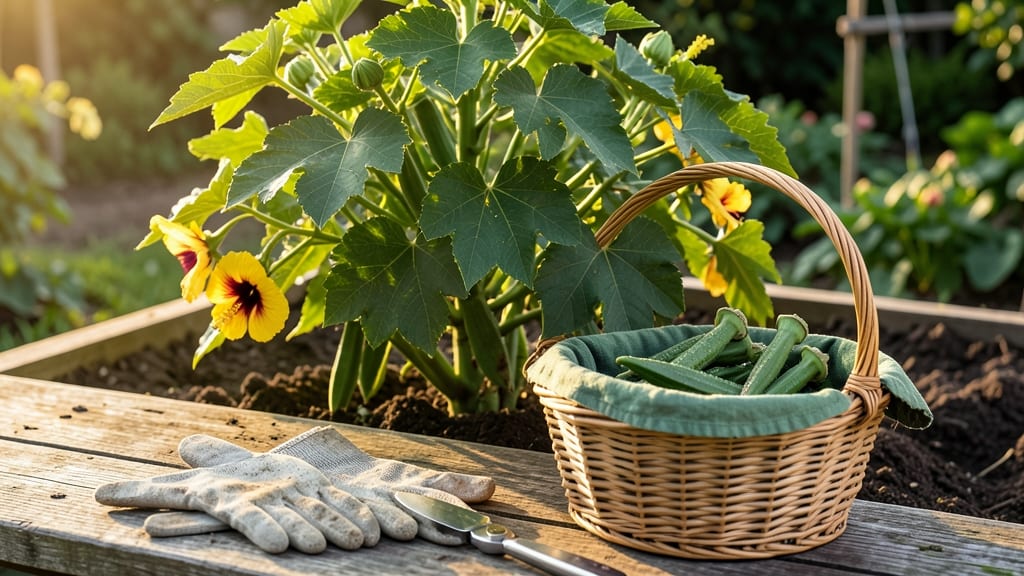
Picking okra at the right time turns your garden’s crisp, tender pods into a culinary treasure—but wait too long, and you’re left with tough, seedy disappointment.
Picture this: you’ve nurtured your 🌱 okra plants all season, and now the pods are growing fast. One wrong day can mean the difference between a perfect bite-sized snack and a woody mess. The secret? Knowing when those pods hit their peak—before they get away from you.
For USDA Zone 6a growers, the harvest window runs from July to October, but timing matters more than dates. The finger-length rule is your best friend: aim for pods that snap easily and measure about 2-3 inches. That’s when flavor and texture are at their best.
In this guide, I’ll show you exactly how to spot the perfect okra, how often to pick for continuous production, and why morning harvests keep your plants happy. Let’s make sure your garden delivers the freshest pods every time.

Okra harvesting by pod size: the finger-length rule explained
Okra thrives when harvested at the right stage—2 to 3 inches long—where flavor peaks and texture remains tender. This finger-length rule ensures crisp pods with minimal seeds, making them perfect for stir-fries or grilling. Skipping this window risks tough, seedy pods that lose their delicate charm.
Think of okra pods like green beans: the younger, the better. A 2-inch pod is ultra-tender, while a 3-inch pod balances flavor and texture. Beyond this, pods harden, seeds bulk up, and the slimy texture (loved by some!) becomes overpowering.
Here’s the golden rule: Harvest when pods match your thumb’s width. Hold a pod next to your thumb—if it aligns perfectly, it’s ready. This trick works for most varieties, from classic 'Clemson Spineless' to compact 'Burgundy' types.
Visual cues matter too. Look for smooth, glossy skin and a slight snap when bent. Dull or wrinkled pods? Too early. Hard or woody? Too late. The ideal pod yields slightly when pressed but springs back—like a fresh green bean.
Why size matters: Smaller pods (<1 inch) are edible but bland, while larger ones (>3 inches) become fibrous. The 2-3 inch range delivers the sweet spot for flavor, texture, and seed development. This window also encourages your plant to produce more pods, extending your harvest season.
Pro tip: Use a small pruning shears or clean knife to snip pods at the base. Avoid pulling—this can damage the plant. Harvest every 2-3 days during peak season to keep pods in the ideal range and boost production.
For continuous harvests, check your plants daily. Okra grows fast—sometimes 1 inch per day in warm weather. If you miss a day, pods can go from perfect to overripe in 24 hours. Stay ahead by picking early in the morning when pods are crispest.
Variety matters! 'Emerald' okra stays tender longer, while 'Arkansas Little Light' matures faster. Always check your plant’s specific guidelines, but the finger-length rule applies universally. Happy harvesting!
🌱
Signs okra is overripe (and how to avoid it)
Okra’s rapid growth means it’s easy to miss the perfect harvest window. Once those tender pods turn woody and seedy, their flavor and texture suffer.
Overripe okra becomes tough, almost like eating a green bean gone wrong. The key is recognizing these warning signs early to salvage your crop.
I’ve learned the hard way—skipping just one harvest can lead to a sudden influx of overripe pods. The plant keeps producing, but the quality plummets. If you’re seeing pods longer than 4 inches, it’s time to act fast.
These pods develop prominent seeds and a fibrous texture, making them less enjoyable to eat.
⚠️ When to Pick Okra: Critical Warning Signs
Hard as a rock: Tap a pod—if it sounds hollow or feels wooden, it’s past its prime. Woody texture is a dead giveaway. ✂️
Seeds popping out: Visible seeds mean the pod is overmature. These seeds grow rapidly once the pod exceeds 3 inches. 🌱
Dull, wrinkled skin: Fresh okra has a glossy, smooth surface. If it looks dry or leathery, it’s time to harvest. 💧
To avoid this, I harvest every 2-3 days during peak season. This keeps the plant focused on producing new pods instead of letting old ones overripe. If you’re away for a few days, pick all pods longer than 2 inches before leaving—this prevents a sudden overripe explosion.
Another trick? Prune lower pods when they reach 3 inches to encourage growth higher up. This extends your harvest season by 2-3 weeks. I’ve seen plants keep producing until first frost when managed this way. Just be vigilant—okra doesn’t wait for you!
If you do end up with overripe pods, don’t toss them. Use them in stews or soups where their texture won’t be an issue. But for fresh eating, always aim for pods between 2-3 inches. Your taste buds—and your plants—will thank you.
Pro tip: Mark your calendar for the 60-day mark after planting. This is when okra typically hits its peak production window. Staying ahead of the game means crisp, tender pods all season long. ☀️