
How To
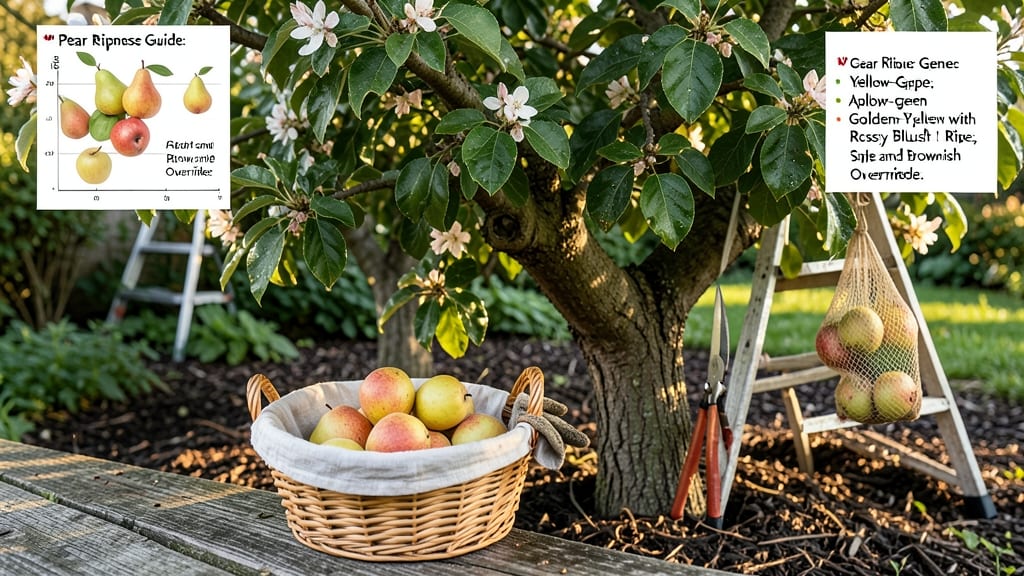
Picking pears from a tree at the right time means the difference between sweet, juicy fruit and a mealy, underripe disappointment—so knowing when to harvest is everything.
Picture this: you’ve waited all season for your 🍐 tree to bear fruit, and now the pears are hanging heavy on the branches. But how do you know if they’re ready?
Grab one and give it a gentle tug—if it separates easily, you’re in business. If not, you might still have a few weeks to wait.
Timing matters because pears don’t ripen on the tree like apples do. Instead, they need to be picked at peak ripeness and then allowed to soften off the branch.
That’s why mastering the three key tests—color, stem flex, and the seed trick—is the secret to a perfect harvest every time.
In this guide, I’ll walk you through exactly what to look for, including how climate and variety affect your harvest window. By the end, you’ll know not just when to pick, but also how to store them so they stay fresh for weeks.

How to determine the best time to pick pears using 3 reliable tests
Mastering the art of pear harvesting starts with knowing exactly when your fruit is ready to pick. Unlike apples, pears don't ripen on the tree—they need to be harvested at peak ripeness and then ripened indoors.
Here's how to avoid the common mistake of picking too early or too late, ensuring you get the perfect balance of sweetness and texture.
Timing your harvest correctly means the difference between juicy, flavorful pears and bland, mealy ones. The three most reliable methods—color change, stem flex test, and seed test—will give you foolproof results every time.
Let's dive into each method so you can confidently determine when your pears are ready to harvest.
Color Change Test
Watch for consistent color. Most pears turn from green to yellow or golden brown, depending on the variety. Bartlett pears will blush yellow-green, while Bosc pears develop a deep russet brown.
Stem Flex Test
Gently twist the pear at the stem. If it detaches easily with a slight pop, it's ready. If the stem resists, wait a few days. Avoid pulling—this can damage the tree.
Seed Test
Cut a pear open and check the seeds. If they're plump and brown, the pear is ripe. Shriveled or white seeds mean it's not ready yet. This test works best for Asian pears and European varieties.
Start by observing the pear's skin color, which is your first visual cue. Most pears develop a distinct hue as they ripen—think Bartlett's golden yellow or Bosc's rich russet tones.
However, don't rely solely on color, as some varieties like Anjou may stay green even when ripe. Pair this with the stem flex test for accuracy.
The stem flex test is a tactile method that works wonders for determining ripeness. Simply grasp the pear near the stem and gently twist. A ripe pear will separate cleanly from the tree with minimal force.
If the fruit resists, it's not ready—wait another 3 to 5 days and retest. This method is especially useful for late-season varieties like Seckel or Moonglow.
For an extra layer of confidence, use the seed test, which reveals the pear's internal ripeness. Slice open a candidate pear and examine the seeds.
If they're fully brown and plump, the fruit is ready to harvest. White or shriveled seeds indicate the pear needs more time on the tree. This test is particularly helpful for Asian pears, which often ripen later in the season.
Once you've confirmed ripeness using these three tests, harvest your pears carefully. Use pruning shears or your hands to avoid damaging the fruit. Place them in a single layer in a cardboard box or mesh bag to prevent bruising.
Store them in a cool, dark place like a basement or refrigerator to slow ripening until you're ready to enjoy them.
If you're unsure whether your pears are ready, err on the side of caution and wait a few more days. Pears won't ripen further on the tree, but they'll continue to develop flavor and sweetness indoors. Overripe pears can become mushy, so timing is everything.
With these three reliable tests, you'll never second-guess your harvest again!
Pro tip: Keep a harvest journal to track when your pears ripen each year. Factors like climate, tree age, and variety can influence ripening times. Over time, you'll develop an intuition for the perfect harvest window in your garden.
🍐
Pear variety-specific harvest times: when to pick common types
Not all pears ripen at the same time, and each variety has its own ideal harvest window. Knowing when to pick Bartlett, Bosc, or Anjou pears can transform your harvest from bland to breathtaking.
Some ripen on the tree, while others need time off the branch to soften. Let’s break down the best times to harvest these popular types based on their unique characteristics.
For Bartlett pears, the most common variety, harvest typically occurs in late summer to early fall, usually between August and September.
These pears ripen quickly after picking, so don’t wait until they’re fully colored—they’ll soften faster off the tree. Bosc pears, on the other hand, are best picked slightly firmer and allowed to ripen indoors over 1-2 weeks.
They usually ripen in late summer to early fall, often a bit later than Bartletts.
| Variety | Harvest Time | Ripening Behavior | Best For |
|---|---|---|---|
| Bartlett | Late August - September | Ripens quickly after picking | Fresh eating, canning |
| Bosc | Late August - October | Ripens slowly off the tree | Baking, fresh eating |
| Anjou | September - October | Ripens slowly, firm when picked | Baking, fresh eating |
| Asian Pears | Late August - September | Eat when crisp, never soft | Fresh eating, salads |
Anjou pears are another classic variety that ripens later in the season, typically between September and October. Like Bosc pears, they’re best picked firm and allowed to soften indoors. Their skin stays greenish-yellow even when ripe, so don’t judge by color alone—focus on the stem test and gentle squeeze for readiness.
If you’re growing Asian pears, also known as apple pears, timing is critical. These pears should be harvested when they’re crisp and firm, never soft or mushy. They ripen in late summer to early fall, usually around August to September.
Unlike traditional pears, Asian pears are best eaten when fully crisp—they won’t soften like other varieties, so pick them at peak crunch.
Regional climate plays a role too. In warmer climates, pears may ripen earlier, while cooler regions might extend the harvest window. Always monitor your tree for color changes, stem flexibility, and fruit firmness to ensure you’re picking at the perfect moment.
Missing the window can mean pears that never reach their full potential—or worse, fall and rot on the ground.
Pro tip: Keep a harvest journal to track when your pears ripen each year. Note the month, weather conditions, and any variations in ripening. Over time, you’ll develop an intuition for the ideal harvest time for your specific pear varieties and climate.
With practice, you’ll never miss a sweet, juicy bite again!