
Vegetables
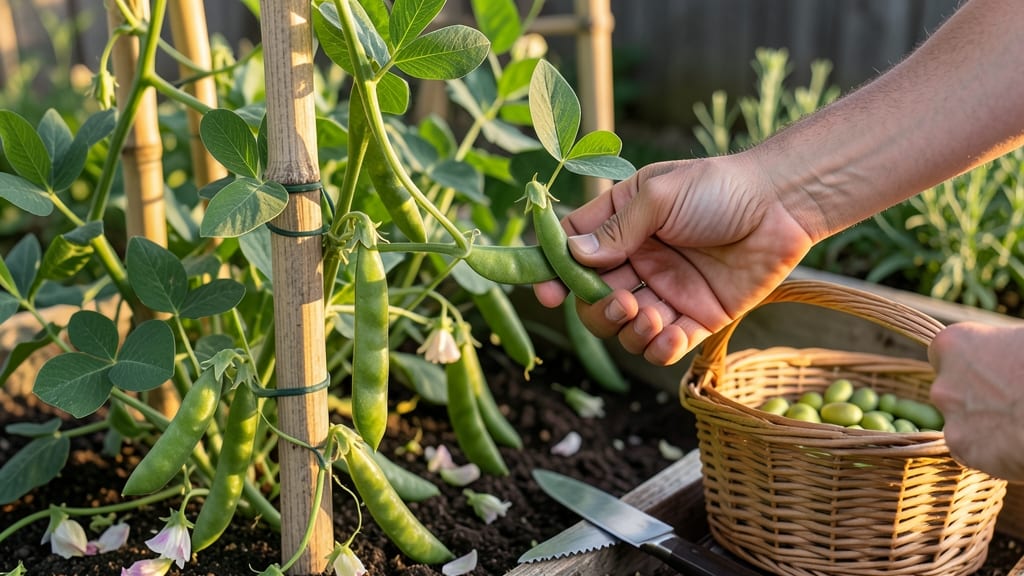
To pick peas at their sweetest, time it when pods are 2-3 inches long and bright green 🌱 — the classic snap test reveals whether they’re ready or still firming up.
Peas may seem simple to harvest, but timing them perfectly ensures sweet, crisp pods bursting with flavor—if you wait too long, you’ll end up with tough, mealy peas instead. The secret? A quick snap test and understanding the plant’s growth stages.
Shelling peas, snap peas, and snow peas each have their own ideal window, and missing it means sacrificing flavor for texture. Below, I’ll walk you through the pod snap test, how to adjust for different varieties, and when to stop harvesting before the plant burns out.
You’ll also learn how to read the plant’s signals—like color shifts and seed visibility—and avoid the two biggest mistakes that turn a bountiful harvest into a bitter disappointment.

How to use the pod snap test for perfect pea picking timing
The pod snap test is the gardener’s secret weapon for harvesting peas at their peak. This simple technique tells you exactly when pods are sweetest and most tender—no guesswork required.
The test works by assessing the pod’s crispness and maturity stage, ensuring you avoid the common mistake of picking pods too early (underdeveloped) or too late (fibrous and tough). Mastering this skill guarantees a steady supply of crisp, flavorful peas all season long.
Timing matters because peas lose their sweetness and texture quickly once mature. A 5-minute snap test in the morning can save you from harvesting overripe pods that turn mealy and bland.
The best time to test is early morning when pods are cool and hydrated, giving you the most accurate results. Avoid testing in the afternoon when pods may feel slightly softer due to heat stress.
Select a mature-looking pod
Choose a pod that’s 2-3 inches long and bright green. Avoid pods that are still small or have turned yellowish.Hold the pod between thumb and forefinger
Position your fingers about 1 inch apart on the pod’s middle section. This is the weakest point for testing.Apply gentle pressure and bend
Slowly bend the pod—don’t snap it yet. A crisp, clean snap means it’s ready. If it bends without snapping, it’s underripe.Check the sound and feel
A perfect pod makes a sharp, loud snap and feels slightly tender but firm. If it feels fibrous or spongy, it’s past its prime.Inspect the inside seeds
Open the pod to check for tiny, barely visible seeds. If seeds are large or bulging, the pod is overripe and should be harvested immediately.One of the biggest mistakes gardeners make is picking peas at the wrong time of day. Testing pods in the afternoon can give false results because heat makes them softer. Always perform the snap test in the cool morning hours (before 10 AM) for the most accurate reading.
Another common error is ignoring pod color—yellowing or dull green pods are a clear sign they’ve passed their prime.
Interpreting the snap test results is straightforward, but paying attention to subtle cues makes all the difference. A crisp snap with a slight give means the pod is perfect for eating fresh or freezing. If the pod bends without snapping, it’s still too young—wait another 2-3 days and retest.
For sugar snap peas, aim for pods that snap cleanly but still feel slightly firm to the touch.
For shelling peas, the snap test works slightly differently. These varieties should snap with a bit more resistance, and the pods should feel plump but not overly tender. The seeds inside should be small and firm, not shriveled or overly developed.
Overripe shelling peas will have large, loose seeds that rattle inside the pod—a sure sign it’s time to harvest.
To maximize your pea harvest, perform the snap test every 2-3 days once pods start forming. This frequent checking ensures you never miss the peak sweetness window. If you’re growing multiple pea varieties, test each type separately since harvest timing varies slightly between shelling, snap, and snow peas.
Keep a small notebook nearby to track which pods pass the test—this helps you identify patterns in your garden’s growth cycle.
Pro tip: If you’re unsure about a pod’s readiness, harvest it anyway. Peas are self-pollinating, so removing pods (even slightly underripe ones) encourages the plant to produce more.
Just avoid letting pods get to the point where they’re dry and shriveled, as this signals the end of the plant’s productivity for that season.
With practice, the pod snap test becomes second nature, and you’ll develop an almost instinctive sense for when peas are at their best. The key is consistency and attention to detail—don’t rush the test, and always harvest in the morning when pods are at their crispest.
Soon, you’ll be enjoying a steady supply of homegrown, garden-fresh peas that rival anything you’ve bought in a store.
Pea variety harvest times: shelling vs. snap peas compared
Not all peas are created equal when it comes to harvest timing. Shelling peas like 'Wando' and 'Lincoln' need their pods fully mature for sweet peas inside, while snap peas like 'Sugar Snap' and 'Oregon Sugar Pod' should be picked young for crisp texture.
The difference isn't just about flavor—it's about pod size and seed development at harvest.
For shelling peas, wait until pods are 2-3 inches long and turn from bright green to slightly yellowish.
The key is when you can see plump peas inside through the pod—this means they're ready to shell. Snap peas, on the other hand, should be harvested when pods are 1-2 inches long and still bright green, with tiny seeds barely visible.
Harvesting shelling peas too early means underdeveloped peas inside, while waiting too long results in tough, stringy pods and shriveled peas. For snap peas, the window is narrower—once pods start to yellow or seeds swell, they become woody and bitter.
I always pick snap peas in the morning when they're coolest and crispiest.
Did you know? Sugar snap peas can be harvested every 2-3 days for continuous production, while shelling peas may need 4-5 days between harvests. This frequency keeps plants producing longer and prevents over-maturation. Always check pods for firmness and color before deciding!
Pro tip: Use a trellis to grow peas vertically—this makes harvesting easier and improves air circulation, reducing disease risk. I’ve found that dwarf varieties like 'Little Marvel' are perfect for containers and small gardens, while standard types like 'Green Arrow' need staking for support.
Remember, the earlier you harvest, the sweeter and more tender your peas will be. Whether you're growing shelling or snap peas, regular picking encourages more production.
Don’t let your pea plants go to seed—once they start flowering heavily, it’s time to pull them or save seeds for next year! 🌱