
Picking
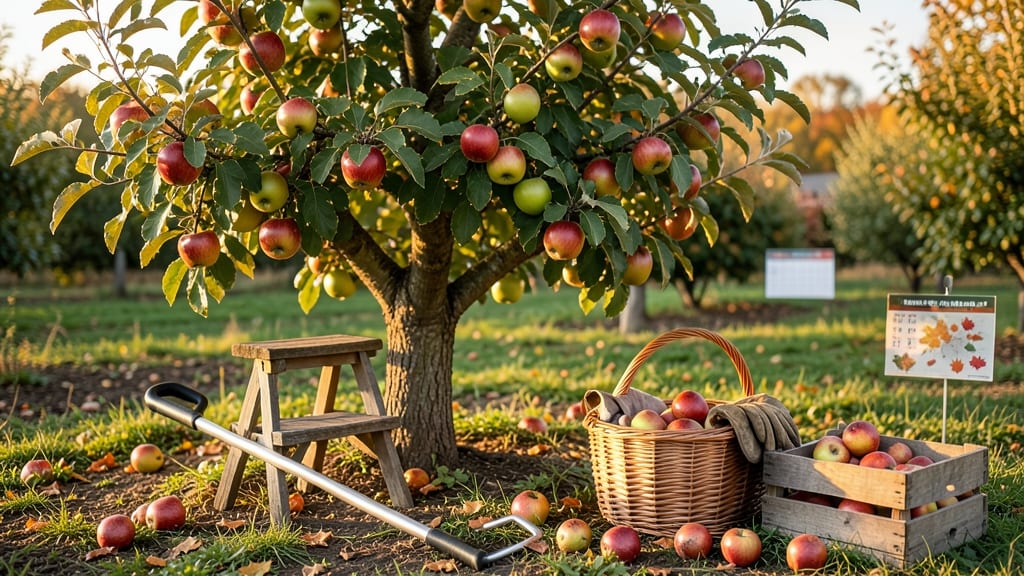
Knowing the exact apple harvest dates for your 🍎 variety is the difference between sweet, crisp fruit and bland, mealy disappointment.
Picture this: you’ve waited all season for your apples to ripen, only to pick them too early and end up with flavorless snacks. Or worse, you miss the window entirely and watch them fall to the ground, wasted. The right timing isn’t just about taste—it’s about storage life, too.
In USDA Zone 6, most apples hit peak ripeness between late summer and early fall, but the exact dates depend on the variety. Early-season apples like McIntosh or Golden Delicious are ready by August, while late varieties like Fuji or Granny Smith can wait until October.
Below, I’ll break down the best harvest windows for popular varieties, how to test for ripeness, and tips to keep your apples fresh long after picking season ends.

Apple harvest dates by variety: when to pick for optimal flavor
Picking apples at the right time is everything—too early, and they’re tart and hard; too late, and they spoil on the tree. Each variety has its own harvest window, often spanning just 1-2 weeks.
Regional climate also shifts these dates, so I’ll break down the best times for popular varieties and how to adjust for your zone. Knowing these details means the difference between crisp, sweet apples and mealy disappointments.
Most apples ripen between late August and October, but early varieties like McIntosh can be ready as early as July. Late-season Granny Smith may linger until November in cooler climates. Your USDA zone matters—northern growers often harvest 2-4 weeks later than southern gardeners due to shorter growing seasons.
For example, a Honeycrisp in Zone 5 might be ready in late September, while the same tree in Zone 8 could wait until mid-October.
For Fuji apples, aim for late September to early October in Zone 6. Look for a deep crimson blush and a slight give when you press gently—this signals peak sweetness. If you’re in Zone 5, harvest 2 weeks earlier to avoid early frosts.
In warmer Zone 8, delay by 1 week to let the sugars fully develop. Honeycrisp is another crowd-pleaser, but its harvest window is short—wait until the skin shows a golden-red blush and the apple releases easily from the stem.
Southern growers in Zones 7-9 can often extend harvests by 1-2 weeks due to longer growing seasons. For example, Granny Smith apples in Zone 9 might be ready by early October instead of November.
Meanwhile, northern gardeners in Zones 4-5 should pick early varieties like McIntosh by mid-September to avoid frost damage. Always check your local frost dates—a late frost can turn a perfect apple into a mushy mess overnight.
Don’t rely solely on dates—taste-test a few apples before committing to a full harvest. Cut one open: if the flesh is creamy white and crisp, it’s ready.
If it’s still greenish or hard, wait 3-5 days and check again. I’ve learned the hard way that overripe apples fall
How to determine if apples are ready for harvest (beyond dates)
Relying solely on calendar dates to harvest apples can lead to disappointing results—whether your fruit is underripe and bland or overripe and mealy. Instead, focus on visual and tactile cues that reveal true ripeness.
The key lies in combining multiple indicators to ensure you pick apples at their peak flavor and storage potential.
Start by examining the skin color of your apples, as this is one of the most obvious signs of readiness. Different varieties mature at different shades—Fuji apples develop a deep red blush, while Granny Smiths turn a vibrant green.
Pay attention to whether the color has fully developed across the entire surface, not just in patches.
Next, perform the stem pull test, a foolproof method to check ripeness. Gently grasp an apple and twist it slightly—if it separates cleanly from the stem without tearing, it’s ready to harvest.
This indicates the fruit has reached its ideal sugar content and texture. Avoid pulling too hard, as this can damage the tree or the apple itself.
🌱
Harvest Dates Are Just a Starting Point
Apple harvest dates vary by USDA zone and variety, but climate shifts can delay or accelerate ripening. For example, a hot summer may mature Honeycrisp apples earlier than expected, while a cool fall can extend the season. Always verify ripeness with physical tests rather than relying on traditional harvest windows.
Don’t overlook the size consistency of your apples. While size alone doesn’t determine ripeness, apples that are noticeably larger than their peers may have absorbed more water and nutrients, often resulting in better flavor.
Compare apples on the same tree—if they’re clustered and uniformly sized, they’re likely ready. Smaller or misshapen apples may need more time.
Finally, conduct a taste test on a few apples to confirm ripeness. A ripe apple should be sweet with a slight tartness, depending on the variety. If it tastes bland or overly tart, it’s not fully mature.
Conversely, if it’s mushy or fermented, you’ve waited too long. This step is especially useful for late-season varieties like Braeburn or Pink Lady, which can ripen unevenly.
Common mistakes include picking apples too early for storage or leaving them on the tree past their prime. Early harvesting often results in poor storage life, while waiting too long can lead to rotting or animal damage.
Always prioritize the stem pull test and taste test over calendar dates to avoid these pitfalls.
🍎