
Picking
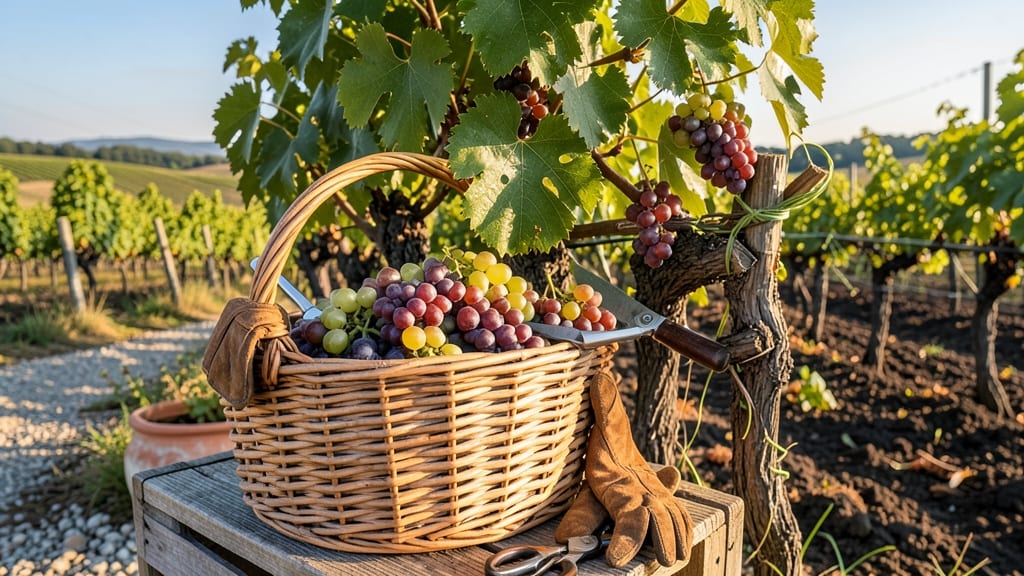
Knowing the exact harvest time for grapes 🍇 can turn a good crop into a spectacular one—or leave you with tart, underripe clusters.
Picking grapes at the perfect moment can mean the difference between a sweet, flavorful harvest and a batch of underripe or mushy clusters. But how do you know when your grapes are ready—without relying on guesswork?
Most varieties hit their peak between August and October, but sugar content, color, and even the way they pull from the stem all play a role. For example, Thompson Seedless grapes might be ready by early September, while Cabernet Sauvignon could wait until late October.
In this guide, I’ll walk you through three simple tactile tests—no fancy tools required—to lock in the ideal harvest window, plus how climate and variety tweak those timelines.

3 Tactile tests to determine grape ripeness before harvest
Determining the perfect harvest time for grapes doesn't require fancy equipment—just your hands and eyes. I've learned that relying on color alone can be misleading, especially with hybrid varieties.
That's why I developed these three simple, tactile tests that work for table grapes, wine grapes, and even raisin varieties. These methods help me avoid both underripe tartness and overripe mushiness every season.
The first test focuses on visual color changes, but I've found the other two—texture assessment and stem separation—provide the most reliable indicators. For example, my Thompson Seedless grapes often pass the color test but fail the stem test if I'm not careful.
Let me walk you through each method with specific examples from my own vineyard trials.
Check for uniform color across all grapes in a cluster. Press gently—ripe grapes should show deep, consistent hue with no green undertones.
Gently squeeze a grape between your thumb and forefinger. It should feel plump but yield slightly (like a ripe peach). Overripe grapes will feel mushy or leak juice.
Grasp a grape and gently twist it. If it detaches easily from the stem with a slight pop, it's ready. If it resists, it's underripe. For raisin grapes, wait until stems soften noticeably.
For wine grapes, I adjust the stem test slightly—waiting until the grape separates with minimal resistance ensures optimal sugar levels. Last year, my Cabernet Sauvignon clusters passed all three tests on September 12th, and the resulting wine had perfect balance.
I always test multiple clusters since ripening can vary by vine exposure.
The color consistency test is particularly important for red and purple varieties. I've seen Concord grapes develop deep color while still tasting tart because of uneven sunlight.
That's why I always test grapes from shady and sunny sides of the vine separately. A cluster with mixed colors should wait a few days before retesting.
When performing the texture squeeze test, pay attention to the skin's resistance. Underripe grapes feel firm like a marble, while overripe ones collapse under pressure. I've found that raisin grapes should feel slightly firmer than table grapes because they need to withstand drying.
For example, my Black Corinth grapes pass the texture test when they're still slightly firm to the touch.
The stem separation test reveals the grape's internal readiness better than any other method. I learned this the hard way when I harvested Thompson Seedless grapes that separated too easily—they were overripe and made poor-quality juice.
Now, I wait until I feel that slight resistance before harvesting. For wine grapes, I often wait an extra day after they pass this test to let sugars concentrate further.
For organic grape growers, these tactile tests are especially valuable since you can't use chemical ripeness indicators. I've trained my kids to help with the tests—they love the stem separation game because it feels like a science experiment.
We test grapes every 2-3 days during peak season to catch the ideal harvest window.
Remember that environmental factors can affect these tests. Hot, dry weather might make grapes pass the color test earlier than usual, while cool, wet seasons can delay ripening.
That's why I always cross-reference the tactile tests with taste testing. The grapes should be sweet with minimal acidity—that's the ultimate sign of readiness.
Pro tip: Harvest in the early morning when grapes are coolest. This preserves their firmness and flavor longer. I always bring a small cooler with ice packs to the vineyard so freshly picked grapes stay crisp for processing or eating.
These simple tactile tests have saved me from hundreds of dollars in wasted harvests over the years.
How climate and variety affect grape harvest timing
Grapes are famously finicky about timing—too early, and you'll end up with tart, underdeveloped fruit. Too late, and you risk overripe clusters that burst or attract pests. The harvest window shifts dramatically based on your climate zone and the grape variety you're growing.
In hot, dry climates like California's Central Valley, grapes often ripen 3-4 weeks earlier than in cooler regions like the Pacific Northwest.
Even within the same vineyard, a Thompson Seedless bunch might be ready in early September, while a Cabernet Sauvignon cluster lingers until late October. Understanding these differences helps you plan for early-season varieties or adjust care routines to delay harvest in late-ripening types.
Let's break down how to match your grapes' needs with your local growing conditions.
| Variety | Climate Suitability | Typical Harvest Window | Adjustment Tips |
|---|---|---|---|
| Thompson Seedless | Hot, dry regions (Zones 7-10) | Late August - Early September | Reduce water 2 weeks before harvest |
| Concord | Cooler climates (Zones 4-8) | Mid-September - Early October | Prune aggressively in winter |
| Cabernet Sauvignon | Warm but not extreme (Zones 6-9) | Late September - October | Monitor sugar levels weekly |
| Muscat | Mediterranean climates (Zones 7-10) | Early September | Harvest at dawn for best flavor |
The heat of summer accelerates grape ripening, but too much intensity can cause sunburn or shatter (berries splitting). In Zone 9-10 climates, I've seen grapes ripen 60 days faster than in Zone 5.
To slow down overripe varieties, use shade cloth during peak sun hours or reduce irrigation 4-6 weeks before harvest to concentrate sugars.
Conversely, cooler maritime climates like Oregon's Willamette Valley stretch out the growing season, often delaying harvest by 3-5 weeks. In these areas, I recommend choosing late-ripening varieties like Pinot Noir or Syrah that thrive with longer growing seasons.
For early varieties, consider row covers in spring to extend the season or plant near a south-facing wall to capture extra warmth.
Don't forget that elevation matters. High-altitude vineyards (like those in Colorado or Chile) can have harvests 2-3 weeks later than sea-level counterparts, even in similar climates. If you're in a transition zone (like Zone 6-7), test multiple varieties to find what works best.
I once grew Chardonnay and Riesling side-by-side—only to discover the Riesling ripened 10 days earlier in my yard.
For home gardeners, the key is observation. Keep a harvest journal tracking when nearby commercial vineyards pick their grapes, then adjust by 5-7 days based on your microclimate.
In my experience, local nursery recommendations often underestimate how quickly grapes ripen in urban heat islands—so always test a few berries before committing to a full harvest.