
How To
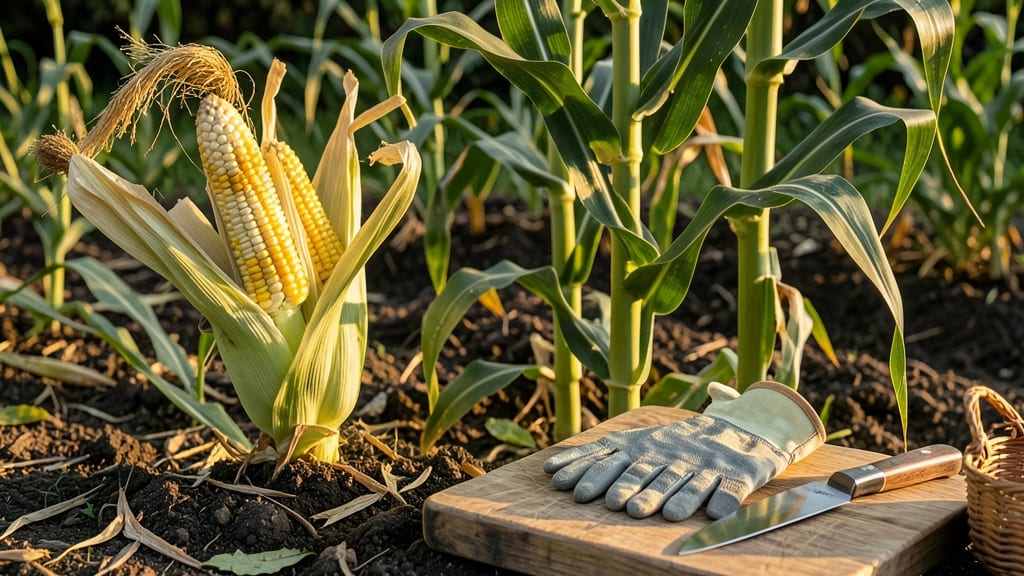
Harvesting corn at the right time means the difference between sweet, juicy kernels and tough, starchy ears — and the days to maturity vary wildly by variety, from 60 to 120 days after planting.
Picture this: you’ve waited months for your 🌽 to mature, only to pull an ear that’s either still hard or already turning woody. The key? Watching for the milk-stage — that creamy liquid inside the kernel — and the silk drying out to a crisp brown.
Miss these cues, and you’ll either waste your effort or end up with corn that’s past its prime.
But timing isn’t just about days on the calendar. Heat waves, heavy rain, or poor soil can speed up or slow down maturation, throwing off your harvest window. Even the right variety matters: sweet corn like ‘Silver Queen’ needs 70–75 days, while field corn can take twice as long.
Knowing these factors means you’ll never guess again.
In this guide, I’ll walk you through the exact visual and tactile tests to nail your harvest — from the finger-press method to kernel color shifts — so you can pull perfect ears every time, no matter your zone or variety.

Corn harvest timeline: days to maturity by variety & kernel color stages
Harvesting corn at the perfect moment transforms your garden into a treasure trove of sweet, juicy kernels. But timing is everything—wait too long, and you’ll get tough, starchy ears.
The key lies in understanding days to maturity for your specific corn variety and watching for kernel color shifts from white to yellow. Most gardeners rely on a mix of days after planting and visual cues like the milk-stage to nail the harvest window.
Sweet corn typically reaches harvest readiness between 60 to 100 days, depending on the variety. Early varieties like 'Silver Queen' can be ready in as few as 55 days, while heirlooms such as 'Country Gentleman' may take 110 days or more.
Meanwhile, popcorn and field corn follow different timelines—often 80 to 120 days—with a focus on kernel hardness rather than sweetness. Let’s break down the exact harvest windows by type and how to spot the ideal moment using kernel color and moisture clues.
🌽 Visual Cue #1: The Milk-Stage When you cut into a kernel and see a white, milky liquid (not clear or yellow), that’s your golden ticket. This milk-stage signals peak sweetness in sweet corn. For popcorn, the milk-stage is less critical—focus instead on the kernel’s hardness and denting (a slight dip at the top). Field corn, used for animal feed or ethanol, is harvested when kernels are fully dry and hard, often 30 to 45 days after denting.
| Variety Type | Days to Maturity | Harvest Cue | Kernel Color Shift |
|---|---|---|---|
| Sweet Corn (Early) | 55–70 days | Milk-stage liquid when cut | White → Creamy yellow |
| Sweet Corn (Mid-Season) | 70–90 days | Firm ears, silks browned | Cream → Golden yellow |
| Sweet Corn (Late) | 90–110+ days | Denting begins, kernels plump | Yellow with slight brown tips |
| Popcorn | 80–120 days | Dry kernels, black layer forms | White → Off-white/yellow |
| Field Corn | 100–130 days | Moisture <15%, black layer visible | Yellow → Golden-brown |
Pay close attention to the silks—those thread-like strands at the top of the ear. When they turn brown and dry, that’s your first sign the kernels are nearing maturity. For sweet corn, harvest within 2–4 days of the silks drying to avoid starchy kernels.
If you miss the window, the kernels will convert their sugars into starch, making them tough and less flavorful. Pro tip: Morning harvests keep corn crispest, as daytime heat accelerates sugar breakdown.
🌽 Kernel Color: The Final Check The shift from white to yellow in sweet corn kernels is your second visual cue. Start checking ears 5–7 days before the expected harvest date by slicing open a kernel. If it’s milky white, harvest today. If it’s clear or yellow, you’ve waited too long. Popcorn kernels, on the other hand, should be hard and dry with a slight dent at the top—this indicates they’re ready for popping. Field corn is harvested when the kernels are fully dry and the husk pulls back easily, revealing a black layer (the "hard mature" stage).
Don’t overlook the denting stage, where the kernel at the top of the ear develops a slight dip. This happens 20–30 days before harvest for sweet corn and is a critical marker for popcorn and field corn.
For example, 'Black Aztec' popcorn takes about 90 days to dent, followed by 30 more days to reach full maturity. Tracking this stage helps you anticipate harvest dates, especially if you’re growing multiple varieties simultaneously.
A simple harvest journal with planting dates and denting observations can save you from guesswork next season.
Extreme weather can throw off your harvest timeline. Hot, dry conditions may speed up maturation, while cool, wet springs can delay it by 1–2 weeks. If your area experiences unexpected heatwaves, check ears 3–5 days early—sweet corn can go from perfect to starchy in a flash.
Conversely, if temperatures dip below 50°F (10°C), growth slows, and you might need to extend your harvest window. Always adjust your expectations based on your local frost dates and soil moisture
How to test for perfect corn ripeness: the milk-stage & finger-press method
Harvesting corn at the right moment transforms your garden into a treasure trove of sweet, juicy kernels—but wait too long, and you’ll end up with tough, starchy ears. The milk-stage and finger-press test are my go-to methods for pinpointing perfection.
These simple tricks reveal when kernels are packed with natural sugars and moisture, ensuring your harvest shines at the dinner table.
The milk-stage is your first clue: when you cut open a kernel, a milky white liquid should ooze out. This isn’t just water—it’s the sweetness reservoir that makes corn irresistible. If the liquid is clear or the kernels feel hard, they’re past their prime.
Pair this with the finger-press method, and you’ll never guess again whether your corn is ready.
Step-by-Step Ripeness Test
-
Step 1: Check the Silks
Look for brown, dry silks (the thread-like strands). If they’re still green or damp, wait 2-3 more days.
-
Step 2: Test the Kernel Milk-Stage
Cut the husk back and slice open a kernel. A milky white liquid means it’s ready. No liquid? Wait another 1-2 days.
-
Step 3: Perform the Finger-Press
Gently squeeze an ear. It should feel firm but not rock-hard. If it’s soft or doughy, it’s underripe; if it’s hard, it’s overripe.
-
Step 4: Inspect the Tip
The kernel tips should be plump and rounded. Shriveled tips mean the ear is past its peak.
-
Step 5: Harvest in the Morning
Corn tastes sweetest when harvested early in the day (before 10 AM) after the dew has dried.
✅ Pro Tip: Harvest every 2-3 days once ears reach maturity to avoid missing the sweet window.
One of the biggest mistakes I see is relying solely on days to maturity (e.g., 75 days for sweet corn) without checking the plant. Weather plays a huge role—hot days can speed up ripening, while cool nights slow it down.
Always cross-reference the milk-stage and finger-press test with the calendar for foolproof results.
If your corn feels too soft or the kernels are still hard, don’t panic. Sweet corn varieties like ‘Silver Queen’ or ‘Peaches and Cream’ often need that extra day or two.
For popcorn, wait until the husk is fully dry and the kernels rattle when shaken—this means they’re ready for popping, not eating fresh.
Once you master these tests, you’ll never again sacrifice sweetness for convenience. The milk-stage and finger-press method are your secret weapons for garden-fresh corn that rivals store-bought—and then some. Happy harvesting! 🌽