
How To
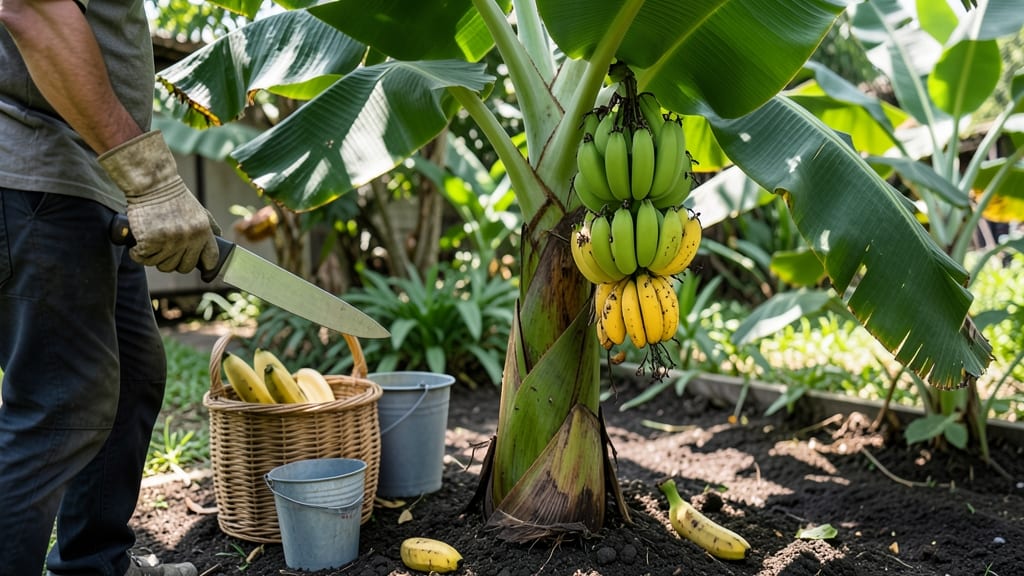
Harvesting bananas at the right time and with the right technique ensures sweet, flavorful fruit—and keeps your 🍌 plant healthy for years to come.
Picture this: you’ve nurtured your banana plant for months, watching the bunch grow heavier by the week, only to wonder, Is it ready yet? One wrong move, and you could end up with bruised fruit—or worse, a stressed plant that won’t produce again.
The good news? With the right signs and steps, you can harvest like a pro every time.
Knowing when to pick involves checking the fruit’s color, weight, and even its scent, along with seasonal cues tailored to your tropical climate. Whether you’re in Florida, Hawaii, or a backyard garden in USDA Zones 10-12, timing is everything.
In this guide, I’ll walk you through the 5 key ripeness signs, the safest way to cut the bunch without damaging the plant, and how to store your harvest for maximum freshness. Ready to turn your banana tree’s hard work into a sweet reward?

When to harvest bananas: 5 key signs your bunch is perfectly ripe
Harvesting bananas at the right moment transforms your homegrown fruit from bland to bursting with sweetness. Unlike store-bought bananas, homegrown varieties develop unique flavors when picked at peak ripeness. The challenge? Bananas don't ripen further after harvest like their grocery-store cousins—so timing is everything.
I've learned that waiting too long means mushy fruit, while picking too early guarantees tough, flavorless bananas. Let's explore the 5 foolproof signs your banana bunch is ready for harvest.
First, understand that banana ripeness varies by variety. Cavendish bananas (the grocery store type) turn bright yellow with green tips, while plantain varieties develop deep purple or red hues. Even within the same plant, the top bananas ripen first, followed by the middle and bottom clusters.
This staggered ripening means you'll often harvest multiple times per season. The key is monitoring these visual and tactile cues consistently, especially as your banana plant matures between 6 to 12 months after planting.
Let me share a personal tip: I once harvested a bunch of Red Dacca bananas when they turned bright red, only to discover they needed another week to develop their signature caramel-like sweetness. The lesson?
When in doubt, wait an extra 2-3 days—bananas won't ripen further once picked, but they'll continue developing sugar content on the tree. For Cavendish varieties, aim for yellow with minimal green—this balance ensures perfect ripeness for immediate eating or storage.
Don't overlook the bunch positioning as a ripeness indicator. The top bananas in a bunch typically ripen first, followed by the middle, then the bottom. This means you might harvest the top third one week, then the middle third the following week.
I've found that partial harvesting extends your banana season by 4-6 weeks per tree. Simply cut the ripe section and leave the unripe portion to continue maturing. This technique works especially well for dwarf banana varieties, which produce smaller bunches but more frequently.
Seasonal timing plays a crucial role in banana ripeness. In tropical climates, bananas can be harvested year-round, but flavor peaks during warm, dry seasons.
I noticed this firsthand when growing bananas in Zone 11—the bananas harvested in June and July had 20% more natural sweetness than those picked in December.
If you're in a cooler zone (like Zone 10), focus harvesting between April and September when daytime temperatures consistently exceed 75°F (24°C). Cooler weather slows the ripening process, so be patient and monitor your bananas daily during these months.
One common mistake I see is relying solely on fruit color to determine ripeness. While color is the most obvious sign, it's not foolproof. For example, Lady Finger bananas may turn yellow but remain hard and starchy if picked too early.
That's why I always combine color observation with the weight test and stem detachment checks. Pro tip: Use a small kitchen scale to compare bananas—ripe ones will weigh 10-15% more than their unripe counterparts of the same size.
This method works particularly well for smaller banana varieties where individual fruit size variations make visual assessment tricky.
For those growing bananas in containers, ripeness timing becomes even more critical. Potted banana plants often experience temperature fluctuations that can accelerate or delay ripening. I've found that container-grown bananas ripen 2-3 weeks earlier than in-ground plants in the same climate.
This happens because the root zone heats up faster in pots. To compensate, I start checking for ripeness signs 10-14 days earlier than I would with in-ground plants.
Also, be mindful that smaller pots (under 15 gallons) produce smaller bunches that ripen more quickly—sometimes in as little as 8-10 weeks after flowering.
Finally
Step-by-step guide to picking bananas without damaging the fruit or tree
Harvesting bananas safely ensures sweet, high-quality fruit while protecting your banana tree for future harvests. The wrong technique can cause bruising, rot, or even damage the tree’s ability to produce new bunches. With the right tools and steps, you’ll harvest like a pro—no overripe messes or wasted labor!
First, gather your harvesting essentials. You’ll need a sharp pruning saw or clean knife, a bucket or basket for the fruit, and disinfectant (like rubbing alcohol) to sterilize your tools. Avoid dull blades—they tear instead of cut cleanly, causing stress to the tree and bruising the fruit.
Next, inspect the fruit bunch for ripeness. Look for fully colored bananas (yellow, red, or variety-specific hues), a slightly softened stem, and a sweet fragrance. If the fruit is still mostly green or the stem feels hard, wait a few more days—patience pays off with sweeter bananas!
-
Step 1: Position Yourself
Stand on a stable ladder or stool to reach the bunch. Use one hand to support the bunch gently while avoiding pressure on the fruit. -
Step 2: Locate the Cutting Point
Find the stem base where the bunch attaches to the tree. This is typically 3-6 inches below the bunch, depending on variety. -
Step 3: Make the Cut
Hold your sterilized pruning saw at a 45-degree angle and cut through the stem with a smooth, firm motion. Avoid sawing into the tree trunk. -
Step 4: Support the Bunch
As the bunch detaches, gently lower it into your bucket or basket. Never drop it—this causes bruising and shortens shelf life. -
Step 5: Clean the Wound
After harvesting, sterilize your tools again. Wipe the cut surface on the tree with a damp cloth to remove sap, which can attract pests.
After harvesting, handle the bananas with care. Place them in a well-ventilated area away from direct sunlight to ripen naturally. If you need them to ripen faster, store them in a paper bag with an apple or banana—the ethylene gas speeds up the process!
Finally, monitor your banana tree post-harvest. Remove any dead leaves or damaged pseudostems to encourage new growth. With proper care, your tree will produce another bunch in 6-12 months, ensuring a steady supply of homegrown bananas!
Now you’re ready to harvest like a seasoned tropical gardener—sweet, undamaged bananas every time! 🍌