
How To
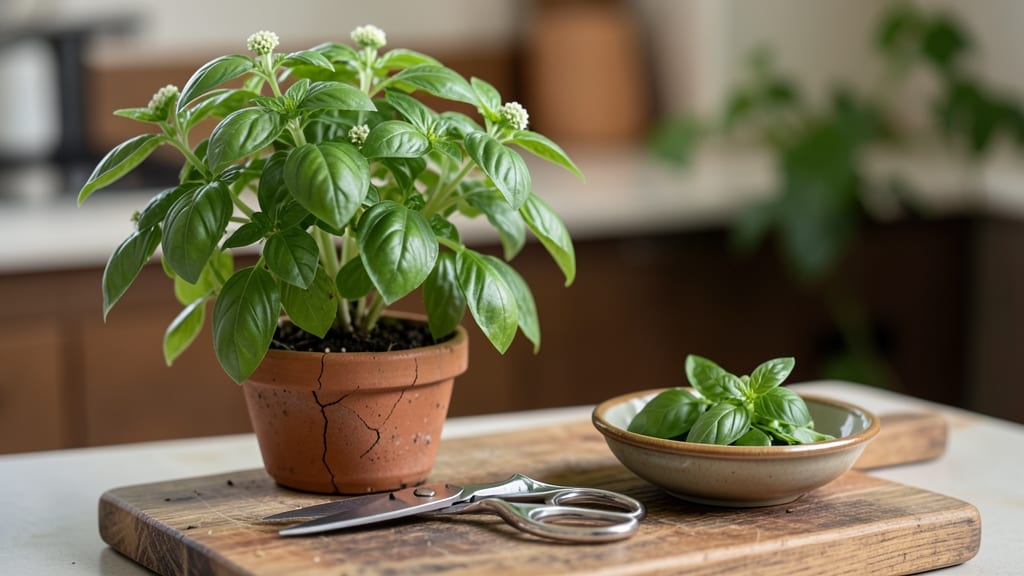
Harvesting fresh basil the right way keeps your plants thriving and your dishes packed with flavor 🌿 — and it’s easier than you think.
Picture this: You’ve spent weeks nurturing your basil, only to grab a handful of leaves and watch the plant bolt to flowers overnight. That’s the fast track to bitter stems and wasted effort. The secret? Pinching leaves before they flower and cutting stems properly to encourage bushier growth.
You don’t need a green thumb to master this — just a pair of clean scissors and a few minutes each week. Below, I’ll walk you through the exact when, how, and why of harvesting, plus tips to stretch your basil’s harvest season from June through October.
Whether you’re growing basil in pots on your windowsill or in garden beds, these steps will help you avoid common mistakes and keep your plants producing flavorful leaves for months.

When and how to pinch basil leaves for continuous growth and flavor
Harvesting basil at the right time and with the right technique is the secret to a bushy, flavorful plant that keeps producing all season.
When you pinch leaves correctly, you encourage new growth while preventing the plant from flowering too soon—because once those blooms appear, the leaves turn bitter and lose their signature taste.
The key is timing: start pinching when your basil reaches 6-8 inches tall and has at least 6-8 pairs of leaves.
Most gardeners make the mistake of cutting leaves individually, which weakens the plant over time. Instead, we use a pinching method that stimulates branching. This technique isn’t just about harvesting—it’s about shaping your plant for maximum yield.
Think of it like giving your basil a haircut: you’re removing the top growth to encourage thicker, fuller foliage. The best part? You can do this every 2-3 weeks throughout the growing season.
How to Harvest Fresh Basil: Step-by-Step Pinching Guide
- 1 Wait for the right size: Pinch when basil reaches 6-8 inches tall with 6-8 leaf pairs. Look for vibrant green leaves and upright stems.
- 2 Use clean scissors or fingers: Snip or pinch the top set of leaves just above a leaf node (where leaves meet the stem). Avoid cutting into woody stems.
- 3 Remove flower buds immediately: If you spot tiny flower buds, pinch them off right away. Flowers signal the end of the flavorful growth phase and trigger bitterness.
- 4 Harvest in the morning: Pick leaves when they’re cool and dew-covered (before 10 AM). This ensures peak flavor and freshness for cooking.
- 5 Repeat every 2-3 weeks: Continue pinching new top growth to maintain a bushy shape. Avoid removing more than 1/3 of the plant at once.
Pro Tip: Use the pinched leaves in pesto, salads, or homemade tomato sauce for instant flavor!
Timing is everything when it comes to basil harvesting. The optimal window is between 6-8 weeks after planting, when the plant is mature but hasn’t started flowering. If you wait too long, the leaves become woody and bitter, and the plant’s energy shifts from growth to reproduction.
I like to check my basil plants weekly in spring and bi-weekly in summer to stay ahead of flowering.
You’ll know it’s time to harvest when the leaves are 2-3 inches long and the plant has a strong, aromatic scent. At this stage, the stems should feel firm but flexible—not brittle.
If you see tiny yellow flowers forming, it’s already too late for that branch. The good news? Pinching encourages new side shoots to grow, giving you a second chance for flavorful harvests.
For container-grown basil, the same rules apply, but you’ll need to be even more precise. Since pots have limited space, over-harvesting can stress the plant. I’ve found that pinching every 3 weeks in containers keeps them producing without crowding.
If your basil starts looking leggy or sparse, it’s a sign you’ve been harvesting too aggressively. Give it a light fertilizer and more sunlight to bounce back.
One common question I get is whether to pinch or cut basil. The answer depends on your goal: Pinching (using fingers) is best for encouraging bushiness, while cutting stems (with scissors) is better for heavy harvests.
If you’re making pesto or need a lot of leaves at once, cut the main stem just above a leaf node. For everyday use, pinching is gentler and keeps the plant thriving longer.
Don’t forget to rotate your harvesting spots if you have multiple basil plants. This prevents uneven growth and ensures all parts of the plant get equal sunlight. I like to start with the outer leaves first, working my way inward.
This mimics natural shade patterns and keeps the center of the plant lush and green. Over time, your basil will develop a full, symmetrical shape that’s perfect for both cooking and decorating your garden.
If your basil starts to bolt (flower), don’t panic. Simply prune the flower stems
Common harvesting mistakes that ruin basil flavor and plant health
Even the most attentive gardeners can accidentally sabotage their basil harvest by making common mistakes. Over-harvesting, cutting stems incorrectly, or ignoring flowering signals can turn your fragrant herb into a bitter, woody mess. These errors don’t just affect flavor—they can permanently damage your plant’s health and reduce future yields.
One of the biggest culprits is harvesting at the wrong time. If you wait until flowers appear, your basil will start producing bitter compounds, and the plant may even stop growing new leaves.
The key is to act before the plant shifts its energy from leaves to blooms. But timing isn’t the only factor—how you cut the stems matters just as much.
⚠️ WARNING: Irreversible Damage Ahead ⚠️
✂️ Cutting Wrong: The Silent Killer of Basil
Never cut stems too close to the base—this removes the plant’s growth points and stunts future harvests. Always leave at least 1-2 inches of stem above the next set of leaves. Cutting too low also invites disease by exposing the stem to rot.
✅ Do: Use clean, sharp scissors or fingers to pinch stems just above a leaf node.
❌ Don’t: Shear the top of the plant or cut into woody stems—this stresses the plant and reduces flavor.
Another frequent mistake is over-harvesting in one session. If you take too many leaves at once, your basil plant may struggle to recover, leading to leggy growth or even death. A good rule of thumb is to never remove more than one-third of the plant in a single harvest.
This ensures the plant retains enough energy to keep producing new leaves.
Ignoring the plant’s signals is another silent killer. Basil sends clear cues when it’s time to harvest—vibrant green leaves, sturdy stems, and a strong aroma are all signs of readiness.
But if you miss these signals and let the plant flower, the leaves will turn bitter and the plant may stop producing new growth entirely.
Finally, improper storage can ruin freshly harvested basil faster than any harvesting mistake. Leaving basil in the sun, storing it in a sealed container, or keeping it too long in the fridge all accelerate spoilage.
Instead, wrap stems in a paper towel, place them in a loose plastic bag, and store them in the fridge for up to a week—or freeze them for longer-term use.
To keep your basil thriving, remember these key takeaways: harvest before flowering, cut stems correctly, avoid over-harvesting, and store leaves properly. With these habits, you’ll enjoy a continuous supply of sweet, aromatic basil all season long. 🌿