
Vegetables
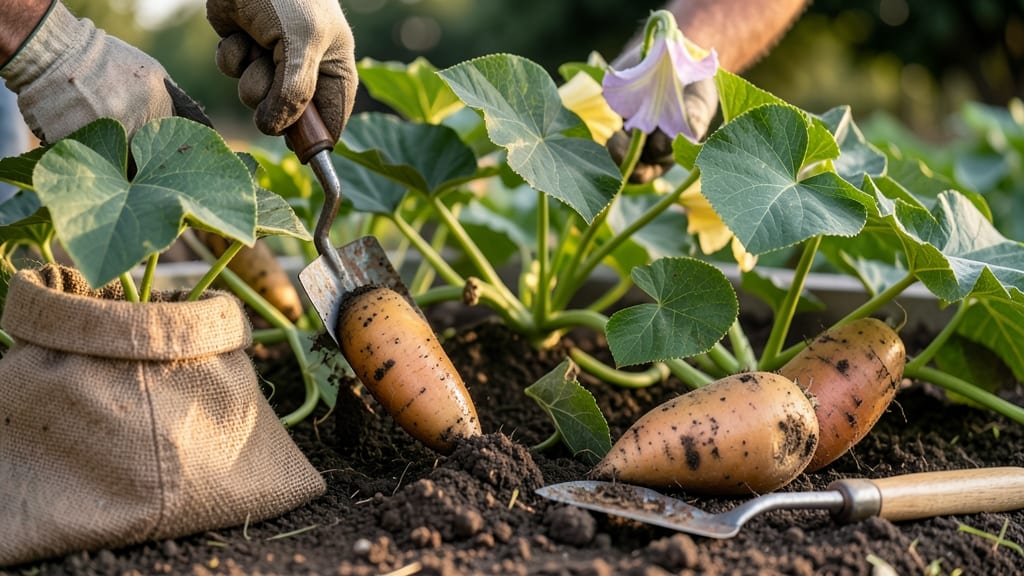
Harvesting sweet potatoes in Texas at the right time means the difference between a sweet, starchy treasure and a bitter, fibrous disappointment 🍠 — and missing that window can cost you the whole crop.
Texas gardeners know these tubers thrive in the heat, but extreme summer temperatures or a late harvest can ruin them. The key is watching for three clear signs: leaf yellowing, the slip-skin test, and deep color development.
In zones 8a-11, most varieties like Beauregard and Jewel reach harvest readiness between October and December, but heatwaves or early frosts can throw off timing. Below, I’ll walk you through the exact cues to dig—plus how to adjust for Texas’ unpredictable fall weather.
You’ll learn when to pull them for peak sweetness, how to store your harvest, and why waiting too long turns your potatoes into tough, woody messes. No more guesswork—just a foolproof plan for Texas gardens.

How to determine sweet potato harvest time using the slip-skin test
Texas gardeners know sweet potatoes thrive in our long, hot summers—but knowing when to harvest is the real challenge. The slip-skin test is your secret weapon for perfect timing.
This method combines leaf color, vine health, and a simple tactile check to ensure you dig up sweet, starchy tubers instead of bitter, underdeveloped ones.
First, watch for yellowing vines and dry foliage as your first clues. When about 60-70% of leaves turn yellow and start dying back, it’s time to investigate further. This usually happens 90-120 days after planting, but Texas heat can speed this up—sometimes as early as 80 days in South Texas.
Here’s where the slip-skin test comes in: gently dig near the plant’s base and look for a slip—a thin layer of skin that peels away from the tuber. This indicates the sweet potato is mature and ready.
If no slip forms, wait another week and check again. False positives happen when soil is too dry or tubers are still growing.
The slip-skin test works because sweet potatoes develop a protective layer as they mature. When this layer separates easily from the tuber, it’s your cue to harvest.
For Texas gardeners, this usually aligns with late September to October, but early frosts in North Texas can push it to mid-November.
| Sign | Ready for Harvest? | Texas Timing | Action |
|---|---|---|---|
| Green stem end | No | Early season (before 90 days) | Wait 1-2 weeks |
| Yellow stem end | Yes | 90-120 days (Sept-Oct) | Harvest immediately |
| Soft skin (no slip) | No | Early or dry soil | Water deeply, wait 1 week |
| Firm skin with slip | Yes | Late season (Oct-Nov) | Harvest and cure |
| Dry, crisp leaves | Yes | Post-frost (North TX) | Harvest before frost |
If you’re in South Texas, where frost is rare, focus on the slip-skin test and leaf color—these are more reliable than calendar dates. In North Texas, however, early frosts can force an earlier harvest. If temperatures drop below 30°F, dig up tubers immediately to prevent damage.
For false positives, dry soil is the biggest culprit. If the slip-skin test fails, water the soil deeply for 3-5 days before retesting. Overwatering can also trick you—if tubers are waterlogged, they’ll slip too early, leading to small, fibrous roots. Aim for consistent moisture without soggy soil.
Once you’ve confirmed readiness, harvest on a dry, sunny day to speed curing. Use a fork or shovel to avoid damaging tubers, then let them cure in a warm (80-85°F), humid (80-90%) space for 10 days.
This step enhances sweetness and storage life—critical for Texas gardeners who want tubers to last through winter.
Pro tip: Label your varieties if growing multiple types. Beauregard and Jewel, two Texas favorites, have slightly different harvest windows—Beauregard matures 5-7 days earlier than Jewel. Always check the slip-skin test for each variety separately to avoid missing the window.
Timing your harvest with the slip-skin test ensures you get the sweetest, starchy sweet potatoes possible. Skip this step, and you risk a harvest of small, bitter tubers or ones that spoil quickly. For Texas gardeners, mastering this test means bigger yields and longer storage—worth every minute of effort!
Texas heatwave timing: when to avoid harvesting for maximum sweetness
Texas summers can push temperatures past 100°F for weeks, and these extreme conditions throw off sweet potato harvest timing. When heatwaves linger, your tubers may develop woody textures or bitter flavors instead of the sweet, starchy goodness you crave.
The key is understanding how to adjust harvest timing based on heat patterns and vine health.
Most Texas gardeners plant sweet potatoes between March and June, with harvest windows opening in October-December. However, if summer heat stretches into September or October, your plants may struggle to recover.
Heat stress forces the plant to prioritize survival over tuber development, leading to smaller, less flavorful yields.
Here’s the critical rule: Never harvest during peak heatwaves (above 95°F for 3+ days). The stress of digging in extreme heat can damage tubers, making them prone to rot or sunburn. Instead, time your harvest for early mornings or late afternoons when temperatures drop below 85°F.
⚠️ Heatwave Harvest Warning
Harvesting during 100°F+ heat triggers:
- 🔥 Sunburned skins (gray/white patches)
- 💧 Accelerated spoilage (30% faster rot risk)
- 🌡️ Bitter, dry flesh (lost sweetness)
Solution: Wait for vines to yellow (sign of maturity) and temperatures to drop below 85°F before digging. If heat persists, harvest late-season varieties (like Beauregard) first—they’re more frost-tolerant.
For late-season harvests in North Texas (where first frost hits by November 30), focus on varieties like Jewel or Centennial, which handle cooler temps better. In South Texas (where frost comes December 15+), you’ve got more flexibility—but still avoid harvesting after October 15 if heatwaves linger.
Pro tip: Use row covers or shade cloth in late summer to protect vines from extreme heat. This keeps plants healthy longer, giving tubers more time to develop sweetness before harvest. Mulch with straw or grass clippings to insulate roots and maintain even soil temps.
If you must harvest during a heatwave (e.g., an unexpected frost warning), dig only the largest tubers and cure them immediately in a 80-85°F space for 5-10 days. Smaller tubers left in the ground will shrink and toughen in the heat, making them unusable.
Prioritize peak-season harvests when temps are mild—your taste buds (and storage bin) will thank you.