
How To
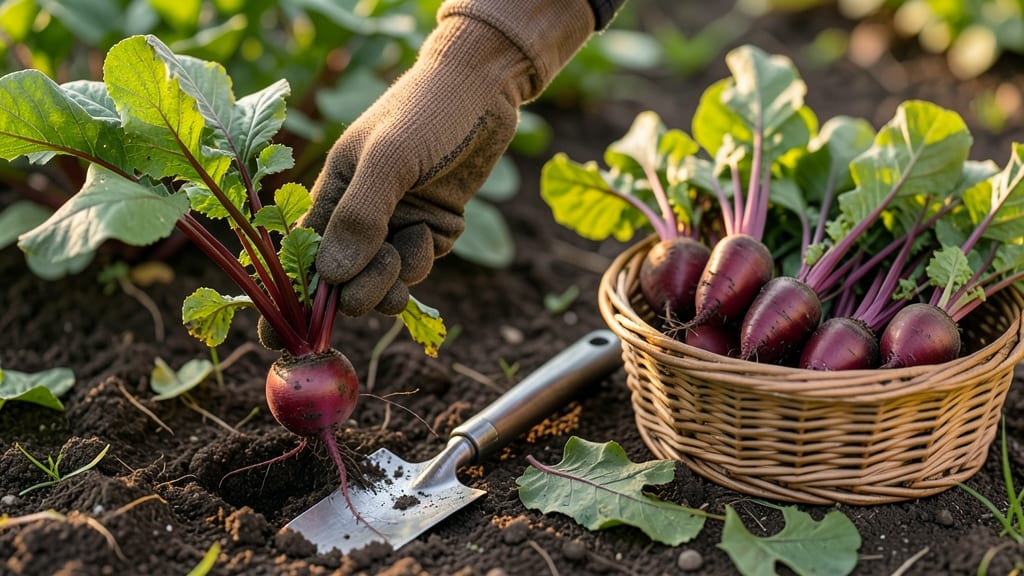
Knowing when to harvest beets 🍠 at their sweetest and most tender is all about timing—and missing the window means tough, woody roots or underripe flavor.
You could wait too long and end up with beets that are hard as a rock, or pull them too soon and miss out on that perfect balance of sweetness and earthiness.
The key is watching for three simple but critical visual cues that tell you exactly when to grab your gardening fork.
Most gardeners assume you harvest beets when they’re fully grown, but the truth is, baby beets (just 1–2 inches wide) are often sweeter and more delicate—ideal for salads or quick cooking. Meanwhile, mature beets (2–3 inches) develop deeper flavor for roasting or pickling.
Below, I’ll walk you through the exact signs to look for—from leaf color to root size—and how to test tenderness without cutting into your harvest. By the end, you’ll never guess again.

3 Visual cues to harvest beets at peak sweetness
Beets reach their peak sweetness when harvested at the right moment—but many gardeners struggle to spot the perfect signs. Unlike some vegetables, beets don’t ripen after picking, so timing is everything. If you harvest too early, they’ll be tough and watery; too late, and they become woody or fibrous.
The key lies in three visual cues that reveal when your beets are ready to pull from the soil.
First, let’s clarify the difference between baby beets (harvested young) and mature beets. Baby beets are typically pulled when they’re 1–2 inches in diameter, while mature varieties reach 2.5–3 inches. Both require the same visual checks, but the size thresholds differ slightly.
For example, ‘Detroit Dark Red’ beets are best when 2–3 inches wide, while ‘Baby Golden’ varieties shine at just 1 inch.
Now, let’s dive into the three foolproof indicators that tell you it’s time to harvest. These cues work for all beet varieties—whether you’re growing red, golden, or striped types—and they’ll help you avoid the common mistake of harvesting too late, which ruins the tender texture and sweet flavor.
- 🔹 1. Leaf Color & Size: Healthy deep green leaves, 4–6 inches tall, with no yellowing or wilting. For baby beets, leaves should be half this size.
- 🔹 2. Root Diameter: Gently brush away soil to check root size. Baby beets: 1–2 inches wide. Mature beets: 2.5–3 inches wide.
- 🔹 3. Soil Resistance: Press gently on the soil near the beet. If the root resists slight pressure (like a firm potato), it’s ready. Soft soil = underripe.
Let’s break down the first cue: leaf color and size. Healthy beet greens should be vibrant and deep green, not pale or yellowing. If the leaves are sparse or wilted, your beet is either underwatered or overripe.
For baby beets, aim for leaves about 2–3 inches tall, while mature varieties should have leaves reaching 4–6 inches. Pro tip: If the leaves start flowering, your beets are past their prime—harvest immediately to avoid bitterness.
The second visual clue focuses on root diameter, which is the most reliable indicator of sweetness. Use your fingers to gently brush away soil around the beet’s base. For baby beets, the root should be about the size of a golf ball (1–2 inches wide).
For mature varieties like ‘Chioggia’ or ‘Bull’s Blood,’ wait until the root reaches 2.5–3 inches in diameter. If the root feels soft or shrinks back when exposed, it’s not ready yet.
Finally, the soil resistance test is a game-changer for beginners. Press your thumb gently into the soil near the beet’s crown. If the root pushes back slightly and feels firm, it’s ready to harvest. Soft soil means the beet is still growing, while overly hard soil could indicate drought stress.
This test works best in the morning when soil moisture is consistent. Remember: Beets store starches (which convert to sugar) during the day, so harvesting in the morning ensures the sweetest flavor.
Timing matters just as much as visual cues. For spring-planted beets, aim to harvest 50–60 days after sowing, while late-summer varieties take 60–70 days. If you’re growing beets for winter storage, let them mature fully (3+ inches) before harvesting.
Pull them in the morning on a cool day to preserve sweetness and tenderness. After harvesting, trim the greens and store the roots in a cool, dark place for up to 2 weeks.
One common mistake is waiting too long for beets to grow larger, thinking bigger means sweeter. In reality, overgrown beets become woody and lose their tender texture. If you notice the leaves turning yellow or the roots developing a rough texture, it’s a sign you’ve missed the window.
The good news? Beets are one of the few vegetables that don’t continue ripening after harvest, so timing is everything.
To maximize your harvest, consider successive planting. Sow beet seeds every 2 weeks in spring and again in early summer for a continuous supply. This way, you’ll always have beets at the perfect harvest stage.
And if you’re growing multiple varieties, keep a small harvest journal to track which types reach peak sweetness fastest—some, like ‘Golden’ beets, mature quicker than deep red varieties.
Now that you’re equipped with these three visual cues, you’ll never guess when to harvest beets again. The next time you’re in your garden, take a moment to check the leaves, measure the roots, and test the soil resistance.
Your taste buds—and your dinner table—will thank you for the perfectly sweet, tender beets you’ll pull from the earth. Happy harvesting! 🌱
How to test beet tenderness before harvesting (without cutting)
Testing beet tenderness without cutting is a game-changer for gardeners who want to avoid accidentally harvesting underripe or overmature roots. The key lies in two simple, non-destructive methods: the finger squeeze test and the soil probe method.
These techniques help you gauge readiness without damaging your plants or wasting potential harvests.
Many gardeners make the mistake of harvesting beets based solely on days since planting or leaf size. However, soil conditions and root development vary widely depending on your climate and growing conditions. By mastering these tests, you'll consistently harvest beets at their peak flavor and texture—no guesswork required.
The finger squeeze test is the easiest way to check beet readiness. Gently press your thumb and forefinger into the soil about 1-2 inches from the beet's base.
If the root feels firm but slightly yielding (like a ripe avocado), it's ready. Avoid pressing too hard—you don't want to bruise the beet.
For the soil probe method, use a pencil or small stick to gently probe the soil around the beet. If the stick meets resistance at 1-3 inches deep and the surrounding soil feels slightly compacted, the beet has reached ideal size.
This method works best in loose, well-drained soil where roots can develop evenly.
Avoid these common mistakes: harvesting when soil is too dry or waterlogged, testing beets in direct sunlight (which can make roots feel firmer than they are), or relying solely on leaf size.
Even lush greens can hide underdeveloped roots, while small leaves might belong to fully grown beets in rich soil.
With practice, these methods become second nature. Start testing beets when they're about 45 days old, and you'll quickly learn to recognize the perfect moment to harvest. The result? Beets that are sweet, tender, and bursting with flavor—every time.