
How To
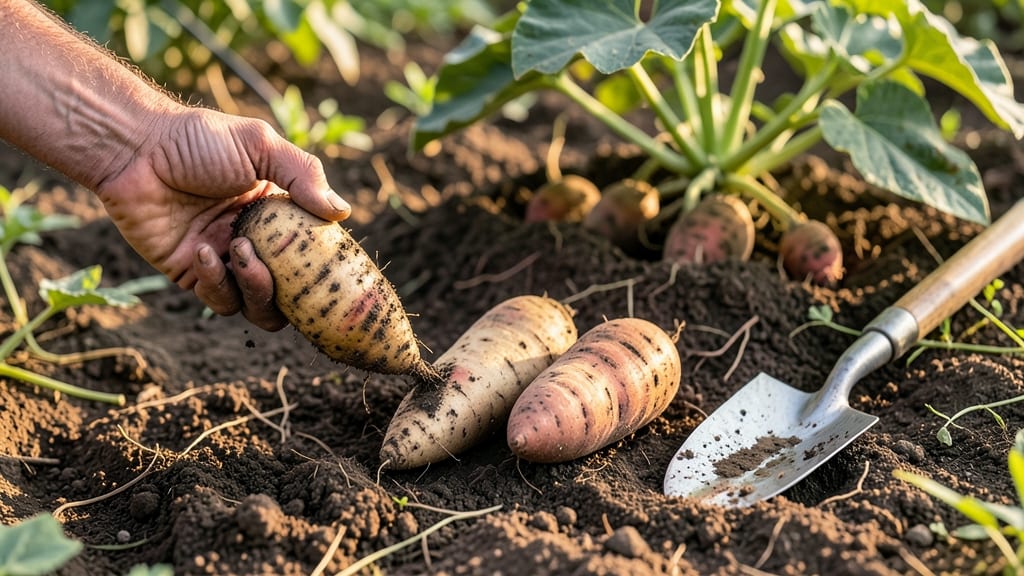
Knowing when to harvest sweet potatoes 🍠 depends on three key signals: vine dieback, skin firmness, and tuber size—get them wrong, and you lose flavor or yield.
Sweet potatoes left in the ground too long become woody and lose their sweet flavor, while harvesting too early means small, underdeveloped tubers—getting the timing right is the key to a bountiful harvest.
Most gardeners wait until the foliage yellows and dies back, but that’s just the start. The real test is the skin slip method, where the skin peels away easily when you gently tug it.
Combine that with a firm tuber and deep color, and you’ve got the perfect harvest window.
Below, I’ll walk you through the exact steps to check your crop, plus how to handle storage so your sweet potatoes stay sweet and last all winter.

The skin slip test: the most reliable way to harvest sweet potatoes
Harvesting sweet potatoes at the perfect time ensures maximum sweetness and optimal texture. The skin slip test is my go-to method because it gives a clear, hands-on signal that your tubers are ready. Unlike guessing by days or leaf color, this test lets you physically verify maturity before digging.
I’ve used it for years, and it’s saved me from harvesting too early or leaving potatoes in the ground too long.
Before you dig, understand what the test reveals: a slippery skin means the tuber’s cork layer has fully developed, which is crucial for storage. If the skin doesn’t slip, your potatoes might still need time—or worse, they could be overmature and woody.
Let’s break down how to perform the test correctly and what to do if something goes wrong.
- 1 Choose a healthy vine with at least 3-4 mature leaves. Avoid vines near the plant’s edges, as they may produce smaller tubers.
- 2 Gently grasp a vine about 6 inches from the base. Use your thumb and forefinger to pinch the stem lightly—this won’t harm the plant.
- 3 Slide your fingers down the vine toward the soil. If the skin slips easily (like a banana peel), the tuber below is ready. If it resists or feels rough, wait 1-2 weeks.
- 4 Test 3-5 vines for accuracy. Sweet potatoes often mature at different rates, so check multiple spots in your patch. If 70% slip, it’s time to harvest.
- 5 Dig carefully with a fork or hands (no sharp tools!) to avoid piercing the tubers. Loosen soil in a spiral pattern around the plant.
If the skin doesn’t slip after testing multiple vines, don’t panic. This could mean your potatoes need 1-2 more weeks to mature, especially if your growing season is short. However, if you’re in Zone 6a or colder and frost is approaching, harvest anyway—frost-damaged tubers won’t store well.
In this case, prioritize saving what you can and plan to cure and store them immediately.
Overwatering or compacted soil can also cause the skin to feel rough or sticky, even when tubers are ready. If your soil is heavy clay or you’ve had recent heavy rains, the skin might not slip smoothly.
To fix this, reduce watering 1-2 weeks before testing and gently loosen the soil with a hand fork to improve drainage. This adjustment can make a big difference in how the skin feels.
One common mistake I see is testing too early in the season. Sweet potatoes typically need 90-120 days to mature, depending on the variety. If you’re growing Beauregard or Georgia Jet, for example, don’t expect the skin to slip before 105 days from planting.
Patience is key—rushing the harvest leads to small, underdeveloped tubers with poor flavor.
Once you’ve confirmed the skin slips, harvest on a dry, sunny day to let the tubers dry slightly before curing. Avoid harvesting after rain, as wet soil can introduce rot during storage. After digging, brush off excess dirt but leave a little soil on the skin to protect it.
Then, move to a warm, humid space (80-85°F) for 5-10 days to cure—this step is non-negotiable for sweetness and storage life.
Pro tip: If you’re unsure whether to harvest, dig up one tuber as a test. Cut it open to check for firm, dry flesh and a deep color.
If it’s still pale or moist inside, give your potatoes more time. This test gives you instant feedback without risking your entire crop.
Remember, the skin slip test is a dynamic process. Conditions like soil moisture, temperature, and even variety differences can affect timing. Keep a harvest journal to track what works best in your garden.
Over time, you’ll develop an instinct for when your sweet potatoes are perfectly ripe—just like a pro!
Signs vine dieback and soil conditions signal harvest time
Your sweet potato vines turning yellow and wilting isn't a sign of failure—it's nature's way of telling you it's time to harvest. When 90% of the foliage dies back, the plant redirects energy to the tubers below ground, signaling they've reached peak sweetness and size.
This process typically occurs 90-120 days after planting, but exact timing depends on your climate zone and variety.
Pay close attention to soil temperature as a secondary cue. Sweet potatoes thrive in warm soil, and when temperatures drop below 55°F (13°C), growth slows dramatically. In colder regions like USDA Zone 6a, this often coincides with the first frost warnings in late October or November.
If frost is imminent, harvest immediately—even if the vines aren't fully dead—to prevent tuber damage.
Plant stress from drought or overwatering can also trigger premature vine dieback, but the tubers may not be fully developed. Check for consistent moisture (not soggy soil) and avoid watering 1-2 weeks before harvest to let the skins toughen. Stressed plants often produce smaller yields, so prioritize balanced care throughout the growing season.
Harvesting early gives you smaller but sweeter tubers ideal for quick recipes, while waiting for full vine dieback maximizes yield and storage potential. However, if your growing season is short (like in Zone 6a), prioritize harvesting before the first frost—even if the vines aren't fully dead.
Unearthed tubers can survive light frosts if cured properly, but prolonged cold turns them mushy.
For longer storage, aim to harvest when 75-90% of vines have died back. This balance ensures tubers are large enough to store but haven't lost sweetness. After harvest, cure them for 5-10 days in a warm (80-85°F), humid space to develop skin toughness and sweetness.
Avoid harvesting when soil is wet, as this increases disease risk and bruising.
If you're unsure whether to harvest, dig up one test tuber from a non-flowering vine. A ready tuber will have a firm skin that slips easily when rubbed between your fingers—a telltale sign of harvest readiness. This method lets you adjust your timing without risking the entire crop.