
How To
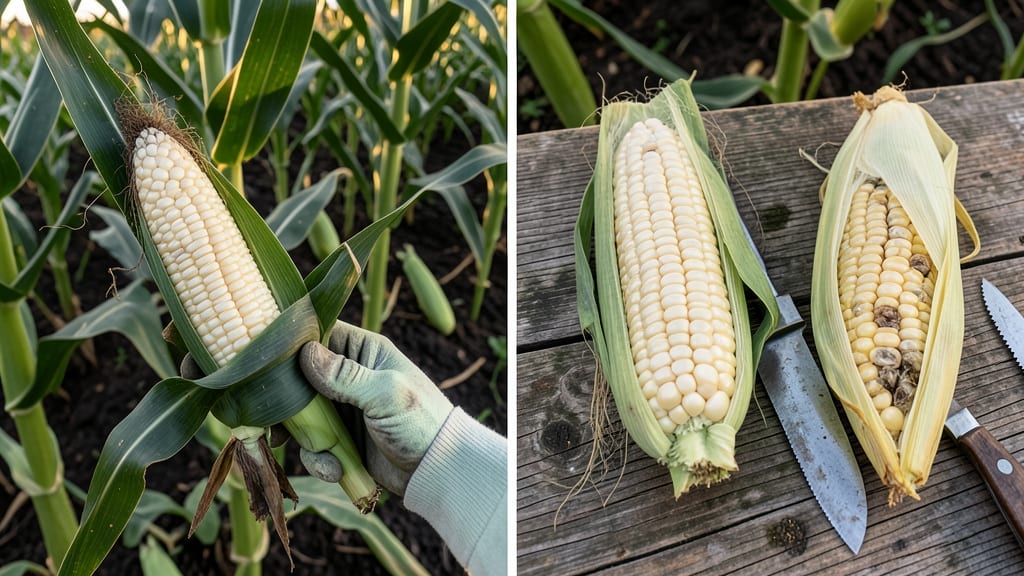
To know when to pick sweet corn, watch for three key signs: browned silks, plump kernels, and a milky-white interior 🌽—because missing this window means tough, starchy ears instead of tender perfection.
Sweet corn is only at its peak flavor for a brief window—miss the harvest, and you’ll end up with tough, starchy ears instead of tender, juicy perfection. Knowing the exact moment to pick ensures you enjoy the sweetest, most delicious corn straight from your garden.
Start by checking the silks: when they turn brown and crispy, it’s time to look closer. Then, gently squeeze an ear—if it feels firm but plump, you’re on the right track.
Finally, peel back the husk and check the kernels for that milky-white stage, the golden ticket to sweetness.
Below, I break down these cues step by step, plus how to test for sweetness and avoid the two biggest mistakes gardeners make—overripe corn that turns starchy and underripe ears that never develop their full flavor.

The 3 key signs your sweet corn is ready for harvest
There’s nothing worse than biting into sweet corn that’s past its prime—tough, starchy kernels with all the flavor of a cardboard box. But knowing peak ripeness is easier than you think.
The secret lies in three simple yet critical clues: the silk color, kernel plumpness, and the milk stage. Master these, and you’ll never miss the sweet spot again.
First, let’s talk about the silks. When they first appear, they’re bright green or yellow, signaling early pollination. But as your corn matures, those silks dry out and turn a crispy brown color.
This is your first green light that the kernels inside are developing properly. If you see silks still clinging to the ear in their original color, hold off on harvesting—your corn isn’t ready yet.
Next, give your corn ears a gentle squeeze. Ready-to-harvest ears should feel firm yet plump, almost like a ripe avocado. If they feel hard or woody, they’re underripe. On the flip side, if they’re soft or mushy, you’ve waited too long.
The ideal ear should yield slightly under pressure but still hold its shape—this means the kernels are fully plump and packed with natural sugars.
Here’s where things get exciting: the milk stage. Cut open a kernel to check its color. At peak ripeness, the kernel should be milky-white and fully formed. If it’s still translucent or underdeveloped, give it a few more days.
But if it’s turning yellow or mealy, you’ve missed the window. This stage is your best indicator of sweetness—once the milk turns to meal, the sugars convert to starch, and your corn loses its sweetness.
Don’t forget to check the husks too. At the perfect moment, they’ll pull back easily from the ear, revealing the kernels underneath. If they resist or tear, your corn might still need time.
And here’s a pro tip: always harvest in the morning. That’s when the sugars are at their highest, ensuring the sweetest, most flavorful corn possible.
Timing is everything with sweet corn, and these three signs will become second nature once you start paying attention. The silks turning brown, the ears feeling plump, and the milky-white kernels are your golden ticket to garden-fresh perfection.
Miss these cues, and you’ll end up with ears that are either too tough or too mealy—neither of which does justice to all the hard work you’ve put into growing them.
One more thing: if you’re growing multiple varieties, keep an eye on their specific maturity dates. Some supersweet corn varieties ripen faster than standard types, so always check the seed packet for guidance.
And if you’re unsure, it’s better to harvest a day early—corn continues to develop sugars slightly after picking, so a little patience goes a long way.
Now that you know the signs, grab your pruners and get ready to harvest. There’s nothing like the taste of homegrown sweet corn at its peak—crisp, juicy, and bursting with natural sweetness. Happy harvesting!
How to test sweet corn sweetness: the squeeze and taste method
Once your sweet corn silks turn brown and dry, it’s time to test for sweetness before harvesting. The kernel squeeze test and milk stage are foolproof methods to avoid tough, starchy ears. I’ve used these tricks for years to guarantee peak flavor every time.
Start by selecting a plump ear with dry, brown silks. Gently squeeze the ear—if it feels firm but slightly soft (like a ripe avocado), it’s ready for testing. This tactile check saves time by eliminating underripe or overripe candidates upfront.
⚠️ callout warning
⚠️ Don’t Rely on Size Alone!
Large ears aren’t always sweet! Overripe corn can be huge but tough and mealy. Always test kernels—smaller ears with plump, milky kernels often taste sweeter than giant but starchy ones.
Pro tip: Harvest supersweet varieties slightly earlier (when kernels are 3/4 milk stage) for maximum sweetness.
Cut open the husk and examine the kernel milk stage. At peak ripeness, kernels should be plump and milky-white when pierced with your thumbnail. Press a kernel—if it releases a white, creamy liquid, it’s perfect. This "milk stage" is your sweetness guarantee.
For a quick taste test, cut a small section of kernels and sample raw. Sweet corn should taste juicy, tender, and slightly sweet—not starchy or crunchy. If it’s too mild, it’s underripe; if it’s tough, it’s overripe. Adjust your harvest timing based on these cues.
Harvest in the morning when sugars are highest. Twist the ear gently from the stalk—it should pull free easily. If the husk resists, wait another day. Remember: supersweet varieties lose sweetness fastest, so test them 24 hours earlier than standard types.
With practice, you’ll develop an instinct for the perfect sweet corn moment. Keep a harvest journal to track what works best in your climate—your future meals will thank you! 🌽