
Vegetables
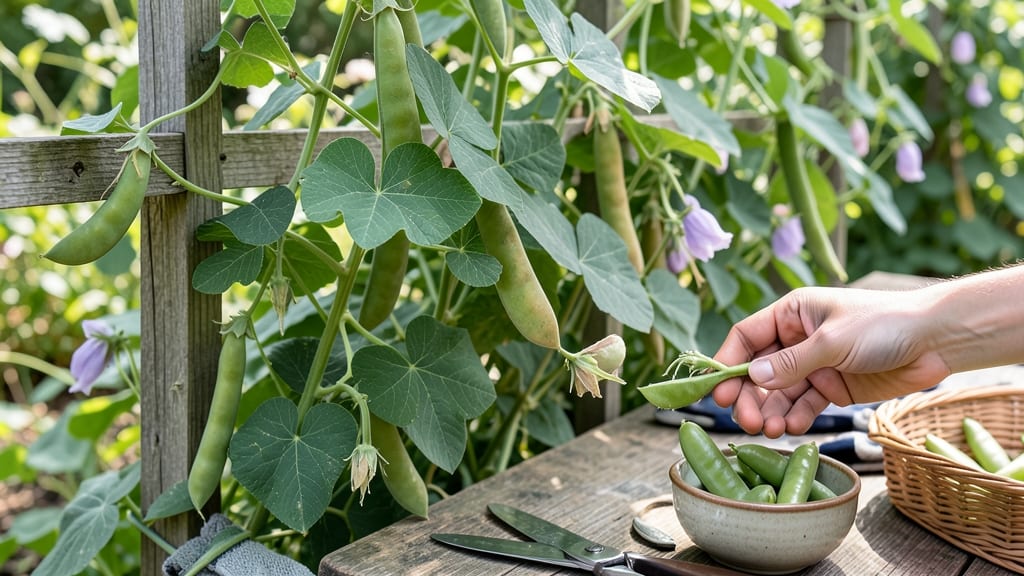
Harvesting peas at the right time turns your garden into a sweet, crisp treasure 🌱—but miss the window, and you get tough, mealy pods instead of the tender perfection you crave.
Nothing beats the crisp snap of a freshly picked pea straight from the vine, but timing your harvest wrong means tough, mealy pods instead of sweet perfection. Mastering pea harvest time is the secret to transforming your garden into a sugar-snap treasure trove.
Peas are ready when pods are plump, bright green, and 2-2.5 inches long, with seeds visible but not bulging. For sugar snap peas, harvest before the pods start to yellow or the seeds harden, while shelling peas need slightly firmer pods for easier shelling.
Below, I’ll break down the best times to pick by variety, how to check pods for readiness, and pro tips to extend your harvest—so you can enjoy fresh peas from late spring to early summer.

Pea harvest time by variety: sugar snap, snow, and shelling peas compared
Peas are one of the most rewarding garden crops, but knowing pea harvest time varies dramatically by variety. Sugar snap peas, snow peas, and shelling peas each have unique maturity cues and ideal harvest windows.
Miss the window, and you'll end up with tough, fibrous pods instead of the tender treats you crave. Let's break down the key differences so you can time your harvests perfectly.
Climate zone plays a surprisingly big role in pea harvest timing. In cool northern zones (3-5), early varieties mature in just 55-60 days, while warmer southern zones (8-10) may need late-season varieties with 70-80 days to maturity.
Even within the same zone, temperature fluctuations can shift harvest windows by 1-2 weeks. Understanding these variations ensures you don't miss peak harvest season.
For sugar snap peas, the harvest window is short-lived—typically just 7-10 days at peak. Look for pods that are 2-3 inches long with a satisfying snap when bent. The key visual cue is a bright green color that remains vibrant, not yellowing.
If you wait too long, the pods become tough and woody, losing their signature crunch. I always harvest mine in the morning when the pods are cool and crispest.
Snow peas have the longest harvest window of the three varieties, often producing for 3-4 weeks if picked regularly. Their flat, edible pods should be 2-4 inches long with a light green hue.
Unlike sugar snaps, snow peas stay tender longer, but they'll eventually develop thick seams if left too long. I recommend picking them when they're still slightly curved—the straighter they get, the tougher they become.
Shelling peas require the most patience, with harvest times often 2-3 weeks after flowering. The pods should be 2-3 inches long and dark green, with seeds that are fully formed but not yet bulging. The secret here is to check the pod texture—it should feel firm but not hard. If the pods start to yellow or the seeds become too large, the peas lose their sweetness and become mealy.
Climate zone dramatically affects harvest timing. In USDA zones 3-5, early varieties like 'Sugar Sprint' mature in just 55 days, often ready by late May. Meanwhile, in zones 8-10, late varieties like 'Lincoln' may not reach maturity
How to check pea pods for perfect harvest readiness (with mistakes to avoid)
Mastering the pea harvest time starts with understanding your pods' physical maturity cues. Unlike many vegetables, peas give clear visual signals when they're ready—if you know what to look for. The key is checking pod firmness, seed development, and overall plant health before you pick.
I've learned that harvesting too early means mealy, underdeveloped pods, while waiting too long results in tough, fibrous textures that ruin the sweet snap we all love.
Begin by examining pod size—the ideal pea harvest time occurs when pods reach 2 to 2.5 inches in length.
For sugar snap peas, this means they should be plump but still tender enough to snap cleanly between your fingers. Snow peas should be flat and slightly crisp, while shelling peas will have fully developed seeds visible through the pod's translucent skin.
Remember, these visual cues change slightly depending on your pea variety and growing conditions.
⚠️ callout warning
- Harvesting too late: Overripe pods develop tough skins and starchy seeds, ruining texture and flavor.
- Ignoring weather signs: Heavy rain or extreme heat can accelerate pod development—check daily during peak season.
- Skipping regular checks: Peas mature quickly (often 3-5 days between harvest-ready stages).
- Using dull tools: Snipping pods with sharp scissors prevents damage that invites pests and disease.
Don't rely solely on pod size—seed development is your next critical checkpoint. Gently squeeze the pod between your thumb and forefinger. At perfect harvest readiness, the skin should resist slight pressure but not feel hard or woody.
Inside, you should see fully formed seeds that fill about half the pod's length—they'll be visible but not bulging. If seeds are barely visible or the pod feels mushy, it's not ready yet.
This firmness test is my go-to method for avoiding the most common harvest mistake: picking peas that are past their prime.
Environmental factors play a surprising role in pea harvest time. Cooler temperatures (ideal between 50-75°F) slow pod development, while heat waves can cause pods to mature 2-3 days faster.
Pay attention to rainfall patterns too—consistent moisture keeps pods tender, but excessive rain can lead to bloated, waterlogged pods that split open. In my garden, I've found that morning harvests yield the freshest peas because evening dew can make pods appear softer than they really are.
Always pick on dry mornings to preserve quality.
To extend your pea production season, try successive planting. In my zone 6a garden, I plant early varieties in March and late-season types in August. This staggered approach ensures a continuous harvest from May through September.
For each planting, mark your days to maturity (typically 55-70 days) and set reminders to check pods every 2-3 days during peak production. This method has doubled my pea yield while keeping the harvest fresh and flavorful all season.
Pro tip: Use a small hand pruner or clean scissors to harvest peas—never pull pods off the vine as this can damage the plant. Cut just above the pod's attachment point to encourage more flowers and pods to develop.
And here's a bonus hack I learned from my neighbor: Harvest in the morning when pods are cool and crisp, then store them in the fridge for up to 5 days. For longer storage, blanch and freeze peas immediately after picking—they'll stay sweet and vibrant for months.