
Picking
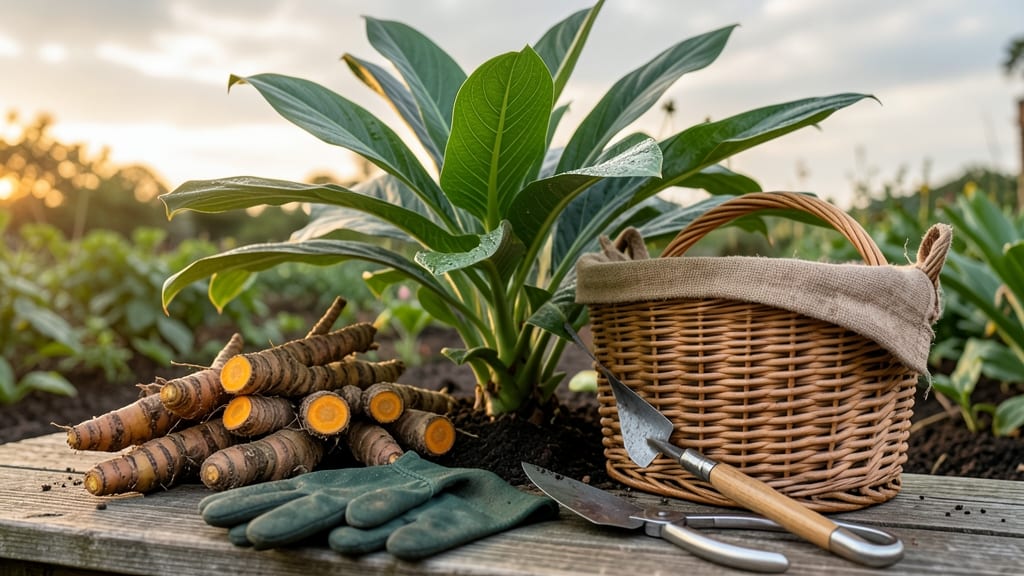
Harvesting turmeric at the right time turns your garden’s golden rhizomes into the vibrant, potent spice you know and love. 🌿
If you’ve ever dug up a turmeric patch only to find pale, underdeveloped roots—or worse, bitter, fibrous ones—you know timing is everything. The difference between a perfect harvest and a disappointing one often comes down to watching for the right cues: leaf color, rhizome size, and even soil conditions.
In USDA Zone 6a, the ideal window stretches from late October through November, when the plant’s foliage yellows and wilts naturally. But climate plays a big role—tropical growers can harvest year-round, while cooler zones must act quickly before the first frost.
Below, I’ll walk you through the visual and tactile signs that tell you exactly when to pull your turmeric for maximum flavor and storage life.
You’ll also discover how to cure and store your harvest to keep those rhizomes bright and potent for months—plus, the one mistake that turns great turmeric into something barely usable. Let’s get started.

Signs your turmeric is ready for harvest: leaves, soil, and rhizome clues
Harvesting turmeric at the right time ensures vibrant color, maximum potency, and optimal storage life. Unlike many herbs, turmeric rhizomes mature underground, so you’ll need to rely on leaf signals, soil conditions, and rhizome development to determine peak harvest time.
Missing these cues can result in bitter, fibrous roots that lack the rich golden hue we love.
One of the first visual clues is the foliage turning yellow and wilting naturally. This happens when the plant redirects energy from leaves to the underground rhizomes, signaling maturity.
However, yellow leaves alone aren’t enough—you’ll also need to check the rhizome size and skin texture to confirm readiness. Let’s break down each indicator step by step.
⚠️ IMPORTANT: Harvesting too early means small, underdeveloped rhizomes, while waiting too long can lead to over-mature roots that split or lose flavor. Aim for a balance where rhizomes are 1-2 inches thick and the skin is hard to puncture with a fingernail.
Start by examining the leaves—they should be yellowing from the bottom up and wilting naturally, not due to disease or pests. This is your plant’s way of telling you it’s redirecting nutrients to the rhizomes.
If the leaves are still vibrant green, your turmeric needs 2-4 more weeks to mature.
Next, dig up a small test rhizome to check its size and firmness. At harvest time, rhizomes should be 1-2 inches thick and feel firm to the touch.
If they’re smaller or soft, wait longer. A good rule of thumb is that the rhizome should resist puncture when pressed with your fingernail—a sign of maturity.
The color of the rhizome is another critical clue. Mature turmeric rhizomes have a deep orange-yellow hue that’s consistent throughout. If the color is pale or patchy, it’s not ready. Pale rhizomes often result from insufficient sunlight or overwatering, both of which can delay maturity.
Don’t overlook the soil conditions around your turmeric plants. At harvest time, the soil should be slightly dry at the surface but not bone-dry. Well-draining soil prevents rhizomes from becoming waterlogged, which can cause rot or uneven development.
If your soil stays soggy, consider amending it with compost or raising beds for better drainage.
One common mistake is harvesting after the first frost, especially in temperate climates. While turmeric can tolerate light frosts, freezing temperatures can cause the rhizomes to split or develop off flavors.
In USDA zones 8-10, aim to harvest in late fall (October-November), while in cooler zones, harvest before the first frost hits.
For the best flavor and storage potential, time your harvest when the rhizomes are fully developed but before the plant’s energy is completely drained. This usually aligns with 9-10 months after planting, depending on your climate.
Once you’ve confirmed all signs of readiness, it’s time to dig up your harvest and begin the curing process to preserve that golden color
Step-by-step turmeric harvesting process: digging, curing, and storing rhizomes
Harvesting turmeric at the right time ensures you get vibrant rhizomes packed with flavor and medicinal properties. If you wait too long, the roots become woody and bitter—so timing is everything.
The key is to harvest when the foliage yellows and the rhizomes reach 1-2 inches in diameter, usually 9-10 months after planting.
Before you dig, gather your harvesting tools: a sharp garden fork, pruning shears, rubber gloves, and a clean bucket. Work on a dry, sunny day to minimize soil-borne diseases. Avoid harvesting after rain, as wet rhizomes won’t cure properly and may spoil faster.
🌱 Step-by-Step Turmeric Harvesting Guide
-
Step 1: Cut the Foliage
Use pruning shears to sever the stems about 2 inches above the soil line. This prevents the rhizomes from absorbing excess moisture during curing.
-
Step 2: Loosen the Soil
Gently loosen the soil around the base with a garden fork, working 2-3 inches deep to avoid damaging the rhizomes. Turmeric roots spread horizontally, so be careful not to pierce them.
-
Step 3: Dig Carefully
Use your hands or the fork to lift the rhizomes from the soil. Shake off excess dirt, but don’t rinse them—moisture speeds up spoilage. Look for firm, orange-yellow roots with a hard skin.
-
Step 4: Cure in the Sun
Spread the rhizomes on a clean, dry surface in direct sunlight for 3-5 days. Turn them daily to ensure even drying. They’re ready when the skin turns deep golden-brown and feels papery.
-
Step 5: Store Properly
Once cured, store the rhizomes in a cool, dark place (like a pantry) with good airflow. Wrap them in paper towels or place them in a mesh bag to prevent mold. They’ll last 6-12 months if stored correctly.
One common mistake is harvesting too early—this results in small, underdeveloped rhizomes with weak flavor. Conversely, waiting too long leads to woody, fibrous roots that lose their vibrant color. Always check the rhizome thickness and skin hardness before digging.
Pro tip: If you’re unsure whether your turmeric is ready, dig up one rhizome as a test. If it’s 1-2 inches thick and deep orange-yellow, it’s harvest time! Otherwise, wait another 2-4 weeks and check again.
After harvesting, consider saving a few rhizomes to replant next season. Choose the largest, healthiest ones and store them in a cool, dry place until spring. With the right technique, you’ll enjoy homegrown turmeric year after year! 🌱