
Picking
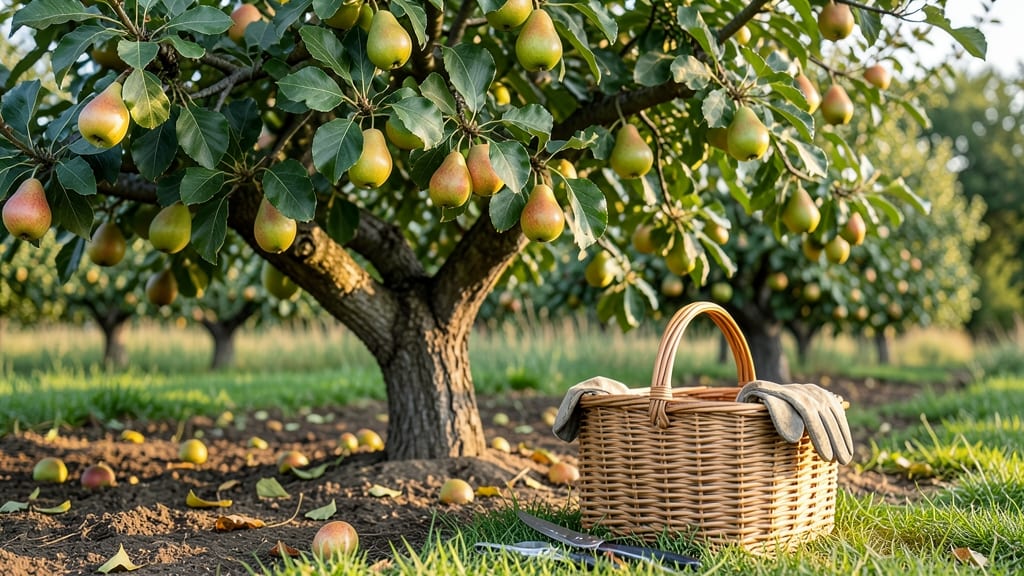
What month do you harvest pears? September and October deliver the sweetest, juiciest fruit—but timing is everything.
Miss the window, and you’ll end up with mealy, underripe pears that never reach their full flavor potential. The key? Knowing when your specific variety is ready to pick, whether it’s a classic Bartlett or a crisp Asian pear.
Climate zones shift harvest timing by 2-4 weeks, so Northern Hemisphere gardeners should watch for color changes, stem separation, and that telltale sweet scent. Meanwhile, Southern Hemisphere growers adjust for their opposite seasons.
Below, I’ll break down the exact months for popular varieties, how to test ripeness beyond just color, and the one mistake that ruins more pear harvests than any other.

Pear harvest months by variety: when to pick for peak flavor
Knowing when to harvest pears depends entirely on the variety you're growing. Each type has its own peak flavor window, and missing it means sacrificing that perfect balance of sweetness and texture.
For example, Bartlett pears—the classic buttery variety—must be picked at just the right moment, or they'll turn mealy before you can enjoy them. Meanwhile, Anjou pears hold their firmness longer, giving you a slightly wider window to harvest.
Your climate zone also shifts these harvest windows by 2-4 weeks. Gardeners in USDA Zone 5 might harvest in early September, while those in Zone 9 could be picking as late as November.
Understanding these variations ensures you don’t end up with underripe or overripe fruit. Let’s break down the exact months for the most popular varieties and how to adjust for your region.
📅 Summary Table: Pear Harvest Months by Variety & Climate Zone
| Variety | USDA Zone 5-7 (Northern US) | USDA Zone 8-10 (Southern US) | Key Ripeness Cue |
|---|---|---|---|
| Bartlett (Williams) | Late August - Early September | Mid-September - Early October | Yellow skin, stem separates easily |
| Anjou | Mid-September - Late September | Late September - Mid-October | Greenish-yellow, firm but slightly soft |
| Bosc | td style="padding: 10px;">Late September - Early OctoberMid-October - November | Russeted brown skin, crisp texture | |
| Asian Pears (e.g., Hosui) | Early October - Mid-October | Mid-October - Late October | Green skin, crunchy when ripe |
The Bartlett pear is the earliest to harvest, typically in late August to early September in cooler climates. These pears ripen quickly after picking, so don’t wait until they’re fully yellow on the tree—aim to harvest when they’re still slightly greenish but the stem twists off easily.
In warmer zones, Bartletts can hold on the tree until mid-September, but they’ll lose their signature buttery texture if left too long.
Anjou pears are more forgiving, with a harvest window stretching from mid-September to late September in the North and late September to mid-October in the South. Their greenish-yellow skin and firm yet slightly yielding texture are your best clues. Unlike Bartletts, Anjou pears don’t ripen well off the tree, so timing is critical. If you’re unsure, pick a few early and let them ripen indoors—they’ll soften slightly but retain their crispness.
For Bosc pears, patience pays off. These varieties develop their signature russeted brown skin and crisp, spicy flavor when harvested late September to early October in cooler zones or mid-October to November in warmer areas.
Bosc pears are one of the few that improve in flavor when stored properly, so don’t rush to pick them. Wait until the skin has fully developed its distinctive texture before harvesting.
Asian pears, like the Hosui variety, are a favorite for their crunchy texture and mild sweetness. They ripen later than European pears, typically between early October and mid-October in the North and mid-October to late October in the South.
Unlike their counterparts, Asian pears don’t soften much after picking, so focus on the skin color transitioning from green to a pale yellow-green and a slight give when gently squeezed.
If you’re in a transition zone (like USDA Zone 7b), your harvest timing might fall somewhere between the Northern and Southern windows. For example, Bartletts in Zone 7b could be ready as early as early September or as late as mid-September, depending on spring temperatures.
To refine your timing, keep a harvest journal for at least two years, noting when pears ripen in your specific microclimate. Factors like nearby water bodies or urban heat islands can shift your harvest by up to 10 days.
One common mistake is assuming all pears ripen on the same schedule. European pears (like Bartlett and Anjou) ripen best on the tree, while Asian pears can be picked slightly firmer and ripened indoors.
For European varieties, always harvest when the fruit separates easily from the stem—this is your golden rule. If the stem resists, the pear isn’t ready yet. For Asian pears, you can pick them a bit earlier and let them sit at room temperature for 3-5 days to soften slightly.
Finally, post-harvest care can extend your pear enjoyment. Once picked, store European pears in a cool (32-40°F), humid environment like a root cellar or refrigerator. They’ll keep for 2-4 weeks if stored properly.
Asian pears, on the other hand, can last up to 6 weeks in the fridge due to their thicker skin. The key is consistency: don’t mix ripe and unripe pears in the same storage space, or the ethylene gas from ripe fruit will speed up spoilage in the others.
With this guide, you’ll never miss the peak flavor window again. Whether you’re growing Bartletts, Anjou, Bosc, or Asian pears, timing your harvest
How to test pear ripeness: 3 key methods beyond color
Color alone isn’t always reliable for determining pear ripeness—especially with late-season varieties like Bosc or Asian pears. Many gardeners pick too early, ending up with mealy, underripe fruit that lacks sweetness.
Instead, focus on these three key ripeness tests that go beyond surface appearance to ensure you harvest at peak flavor.
Ripe pears should yield slightly when gently pressed near the stem—think of the give of a ripe avocado, not the firmness of an unripe one. This gentle squeeze test works best for European pear varieties like Anjou or Bartlett, which soften internally before their skins change color.
For Asian pears, the squeeze should feel slightly firmer but still responsive.
Here’s how to apply these tests with confidence, plus a bonus tip for accelerating ripeness if you’re dealing with late-season fruit:
- 1 Stem Separation Test: Gently twist the pear at the stem. If it separates cleanly with minimal force, it’s ready to harvest. A stubborn stem means wait 3-5 more days.
- 2 Gentle Squeeze Technique: Press near the stem end. A ripe pear will yield slightly (like a soft tennis ball), while an unripe one feels rock-hard. Overripe pears get mushy—avoid this!
- 3 Scent Analysis: Hold the pear near your nose and sniff at the stem end. A sweet, floral aroma signals ripeness. No smell? It’s not ready yet. Overripe pears may smell fermented.
If you’re harvesting in cooler climates (USDA Zones 4-6), pears often ripen 2-4 weeks later than in warmer zones. For example, Bartlett pears in Zone 5 may not reach full ripeness until late October, while Southern gardeners can harvest as early as September.
For Asian pears, which stay crisp even when ripe, rely more on the stem test and scent—their skins rarely change color. Once harvested, store them in the fridge for up to 2 weeks to slow ripening.
If you’re unsure, pick a few test pears and let them ripen at room temperature for 3-5 days before committing to a full harvest.
Remember: Pears continue ripening after picking, but only up to a point. Once they’re overripe, their texture turns mushy, and their flavor sours. Use these tests to time your harvest perfectly—your taste buds (and your pear tree!) will thank you.