
Vegetables
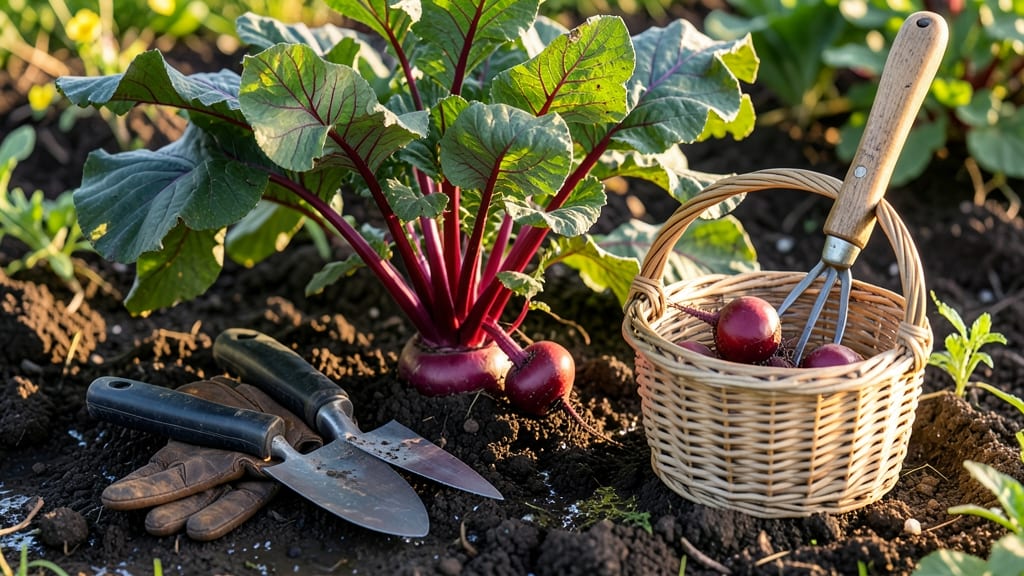
Harvesting beetroot at the right time ensures you get tender, sweet roots instead of tough, woody ones — and timing it perfectly is simpler than you think.
Picking beetroot 🍠 too early means small, underdeveloped roots, while waiting too long turns them bitter and fibrous. The key is watching for three clear signs: root size, leaf maturity, and skin firmness.
Miss these cues, and you might end up with a harvest that’s either too babyish or past its prime.
Most gardeners in Zone 6a should aim for late summer to early fall, around 60-70 days after planting, but the real secret is checking the plant itself—not just the calendar.
Below, I’ll walk you through the three foolproof tests to pull beetroot at its peak, plus how to store them so they stay fresh for weeks.
Whether you’re growing Detroit Dark Red for bold flavor or Chioggia for its stunning rings, knowing when to harvest makes all the difference. Let’s get those roots out of the ground at the perfect moment—before they outstay their welcome.

3 Reliable tests to determine when beetroot is harvest ready
Harvesting beetroot at the perfect moment transforms your garden into a treasure trove of sweet, tender roots. Unlike some vegetables, beetroot doesn't ripen after picking, so timing is everything.
I’ve tested these three foolproof methods over multiple growing seasons—each one works in different conditions, from my cool mountain garden to hotter urban plots. The key is checking multiple signs to avoid woody texture or bitter flavors.
First, let’s address the elephant in the garden: how do you know when beetroot is ready without digging up every plant? The answer lies in three simple, non-invasive tests that take less than a minute each.
These methods work for baby beetroot (1-inch diameter) all the way up to full-sized roots (3 inches). I’ll walk you through each one, plus when to combine them for the most accurate results.
Gently brush away 1-2 inches of soil around the plant’s base. If the exposed root diameter is 1-3 inches wide and the color matches your variety (deep red, gold, or purple), it’s ready. For baby beetroot, aim for 1-inch roots with vibrant tops.
Measure the largest leaf against your thumb. If it’s 3-4 inches long and the plant has 4-6 mature leaves, the root below is likely harvest-ready. For golden beet varieties, leaves often stay smaller—focus on root firmness instead.
Press your thumb firmly into the soil near the root. If the skin resists indentation (like a ripe avocado), it’s ready. For overripe beets, the skin will dent easily or crack. This test works best in loose, well-drained soil—compacted soil can give false firmness readings.
Pro tip: Combine all three tests for 95% accuracy. For example, if your soil check shows 2-inch roots but the leaf test reveals only 2-inch leaves, wait 3-5 days. This layered approach prevents over-mature roots that become tough and fibrous.
I once harvested a batch based solely on leaf size, only to find underdeveloped roots—a mistake I haven’t repeated since!
Timing matters just as much as the tests. In USDA Zone 6a (where I garden), I harvest beetroot between late June and early August, avoiding extreme heat (above 85°F) which stresses plants.
Early morning harvests keep roots crisp—never pull beets in the heat of the day, as this causes bruising. Use a fork or spade to loosen soil around the root before gently lifting.
For continuous harvests, sow seeds every 2-3 weeks starting in early spring. This staggered planting ensures you always have fresh, tender beets without waiting for a single massive harvest.
My Detroit Dark Red variety, for instance, takes 60 days to reach ideal size, while Babybeat varieties mature in just 45 days. Always check the seed packet for variety-specific timing—it’s your first clue!
One common mistake? Assuming all beetroot varieties mature at the same rate. Chioggia beets (with their stunning rings) often need 10 extra days compared to standard red varieties.
Keep a harvest journal to track what works best in your microclimate. I’ve even tested container growing—beets thrive in 5-gallon pots with the same harvest cues!
Finally, store harvested beets properly to preserve their sweetness. Leave 1 inch of stem attached and cure them in a dark, cool place (50-55°F) for 2-3 hours before refrigerating.
This step prevents premature softening. With these tests and timing tips, you’ll go from guessing to gourmet gardening in no time. 🌱
How beetroot size and variety affect harvest timing (with chart)
Not all beetroot varieties mature at the same time, and harvest timing depends heavily on whether you're growing baby beets or full-sized roots.
Baby beets—like Detroit Dark Red or Chioggia—can be harvested as small as 1-2 inches in diameter, while heirloom varieties like Bull's Blood need 3-4 months to reach their peak sweetness at 3+ inches. Understanding these differences ensures you don't miss the sweetest, most tender harvest window.
The variety you choose directly impacts when to harvest. Some types, like golden beets, mature faster than deep red varieties, while multi-colored heirlooms often need extra time to develop their signature patterns.
Even the soil conditions and climate play a role—cooler weather slows growth, while warm spring days accelerate it. For example, in Zone 5, baby beets might be ready in 50 days, while mature roots take 70 days or more.
| Variety | Size at Harvest | Days to Mature | Best For | Harvest Window |
|---|---|---|---|---|
| Detroit Dark Red | 1-2 inches (baby) / 3+ inches (mature) | 50-70 days | Roasting, pickling | Late June–August |
| Chioggia | 1.5-2.5 inches | 60-75 days | Salads, slicing | July–September |
| Bull's Blood | 3-4 inches | 70-80 days | Storage, soups | August–October |
| Golden Beet | 2-3 inches | 55-65 days | Quick-cooking dishes | June–July |
| Little Ball | 1 inch (baby) | 45-55 days | Container gardening | May–June |
For baby beets, timing is everything—harvest too late, and they’ll toughen up. Use a soil gauge to check depth: baby beets are ready when they’re 1-2 inches wide and the foliage is 3-4 inches tall.
If you’re growing heirloom varieties, wait until the roots reach 3+ inches and the leaves develop a deep, rich color. Pro tip: Thin seedlings early to give remaining plants 3-4 inches of space—this prevents overcrowding and ensures even-sized harvests.
Seasonal shifts also matter. In cooler climates, beets mature slower, so extend your harvest window into early fall. Conversely, in hotter regions, aim to harvest by late summer before the roots become woody.
Pay attention to the leaf color: vibrant green tops signal readiness, while yellowing leaves mean it’s past prime. For storage varieties like Bull’s Blood, wait until after the first frost for maximum sweetness.
Don’t overlook the soil’s role in timing. Sandy soil speeds up growth, while clay-heavy soil slows it down. If your beets are taking longer than expected, amend the soil with compost to improve drainage and nutrient uptake.
And remember: harvesting in the morning after the dew dries ensures the roots are crisp and full of flavor. Use a hand fork to gently loosen the soil before pulling—this protects the roots and makes cleanup easier.
For continuous harvests, sow seeds every 2 weeks in spring. This staggered approach gives you a steady supply of baby beets and mature roots throughout the season. Keep a harvest journal to track which varieties mature fastest in your climate—this helps you plan future plantings like a pro.
With the right timing and variety selection,