
Picking
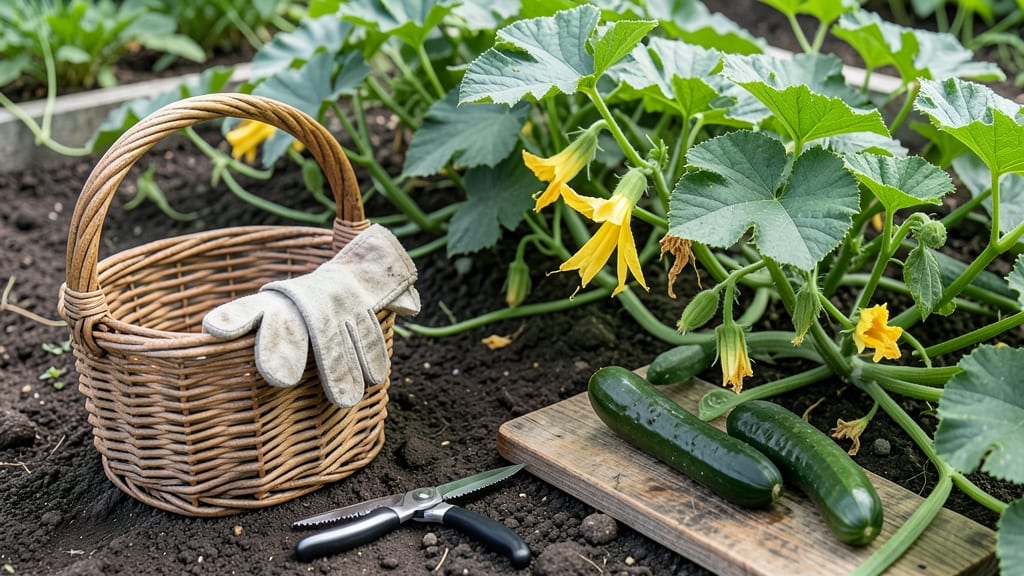
Harvesting cucumbers from your garden at the right time means the difference between a crisp, seedless bite and a meal of bitter, oversized disappointment.
Picking too early leaves you with bland, seedy cucumbers that taste more like disappointment than dinner. But wait too long, and you’re left with oversized, bitter fruits that even pickling can’t save. The key? Knowing exactly when those 🥒 are at their peak—before they turn into garden decor.
Most cucumbers reach harvest readiness between 60 and 75 days after planting, but size, color, and texture are the real clues. A firm, deep-green cucumber that’s 6-8 inches long (for slicing types) or a slightly smaller one (for pickling) is your golden ticket to flavor.
And don’t forget the stem test: if it snaps cleanly, it’s ready to go.
In this guide, I’ll break down the three visual cues to watch for, how climate and variety tweak the timing, and why harvesting frequently keeps your plants producing like crazy. No more guessing—just perfect, crunchy cucumbers every time.

3 Visual signs your cucumbers are ready for harvest
Harvesting cucumbers at the right moment transforms your garden into a crisp, flavorful feast. The difference between a perfectly ripe cucumber and one that's either underdeveloped or bitter often comes down to three key visual cues.
I've learned the hard way that ignoring these signs leads to disappointing results—so let's dive into what to look for when checking your vines.
First, timing matters because cucumbers continue to grow after reaching marketable size. What starts as a bright green, tender fruit can quickly turn into a hard, seedy mess if left too long on the vine.
The good news? With these three simple visual checks, you'll never miss the perfect harvest window again.
🔍 3 Visual Signs Your Cucumbers Are Ready
- 1. Size Matters: Slicing varieties should be 6-8 inches long with a diameter of 2-3 inches. Pickling cucumbers are ready at 2-4 inches—smaller is better for that tangy crunch!
- 2. Stem Color Change: Look for a yellow or brown stem end—this means the cucumber has stopped growing. A green stem end signals it's still maturing.
- 3. Texture Test: Gently press the cucumber near the stem. It should have a slight give (not mushy) and the skin should resist gentle thumbnail pressure. If it feels hard, it's overripe.
Pro Tip: Harvest in the morning when cucumbers are cool and crispest—this makes all the difference for salads and sandwiches!
Let me explain why these visual cues work so well. The size directly correlates with flavor development—cucumbers harvested at the right length contain fewer seeds and more moisture, which equals better texture.
I once left a batch to grow "just a little bigger," only to find they became woody and bitter—a mistake I won't repeat!
The stem color change is nature's way of telling you when growth stops. This yellowing or browning happens because the cucumber's ethylene production (a natural ripening hormone) shifts focus from growth to maturation.
Ignoring this sign often leads to cucumbers that are too large for their own good, with thick skins and tough flesh.
Don't overlook the texture test—this is where many gardeners go wrong. A properly ripe cucumber should yield slightly when pressed but still feel firm. If it feels spongy or mushy, it's overripe.
If it's rock-hard, it's underripe. The ideal balance gives you that snap and crunch we all love in fresh cucumbers.
Here's a common mistake I see: people wait until cucumbers turn yellow or orange before harvesting. While some heirloom varieties develop these colors naturally, most modern cucumbers never ripen fully on the vine.
Waiting for color changes often means you're too late—these cucumbers will be mealy and seedy, perfect for compost but not for eating.
For bush varieties, check cucumbers every 2-3 days since they produce more rapidly than vining types. Vining cucumbers can be checked every 3-4 days, but don't let them get away from you!
The more consistently you harvest, the more your plants will produce—it's like giving them a green light to keep making fruit.
One final tip: always use a sharp pair of pruning shears or a knife to harvest. Cutting the stem 1/4 inch above the fruit prevents disease from entering the plant.
I used to just pull cucumbers off, which sometimes damaged the vines and reduced future yields. That small change made a huge difference in my garden's productivity.
Remember, the earlier you start harvesting, the better your cucumbers will taste all season. Begin checking your plants about 50-60 days after planting, and you'll be enjoying garden-fresh cucumbers in no time. Happy harvesting!
Harvest timing differences: slicing vs. pickling cucumbers
Not all cucumbers are created equal when it comes to harvest timing. Slicing cucumbers like Straight Eight or Marketmore need to be picked at 6-8 inches for peak crunch, while pickling varieties such as Boston Pickling or National Pickling should be harvested at 2-3 inches for that perfect tiny size.
The difference isn't just about aesthetics—it's about flavor and texture too.
Climate plays a surprising role in harvest timing. In hot climates like Arizona or Florida, cucumbers grow faster, so you may need to harvest every 2-3 days to prevent overripening.
Meanwhile, in cooler regions like the Pacific Northwest, growth slows, giving you a 5-7 day window between harvests. Understanding these differences ensures you never miss the perfect moment.
Why the size difference matters: Slicing cucumbers develop thick, crisp flesh when allowed to grow larger, while pickling types become seedy and tough if left on the vine too long. The bitterness compounds called cucurbitacins also increase as cucumbers mature, making timing critical for flavor. For example, a 7-inch slicing cucumber harvested at the right time will be sweet and tender, while the same variety left to grow to 12 inches becomes woody and bitter.
Harvest Timing Comparison
| Type | Ideal Size | Harvest Window | Climate Adjustment | Flavor Risk |
|---|---|---|---|---|
| Slicing | 6-8 inches | Every 2-5 days | Hot: harvest sooner; Cool: wait 1-2 days | Bitter, seedy, woody |
| Pickling | 2-3 inches | Every 1-3 days | Hot: harvest daily; Cool: check every 3 days | Mushy, overripe, bland |
For hot climates, I recommend harvesting earlier in the day when temperatures are cooler. This reduces stress on the plant and helps maintain crispness and sweetness. In cool climates, you can afford to wait until mid-morning, as the slower growth rate gives you more flexibility.
Always check for the stem separation point—where the cucumber meets the vine—it should snap cleanly when ready.
Pro tip: Use a harvest basket with a handle to avoid bruising your cucumbers during collection. Store them in the fridge for up to 5-7 days to maintain freshness. If you notice yellowing or soft spots, it's a sign you've waited too long—time to adjust your harvest schedule!
Regular harvesting also encourages your plants to produce more fruit, giving you a continuous supply all season long.
Remember, the key to success is consistency. Whether you're growing slicing or pickling varieties, pay attention to size, color, and texture cues. With practice, you'll develop an eye for the perfect harvest moment—ensuring your garden always delivers the freshest, most flavorful cucumbers possible. 🥒