
Picking
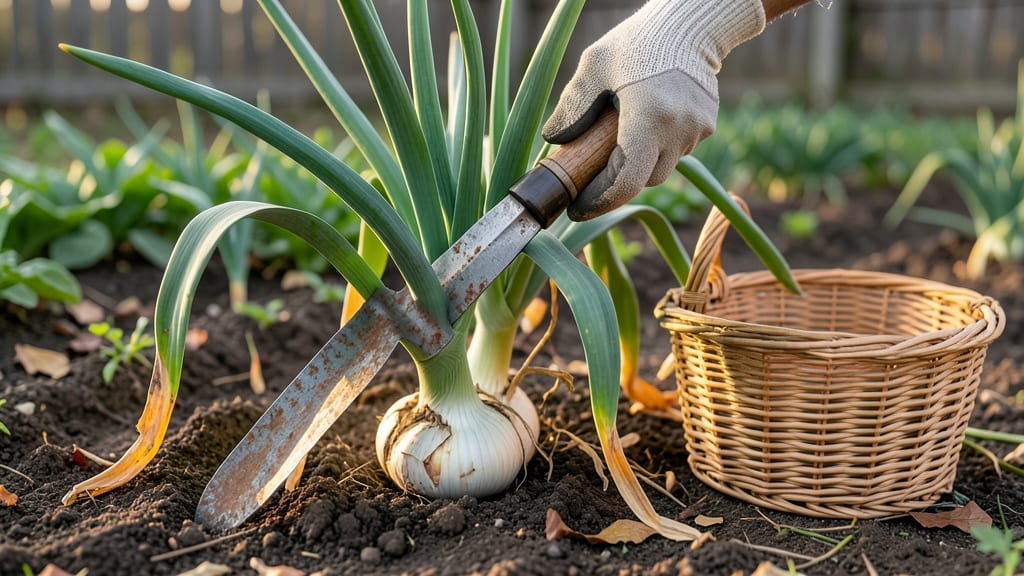
Harvesting garlic in Georgia at the right time means the difference between bold, flavorful bulbs and limp, pungent scraps 🧄 — and the window is narrower than you think.
Picture this: you’ve spent months nurturing your garlic, only to pull it too early and end up with soft, underdeveloped cloves, or worse, leave it too long and risk rot from Georgia’s late spring rains.
The key? Watching for those crispy lower leaves and firm bulbs before the tops flop over.
Georgia’s 7b-8b climate gives growers a late April to early May harvest window, but microclimates like the mountains or coastal areas can shift that by weeks. Hardneck varieties in the North may need pulling by late April, while softnecks in Savannah can wait until early May.
Below, I’ll walk you through the exact visual cues to harvest, region-specific adjustments, and how to cure your garlic for maximum shelf life—so you never waste another bulb.

5 Key visual & environmental cues to harvest garlic in Georgia
Harvesting garlic at the right time is everything—too early and your bulbs won’t store well, too late and they’ll split or rot. In Georgia, where USDA zones 7b-8b create a long growing season, you’ll need to watch for 5 key visual cues rather than relying on a fixed calendar date.
The biggest mistake I see? Gardeners waiting until the tops fall over completely, which is already too late for peak flavor and storage life.
Start by focusing on the lower leaves—they’re your first warning system. When about one-third of the bottom leaves turn brown and crispy, that’s your first sign.
But don’t panic if your neighbor’s garlic looks different; Georgia’s humid coastal areas (like Savannah) and drier mountain regions (like Blue Ridge) can cause variations in leaf color. I’ve found hardneck varieties often brown earlier than softnecks in the same bed.
Next, check for scape development—the curly flower stalk that appears in hardneck varieties. If you’re growing ‘Music’ or ‘German White’, removing the scape (a practice called “topping”) redirects energy to bulb growth, but you should only do this if the lower leaves are already browning.
Softnecks like ‘Silverskin’ won’t produce scapes, so focus on leaf color instead. Pro tip: Use a sharp pruner to cut scapes cleanly at the base to avoid damaging the main stem.
The soil temperature also plays a crucial role. When daytime highs consistently reach 75°F+ and nighttime lows stay above 50°F, your garlic is ready to harvest. In North Georgia’s higher elevations (USDA 6a-7a), this might happen in early May, while coastal areas could be ready by late April.
I always test soil moisture first—if it’s dry 2 inches below the surface, it’s harvest time regardless of leaf color.
Here’s where hardneck and softneck varieties diverge significantly. Hardnecks mature faster (about 240 days) and are more sensitive to heat, while softnecks take 300+ days and handle Georgia’s summer humidity better.
If you’re growing both, harvest hardnecks first when their leaves start browning, then wait another 2-3 weeks for softnecks. The key difference? Hardneck bulbs will feel firm and papery when ready, while softnecks stay slightly softer longer.
| Cue | Hardneck Varieties | Softneck Varieties | Georgia-Specific Note |
|---|---|---|---|
| Leaf Browning | Lower 1/3 turns brown first (late April) | Lower 1/2 turns brown (May) | Coastal areas may brown earlier due to heat |
| Scape Development | Scape appears 60-70 days after planting | No scape; focus on leaf color | Remove hardneck scapes to boost bulb size |
| Bulb Firmness | Firm with papery skins | Slightly softer but fully formed | Test by gently squeezing—shouldn’t feel mushy |
| Soil Conditions | Daytime 75°F+, nighttime 50°F+ | Same as hardnecks but 2-3 weeks later | Mountain areas may need 10°F cooler thresholds |
| Clove Separation | Cloves separate easily by hand | Cloves separate cleanly when dry | Humid areas may require longer drying time |
Don’t overlook the bulb size—it’s your final confirmation. When bulbs are 2-3 inches wide and the individual cloves can be separated by hand, they’re ready.
In my Atlanta garden (USDA 7b), I’ve noticed that ‘Chesnok Red’ hardnecks often reach this stage by early May, while ‘Artichoke’ softnecks lag until mid-May. The biggest mistake I’ve seen? Waiting until the tops flop over completely—by then, the bulbs have already started to rot in Georgia’s heat.
For high-altitude gardens (above 2,000 feet), like those in the North Georgia mountains, add 10-14 days to these timelines. Cooler nights delay leaf browning, so watch for soil temperature cues more closely.
I once grew garlic in Dahlonega (USDA 7a) and had to harvest a full two weeks later than my Savannah neighbors. The rule of thumb? If your garlic is in a shadier microclimate, prioritize bulb firmness over leaf color.
Finally, time your harvest for a dry, sunny day. Georgia’s afternoon humidity can trap moisture in freshly dug bulbs, leading to mold. I always aim for 10 AM-2 PM harvests to give the bulbs maximum drying time before evening dew sets in.
Use a garden fork to loosen the soil around the bulb, then lift gently—never pull by the stems, or you’ll damage the papery skins. Once harvested, let the bulbs dry in a
Georgia’s frost risk zones: adjusting harvest timing by region
Georgia’s diverse climate—from the mountain valleys of zone 7a to the coastal plains of zone 8b—means your garlic harvest timing should never be one-size-fits-all. A late frost in North Georgia can ruin bulbs before they mature, while Savannah’s humidity may delay drying.
Understanding your USDA zone and local microclimates is the key to harvesting garlic at its peak.
Use the USDA Plant Hardiness Zone Map to pinpoint your region, then adjust harvest dates by 2-4 weeks based on elevation and urban heat islands.
For example, Atlanta (zone 7b) typically harvests garlic in late April to early May, while Blairsville (zone 7a) may need to wait until mid-May to avoid frost damage.
| Zone | Avg. Last Frost | Harvest Window | Key Adjustments |
|---|---|---|---|
| 7a (North GA) | Mid-November | Late April - Early May | Wait for soil temps >50°F; monitor mountain frost pockets. |
| 7b (Atlanta) | Late November | Mid-April - Late April | Urban areas harvest 1-2 weeks earlier due to heat islands. |
| 8a (Central GA) | Early December | Early April - Mid-April | Prioritize well-draining soil to prevent rot in humid springs. |
| 8b (Savannah) | Mid-December | Late March - Early April | Extend drying time with shade cloth; high humidity slows curing. |
Microclimates play a huge role in Georgia’s garlic harvest. For instance, urban Atlanta gardens often experience earlier harvests due to the urban heat island effect, while rural valleys may face delayed harvests from lingering cold air pockets.
Always check your local frost-free date and adjust by 2-3 weeks if you’re in a frost-prone microclimate.
Hardneck varieties like ‘Music’ or ‘Chesnok Red’ thrive in cooler zones (7a-7b) and should be harvested when 50-60% of leaves turn brown. In warmer zones (8a-8b), softneck varieties like ‘Silverskin’ can handle later harvests but risk bolting in extreme heat. Always prioritize bulb firmness over calendar dates.
Pro tip: Use a soil thermometer to confirm harvest readiness—ideal soil temps should be above 50°F for 2-3 consecutive days. This ensures bulbs dry properly post-harvest, even in Georgia’s humid climate. 🌱