
How To
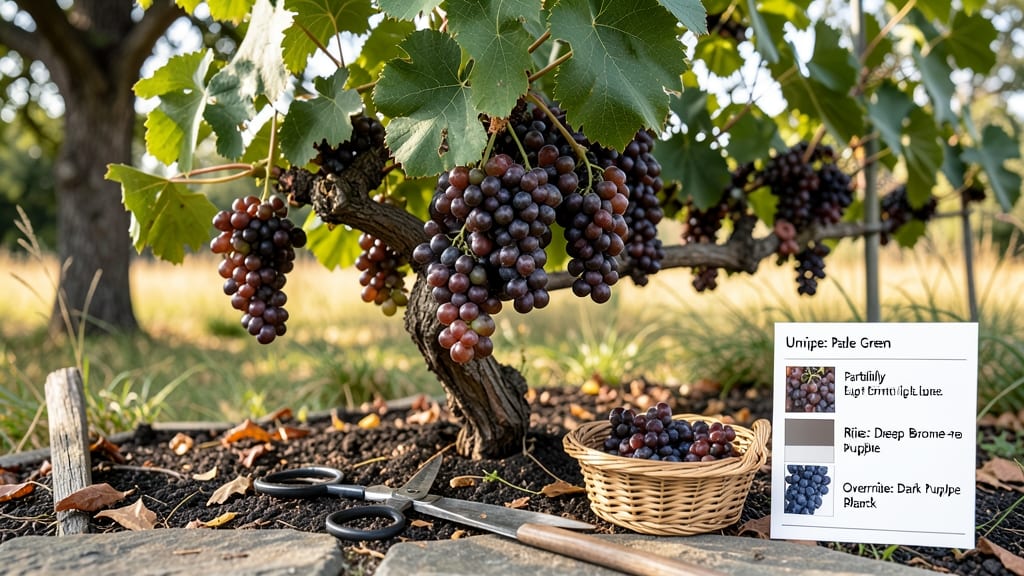
Harvesting muscadine grapes at the right time ensures sweet, flavorful fruit that’s perfect for jams, wines, or fresh eating.
Picking too early means tart, underripe berries, while waiting too long risks overripe, mealy grapes that fall off the vine. The key is knowing when the color deepens, the sugar peaks, and the seeds turn brown—three tests that take the guesswork out of timing.
In USDA Zones 7-9, where these grapes thrive, harvest typically falls between late August and October, but heatwaves or cool spells can shift that window. I’ll show you how to check ripeness daily, adjust for your climate, and avoid the most common mistakes.
By the end, you’ll harvest perfectly ripe muscadines every season—no more wasted labor or bitter surprises.

Muscadine grape ripeness tests: color, sugar, and seed maturity explained
Determining the perfect moment to harvest muscadine grapes can feel like solving a puzzle—but it doesn’t have to be complicated. These grapes rely on three key indicators to signal they’re ready: berry color, sugar content, and seed maturity.
Each test works together to ensure you pick fruit at its peak flavor and texture.
First, let’s talk about color changes, which are the most obvious sign of ripeness. Unlike table grapes, muscadines develop deep, rich hues that vary by variety—think dark purple, black, or bronze.
When the color becomes uniform across the cluster and the grapes no longer appear translucent, that’s your first green light.
Next, you’ll want to check the sugar content using a Brix refractometer, a handy tool that measures sugar levels. Muscadines typically reach their sweetest point between 16-22 Brix.
If you don’t have a refractometer, a simple taste test can work—just remember that underripe grapes taste tart, while overripe ones may be mushy.
Finally, examine the seeds inside the grapes. A ripe muscadine will have seeds that are plump but not hard. If you gently squeeze a grape and the seeds feel soft or squishy, it’s time to harvest. Hard seeds mean the fruit still needs time to ripen.
| Ripeness Indicator | What to Look For | Action to Take |
|---|---|---|
| Color | Deep, uniform hue (purple, black, bronze) | Check for consistency across clusters |
| Sugar (Brix) | 16-22 Brix (use refractometer) | Harvest when sugar peaks |
| Seed Maturity | Plump but soft seeds | Gently squeeze grapes to test |
| Berry Firmness | Slightly soft, detaches easily | Twist gently to remove |
| Aroma | Sweet, fruity scent | Sniff clusters for fragrance |
One common mistake I see is waiting too long for the grapes to turn color, assuming they’ll get sweeter. But muscadines actually lose flavor if left on the vine past their prime.
Overripe grapes become mealy and develop a fermented taste, which is a bummer after all your hard work.
If you’re growing multiple varieties, pay attention to their individual ripening times. Some muscadines, like ‘Scuppernong’, ripen earlier than others, such as ‘Carlos’. Start checking clusters 2-3 weeks before the expected harvest window for your specific variety to catch them at the perfect moment.
For those in cooler climates, like northern parts of USDA Zone 7, grapes may ripen more slowly. Keep an eye on morning frost dates and adjust your harvest timeline accordingly. In warmer zones, like Zone 9, grapes might ripen faster, so daily checks are a must.
Pro tip: Harvest on a cool morning after any overnight dew has dried. This helps preserve the grapes’ quality and makes them easier to handle. Store them in a paper bag in the fridge for up to 2 weeks to maintain freshness.
Remember, the goal is to balance sweetness, texture, and flavor intensity. When all three ripeness tests align, you’ll know you’ve timed it just right—ready to enjoy (or preserve) the fruits of your labor! 🍇
How to time your muscadine harvest for maximum flavor and yield
Timing your muscadine grape harvest correctly transforms bitter grapes into sweet, juicy rewards. In Southern U.S. climates (Zones 7-9), harvest typically spans late August to October, while Northern regions may see fruit ripen 2-4 weeks later.
The key? Daily checks and understanding how weather patterns accelerate or delay ripening.
Morning is the best time to inspect your grapes—cool temperatures slow sugar conversion, giving you an accurate Brix reading. A refractometer (or even your taste buds) reveals when sugars peak. Meanwhile, seed maturity and skin texture provide backup clues that never fail, especially in unpredictable humid Southern summers.
- 🍇 Color Consistency: Grapes should match your variety’s mature hue (e.g., deep purple for Carlos, bronze for Scuppernong). Inconsistent coloring means uneven ripening.
- 🌡️ Brix Test: Aim for 18-22 Brix (use a refractometer). Southern grapes often hit 20+ Brix in hot summers, while Northern regions may max at 18-20 Brix.
- 🤏 Seed Test: Squeeze a grape—seeds should crush easily (not float). Hard seeds mean underripe fruit; mushy grapes are overripe.
- ⏰ Daily Checks: Inspect clusters every 3-5 days starting 60 days after flowering. Early morning (5-7 AM) is ideal for accurate readings.
- ☀️ Weather Adjustments: Hot, dry spells speed ripening; cool, rainy periods delay it. Harvest 2-3 days earlier if rain is forecasted.
Regional differences matter—Southern growers often harvest Carlos or Fry varieties in early September, while Northern Zone 7 growers may wait until mid-October. Watch for bird activity too: when birds ignore your grapes, they’re likely past their prime. Overripe muscadines develop mealy texture and ferment quickly, ruining flavor.
Pro tip: Harvest in stages if clusters ripen unevenly. Twist grapes gently—if they pop off effortlessly, they’re ready. Use clean pruning shears or scissors to avoid damaging the vine.
Store harvested grapes in single layers in a shady, well-ventilated spot (like a garage or porch) for 1-2 weeks to develop full flavor.
Don’t let late-season rains fool you—grapes may look ripe but stay tart and firm inside. If you’re unsure, taste test a few grapes: sweetness should dominate, with minimal tartness. Once you master these cues, you’ll consistently harvest muscadines at peak perfection, every season.
🍇🌿☀️