
Picking
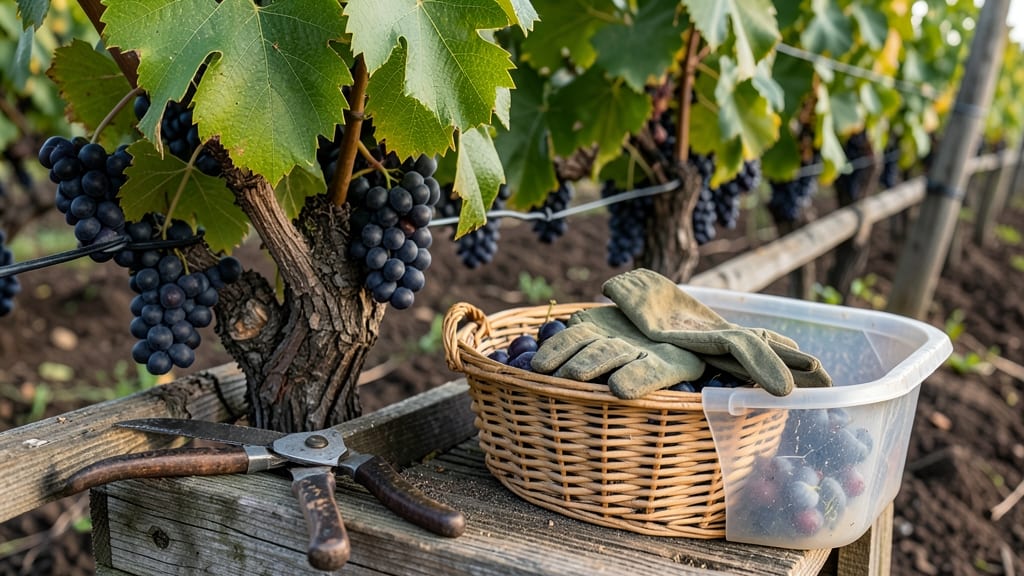
Grape harvest season transforms your vineyard into a sea of deep purple, golden green, or ruby red — but timing is everything.
Picture this: You’ve nurtured your 🍇 vines all summer, and now the clusters hang heavy with promise. One wrong move, and you’ll end up with underripe grapes that lack flavor or overripe ones that ferment too quickly.
The difference between a perfect harvest and a disappointing one often comes down to knowing exactly when to pick.
This guide breaks down the science behind grape ripeness — from sugar levels and color cues to the subtle art of taste-testing — so you can harvest at the peak moment, whether you’re making wine, eating fresh, or preserving for later.
You’ll also discover how climate, variety, and even your local frost dates play a role in scheduling your harvest. By the end, you’ll feel confident picking grapes that burst with flavor, store well, and deliver the results you’ve been dreaming of all season.

How to determine grape ripeness by variety and cluster color
Harvesting grapes at the perfect moment transforms your labor into delicious wine, jam, or fresh fruit—but timing is everything. Each grape variety has unique ripeness cues, from cluster color to sugar content.
I’ll break down how to spot ripe grapes for popular types like Cabernet Sauvignon, Chardonnay, and Concord, so you never miss peak flavor.
Start by examining the cluster color, which is the easiest visual clue. For red varieties like Cabernet Sauvignon, look for deep purple hues, while white grapes like Chardonnay should turn golden or pale green. Hybrids like Concord develop rich blue-black tones.
But color alone isn’t enough—you’ll also need to check skin firmness and seed development.
Here’s a quick reference for ripeness by variety, including color, sugar levels, and acidity—critical factors for wine quality or fresh eating:
| Variety | Ripeness Color | Sugar Level (Brix) | Acidity Level | Seed Development |
|---|---|---|---|---|
| Cabernet Sauvignon | Deep purple-black | 22-26 Brix | Moderate | Fully brown |
| Chardonnay | Pale green/gold | 20-24 Brix | Low to moderate | Soft (white varieties) |
| Concord | Blue-black | 18-22 Brix | Moderate | Fully developed |
| Merlot | Dark blue | 21-25 Brix | Low | Brown |
| Thompson Seedless | Green-yellow | 16-20 Brix | Moderate | Soft (seedless) |
For red grapes, like Cabernet Sauvignon or Merlot, press a grape gently—if it doesn’t leave a dent, it’s likely ripe. White grapes, such as Chardonnay, should feel firm but yield slightly under pressure.
Always check seed color: fully ripe seeds turn brown, while underripe seeds stay green or white.
Use a refractometer to measure sugar content (Brix), which is critical for wine quality. Aim for 22-26 Brix for reds and 20-24 Brix for whites. If your refractometer isn’t calibrated, taste-test: ripe grapes should taste sweet with balanced acidity, not overly tart or mushy.
Don’t ignore the cluster’s stem. When grapes are ripe, they’ll detach easily from the vine with a slight tug. If the stem resists, wait a few days.
Overripe grapes may shrivel or attract pests, so act before they reach this stage. Early morning is the best time to harvest—grapes are cooler and firmer.
Regional climate plays a role too. In cooler zones, grapes may take longer to ripen, while hotter climates can speed up the process. Adjust your expectations based on your USDA zone and local weather patterns.
For example, Concord grapes in Zone 5 may need extra weeks to reach full ripeness compared to Zone 8.
Pro tip: Harvest a few clusters early to test for flavor and sugar levels. If they’re underripe, wait 3-5 days before the full harvest. This small step saves you from picking a batch that’s either too tart or already fermenting on the vine.
Trust your senses—experience teaches you what “just right” feels like for your specific variety.
Once you’ve confirmed ripeness, act quickly. Grapes continue to ripen post-harvest, but overhandling can bruise them. Store harvested clusters in shaded, cool conditions (50-6
Best practices for harvesting grapes without damaging clusters
Harvesting grapes at their peak requires more than just timing—it’s about gentle handling and smart techniques to preserve flavor, sugar content, and cluster integrity. One wrong move can lead to bruised berries, mold risks, or even premature fermentation.
I’ve learned the hard way that rushing the harvest or using the wrong tools can turn a perfect cluster into a mushy mess in minutes.
Start by harvesting in the early morning when temperatures are cool. This reduces stress on the grapes and minimizes sugar loss or disease spread from warm afternoon humidity.
Always work with clean, sharp tools to avoid tearing the delicate grape stems—this is key for maintaining cluster structure and preventing post-harvest rot.
Step-by-Step Grape Harvest Guide
-
Step 1: Choose the Right Tools
- Use pruning shears or harvest knives (never scissors)
- Sanitize tools with 10% bleach solution to prevent disease
-
Step 2: Harvest Cluster by Cluster
- Cut stems 1-2 inches above the cluster to preserve vine health
- Gently twist clusters to avoid stem damage or berry bruising
-
Step 3: Handle with Care
- Place clusters in shallow, breathable containers (no plastic bins)
- Avoid stacking—overcrowding causes heat buildup and spoilage
-
Step 4: Transport Immediately
- Keep grapes in shaded, cool conditions (under 75°F)
- Deliver to processing within 4-6 hours for best quality
-
Step 5: Store Properly
- Store at 32-36°F and 85-90% humidity for fresh eating
- For winemaking, ferment within 24-48 hours to lock in flavors
Never harvest grapes when they’re wet or rainy—this invites fungal infections like botrytis. If you must work in damp conditions, use a clean cloth to dry clusters immediately. I once lost an entire Concord harvest because I ignored this rule during a sudden afternoon shower.
For table grapes, focus on even ripening—pick clusters when 80-90% of berries are ripe. Uneven ripening leads to shriveled grapes or off-flavors. If you’re making wine, aim for 22-24° Brix sugar content (use a refractometer for accuracy).
Overripe grapes will ferment too quickly, producing mushy, unbalanced wine.
After harvesting, inspect every cluster for pests or damaged berries. Remove any affected grapes immediately to prevent spoilage spread. For long-term storage, wrap clusters in breathable paper and refrigerate—this extends freshness by up to 2 weeks.
If you’re not using them right away, consider freezing grapes for smoothies or jams later in the season.
Remember, the first harvest is a learning experience. Document your timing, tools, and storage methods each year to refine your technique. With practice, you’ll harvest grapes that taste like they were plucked straight from a vineyard in Napa Valley—not your backyard.