
Vegetables
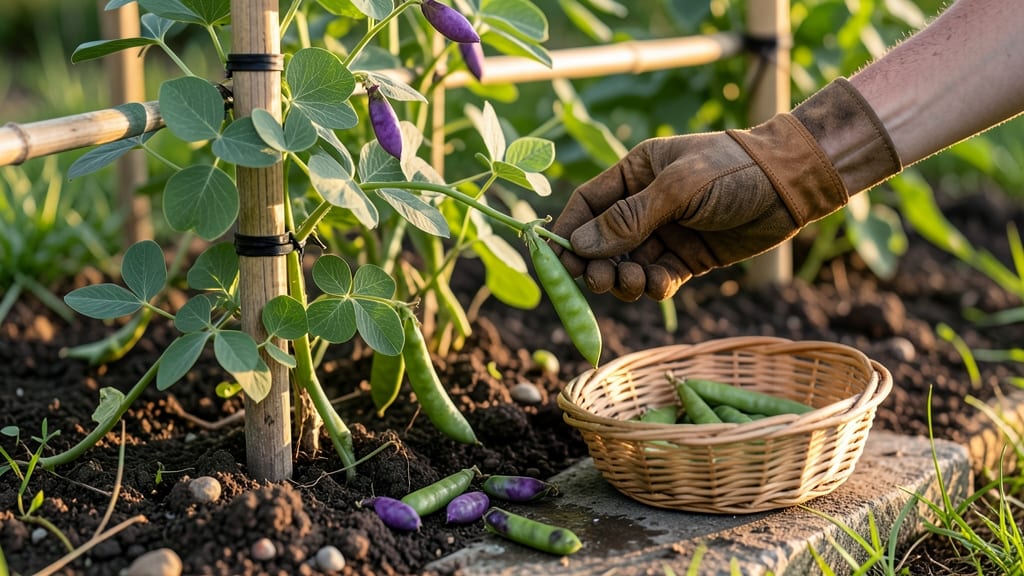
Harvesting purple hull peas at the right time turns a simple garden chore into a flavor explosion—because wait too long, and those tender pods toughen up like leather, while seeds darken and lose their sweetness.
Picture this: you’ve nurtured your 🌱 purple hull peas all season, watching them climb and flourish, only to wonder, "When exactly should I pick them?" The answer lies in a mix of visual cues—pod size, color depth, and even how they feel when you squeeze them—and knowing the 65-day sweet spot for peak ripeness in Zone 6.
Miss the window, and you’re left with mealy peas or shriveled seeds. Get it right, though, and you’ll enjoy pods that snap easily, burst with flavor, and keep producing for weeks. Below, I’ll break down the exact signals to watch for, plus how climate and variety tweak that timeline.
Ready to turn your harvest into a success? Let’s dive into the no-fail rules for timing it perfectly—before the pods outsmart you.

How to identify purple hull peas ready for harvest (visual & tactile cues)
Harvesting purple hull peas at the right moment transforms them from garden curiosities to culinary stars. Unlike some peas that turn green when ripe, these beauties rely on color shifts, pod texture, and even a crack test to signal perfection.
Miss these cues, and you risk tough, fibrous pods or overly mature seeds that lose their signature sweetness.
Start by checking the pod length—ideal harvest size is 2-3 inches. Anything shorter means the peas inside are still developing, while pods longer than 3.5 inches often contain over-mature seeds that shrink during cooking. This size window is your first critical clue, but don’t stop there.
Color consistency is your next checkpoint. Mature purple hull peas should be a deep, uniform purple across the entire pod. Pale spots or streaks indicate underripe pods, while patches of brown signal overripe or damaged pods. Hold the pod up to natural light—any inconsistencies mean it’s not ready.
Now for the tactile test: Gently press the pod between your thumb and forefinger. It should feel firm but slightly yielding, almost like a ripe cucumber. If it’s hard and woody, the peas inside are too small and starchy.
If it feels soft or mushy, the seeds have already begun to dry out, losing their sweetness and tenderness.
Here’s where the crack test comes into play—this is the gold standard for purple hull peas. Hold a pod firmly and bend it slightly at the seam. If it snaps cleanly with a slight crack, it’s ready to harvest.
If it bends without breaking, it’s still too young. If it splits open easily, you’ve waited too long, and the peas inside may be shrunken or tough.
The seed darkness inside the pod is another telltale sign. Look through the pod’s translucent skin—ripe seeds should be dark green to black and plump. If they’re light green or shriveled, the pod needs more time.
Overripe seeds often appear wrinkled or dusty, a clear sign the harvest window has closed.
Timing matters even more when considering climate zones. In USDA Zone 6 (like much of the Midwest), purple hull peas typically reach harvest readiness 65-75 days after planting.
However, warmer climates (Zones 7-9) can shave off 5-10 days from this timeline, while cooler zones (Zones 4-5) may extend it to 80 days or more.
One common mistake is harvesting based solely on days after planting. While days-to-maturity guidelines are helpful, they’re not foolproof. Always verify with visual and tactile cues—especially if you’re growing in unusual temperatures or extended daylight, which can speed up or slow down ripening.
Another pitfall is harvesting in the heat of the day. Purple hull peas are sensitive to temperature fluctuations, and picking them when the sun is strongest can cause the pods to overheat and spoil quickly.
Aim to harvest in the early morning when pods are cool and crisp, ensuring peak flavor and texture.