
How To
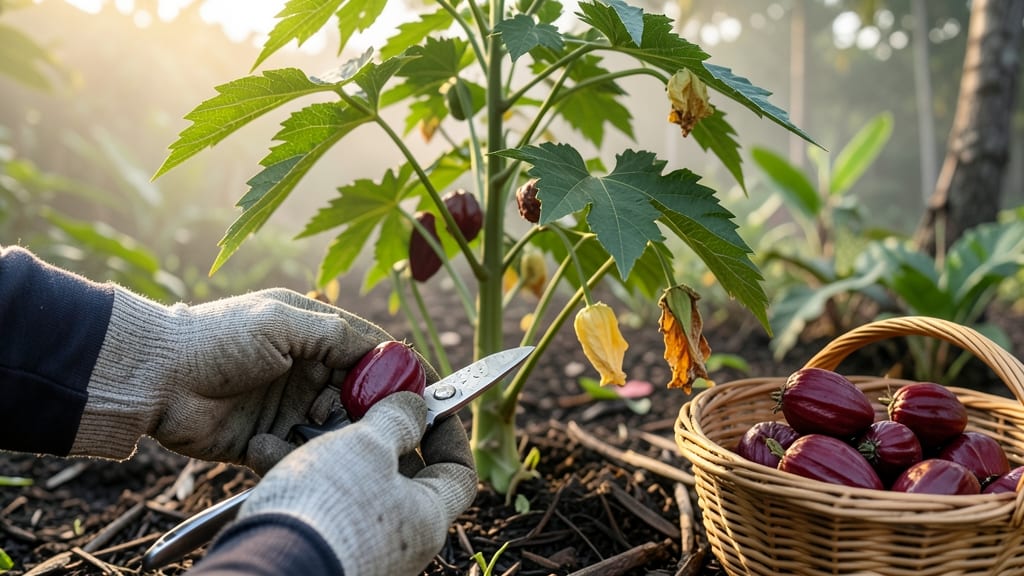
Harvest roselle at 120 to 180 days after planting, when its calyces turn deep red and feel slightly soft to the touch 🌺 — that’s when the tart, cranberry-like flavor reaches its peak.
Picture this: you’ve nurtured your roselle for months, and now the moment of truth arrives. One wrong move, and you’ll either end up with bitter, underripe buds or shriveled, flavorless remnants.
Timing isn’t just about days on the calendar—it’s about the right tactile cues that tell you the harvest window is open.
Whether you’re growing roselle in USDA Zone 6a or a warmer climate, the key is watching for three simple signs: color shift, texture change, and petal wilt. Miss these, and you’ll sacrifice the bold, tangy notes that make roselle a standout in teas, jams, and stews.
In this guide, I’ll walk you through the exact tests to determine when your roselle is ready, plus how to adjust for your local growing season. No more guesswork—just perfect, flavor-packed harvests every time.

3 Tactile tests to determine roselle harvest readiness
Harvesting roselle at the right moment transforms your garden bounty into a bold, tart treasure perfect for teas, jams, or stews. The key lies in three simple science-backed tactile tests that reveal when your Hibiscus sabdariffa calyces are primed for picking.
Skip these cues, and you risk bitter, underdeveloped flavors—or worse, overripe mushiness. Let’s explore how to feel, see, and assess your roselle’s readiness like a pro.
First, understand that roselle’s peak flavor window is narrow—just 24-48 hours when the calyx reaches its tartest, most aromatic state. Missing this window means sacrificing that cranberry-like tang you crave in your homemade hibiscus brews.
The good news? These tests don’t require fancy tools—just your eyes, fingers, and a little patience.
Here’s the game-changer: combine these three tests for 100% accuracy. A single cue might fool you, but together, they’ll confirm when your roselle is ready to harvest. Grab your gloves, step into your garden, and let’s get tactile!
Calyx Color Shift
Look for a deep red or purple hue (not green!). The entire calyx should darken uniformly, signaling sugar accumulation and peak tartness.
Texture Test: Gentle Squeeze
Gently press the calyx between thumb and forefinger. It should yield slightly soft (like a ripe tomato) but not mushy. A firm calyx means it’s too early.
Seed Development Check
Peel back the outer calyx layer to reveal the seeds inside. At peak harvest, seeds should be plump but not hard. Hard seeds = overripe; shriveled seeds = underripe.
Now that you’ve mastered the visual and tactile cues, let’s talk about why timing matters. A roselle calyx that’s harvested too early lacks the complex tartness needed for rich hibiscus tea or jam.
Meanwhile, overripe calyces become fibrous and lose their vibrant color, dulling your dishes. Pro tip: Harvest in the morning after dew dries—this preserves flavor and texture.
For tropical climates, aim to harvest when daytime temps hover around 75-85°F. In cooler zones (USDA 6a-8b), wait until nighttime temps stay above 60°F to avoid stunted flavor development.
I’ve found that hand-picking calyces (not cutting stems) reduces stress on the plant and extends your harvest window by 1-2 weeks.
What if your roselle calyces don’t meet all three tests? Don’t panic! Underripe calyces can mature off-the-plant if placed in a paper bag with a banana (the ethylene gas speeds ripening).
Overripe ones? Use them in cooked dishes where texture matters less. But for hibiscus tea or fresh jam, timing is everything.
Here’s a pro move: Harvest every 2-3 days during peak season to encourage continuous flowering. I’ve seen roselle plants in my Zone 9a garden produce harvestable calyces for 6+ weeks when given consistent care. The secret? Prune spent flowers to redirect energy to new buds.
Remember, roselle’s harvest window is short, but the rewards are sweet. Once you’ve nailed these three tactile tests, you’ll never second-guess when to pick again. Your hibiscus tea will thank you—and so will your taste buds!
🌺
Optimal harvest timing by climate Zone: a month-by-month guide
Your roselle’s harvest window shifts dramatically based on climate zone and daylight hours. In tropical regions like Florida or Hawaii, roselle matures 30-50 days faster than in temperate zones like California or New York—meaning your timing must adapt to avoid bitter or overripe calyces.
The key? Tracking both calyx color and local frost dates to pinpoint the sweet spot.
For example, in USDA Zone 10 (tropical), roselle often reaches harvest by June-July, while in Zone 6a (temperate), you’ll wait until August-September. Even a 10°F temperature drop can delay maturation by 2-3 weeks, so adjust your expectations if your summer cools unexpectedly.
Below, I’ve mapped out the ideal harvest months for each zone, plus how to fine-tune based on your microclimate.
If you’re in a subtropical zone like Zone 9, aim to harvest by late September to avoid the first frost, which can turn calyces mushy. Meanwhile, in tropical Zone 11, you might extend harvesting into October—just watch for humidity spikes, which can promote mold.
Pro tip: In cooler zones, use black plastic mulch to warm soil and push maturation by 1-2 weeks.
Don’t rely solely on the calendar—daylight hours are your real guide. Roselle needs 10+ hours of light daily to develop flavor. In Zone 6a, this means harvesting by late September before daylight shortens.
Track your local sunrise/sunset times (apps like Sun Surveyor help) and adjust if your region experiences early autumn shade.
For container growers, expect a 2-3 week delay compared to in-ground plants. Pots dry out faster, slowing maturation. To compensate, use self-watering containers and fertilize with fish emulsion every 3 weeks starting in July. This tweak can shave off critical days in your harvest timeline.
Finally, if your roselle flowers but fails to set calyces, blame temperature swings or low humidity. In Zone 7, this often happens in June’s heat spikes.
To fix it, provide afternoon shade and mist plants daily until calyces form. Patience pays off—once they appear, you’ll have a 6-week harvest window of peak-tart calyces.