
Picking
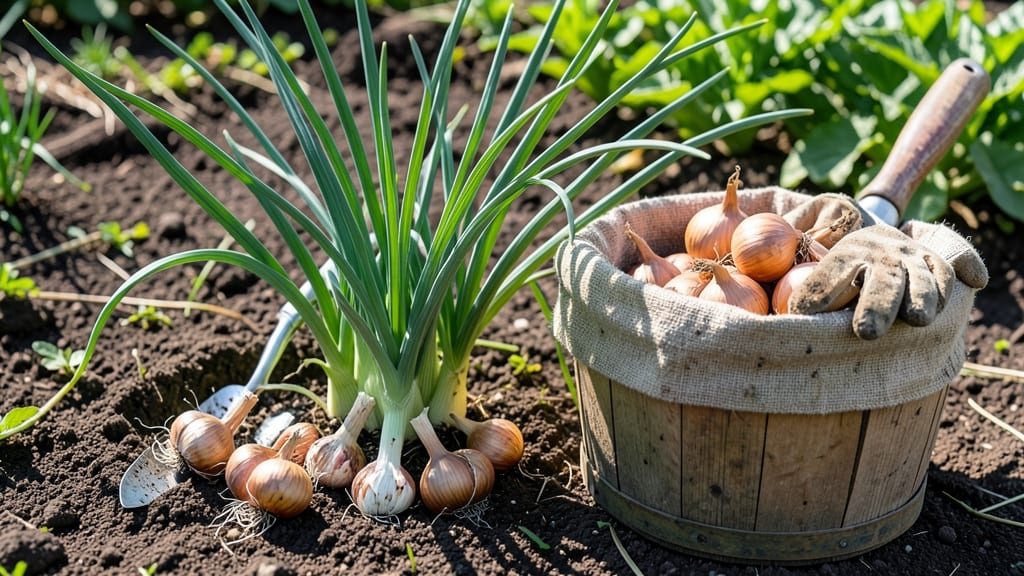
Harvesting shallots planted in spring at the right time ensures you get those sweet, pungent bulbs 🧅 instead of tough, bitter ones.
Timing your harvest perfectly can mean the difference between mild, pungent bulbs and sweet, flavorful gems—so don’t miss these key signs!
Most gardeners wait about 100 days after planting, but the real test is watching for yellowing leaves and firm bulbs that easily pull from the soil.
Below, I break down the exact month-by-month cues, how to check maturity with just three simple steps, and what happens if you harvest too early or late.

Month-by-month shallot growth stages: when to watch for harvest cues
Spring-planted shallots follow a predictable growth cycle, and recognizing their month-by-month milestones ensures you harvest at peak flavor. From April’s early sprouts to July’s harvest-ready bulbs, each stage offers distinct visual cues.
Miss these signs, and you risk underripe or overmature shallots—neither of which deliver that sweet, oniony punch we all crave.
Your shallots’ journey begins in early April when green shoots emerge, but the real magic happens in May through July. That’s when leaf color shifts, bulb size swells, and environmental triggers—like heat waves or drought stress—hint it’s time to dig.
Understanding these cues lets you harvest shallots when they’re at their best, whether you prefer fresh green tops or dry, papery-skinned bulbs.
| Month | Growth Milestone | Leaf Color | Bulb Size (Diameter) | Harvest Window | Key Environmental Trigger |
|---|---|---|---|---|---|
| April | Sprouting & Early Growth | Bright green, upright | 0.25–0.5 inches | Not ready | Soil temps above 50°F |
| May | Active Bulb Formation | Deep green, bushy | 0.5–1 inch | Early green harvest | 50+ days after planting |
| June | Peak Bulb Development | Green with yellowing tips | 1–2 inches | Ideal dry bulb harvest | Foliage yellows 30% |
| July | Final Maturity | Mostly yellow, wilting | 2+ inches (risk of pith) | Last chance harvest | Leaves die back 50% |
In May, your shallots are in their growth spurt, with bulbs forming rapidly. This is when you can start green harvests—snipping tops for cooking while leaving bulbs in the ground to mature.
Look for deep green leaves and bulbs reaching 0.5–1 inch in diameter. If you’re growing for dry bulbs, wait until June when leaves begin showing yellowing tips.
By June, your shallots are at their prime harvest window. Bulbs should measure 1–2 inches in diameter, and leaves will start turning yellow at the tips. This is the sweet spot for flavor—harvest now for mild, sweet bulbs with papery skins.
If you miss this window, leaves will fully yellow by July, signaling it’s time to harvest before bulbs become pithy or split.
Watch for environmental triggers like heat waves or drought stress, which can accelerate maturity. If your region hits 90°F+ temperatures, shallots may mature faster, so check bulbs weekly. Conversely, cool, wet summers can delay harvest—adjust your timeline based on your local climate.
For green harvests, snip tops when leaves reach 6–8 inches tall, leaving 2 inches of stem. For dry bulbs, wait until 50–70% of leaves yellow and gently pull bulbs from the soil. Never wait too long—overripe shallots develop hollow centers and lose flavor.
Pro tip: Test maturity by digging up one bulb to check size and skin texture. If it’s firm with papery layers, it’s ready. If it’s still green or rubbery, give it another week. This hands-on check beats guessing!
Regional differences matter: Southern gardens may harvest earlier (late June), while Northern zones might extend into early August. Always prioritize leaf color and bulb firmness over calendar dates.
Timing your harvest right transforms ordinary shallots into flavorful gems. Follow these month-by-month cues, and you’ll enjoy sweet, crisp bulbs all season long—no bitterness or waste in sight! 🧅
How to test shallot maturity: the 3-Step size and flavor check
Spring-planted shallots reach peak flavor when harvested at just the right moment—too early and they’re bitter, too late and they become pithy. The key is testing maturity with these three simple checks before committing to a full harvest.
I’ve learned the hard way that guessing leads to wasted effort, so let’s dig into the science behind perfect timing!
Start by selecting 3-5 healthy-looking shallots from your bed and gently dig them up with a fork. Look for these visual cues first: the bulb diameter should be between 1–2 inches—any smaller means they’re still growing, while larger bulbs often signal overmaturity.
This hands-on approach saves you from harvesting too soon or too late.
Diameter of 1–2 inches—smaller bulbs are underripe, while larger ones risk becoming pithy and bland.
Outer layers should be dry and papery, not green or rubbery—this indicates the bulb has matured enough to store well.
Cut a bulb lengthwise: mild, sweet taste = harvest time; bitter or sharp = needs more time; hollow center = too late.
If your test bulbs pass all three checks, it’s time to harvest! But what if they fail? For example, if the skin feels rubbery or the flavor is overly sharp, leave them in the ground for another 1–2 weeks.
Overripe shallots lose their sweetness and develop a woody texture, so don’t let them linger past their prime.
Pro tip: Harvest on a dry, sunny morning to let the bulbs dry naturally in the soil for 24 hours before curing. This step prevents rot and extends storage life.
I’ve found that shallots cured this way stay fresh for up to 3 months in a cool, dark place—far longer than those harvested too early!
Don’t overlook the leaf color as a secondary cue. While the bulb tests are definitive, yellowing tops that flop over (but haven’t fully died) often coincide with perfect maturity.
If your test bulbs meet all criteria but the leaves are still green, give them another week—they might just be lagging behind.
Remember, every garden has its quirks. If your local climate runs hot or dry early, shallots may mature faster. Pay attention to these environmental clues and adjust your harvest timeline accordingly.
With practice, you’ll develop an instinct for the perfect moment—just like I did after my first few trial-and-error seasons! 🌱