
How To
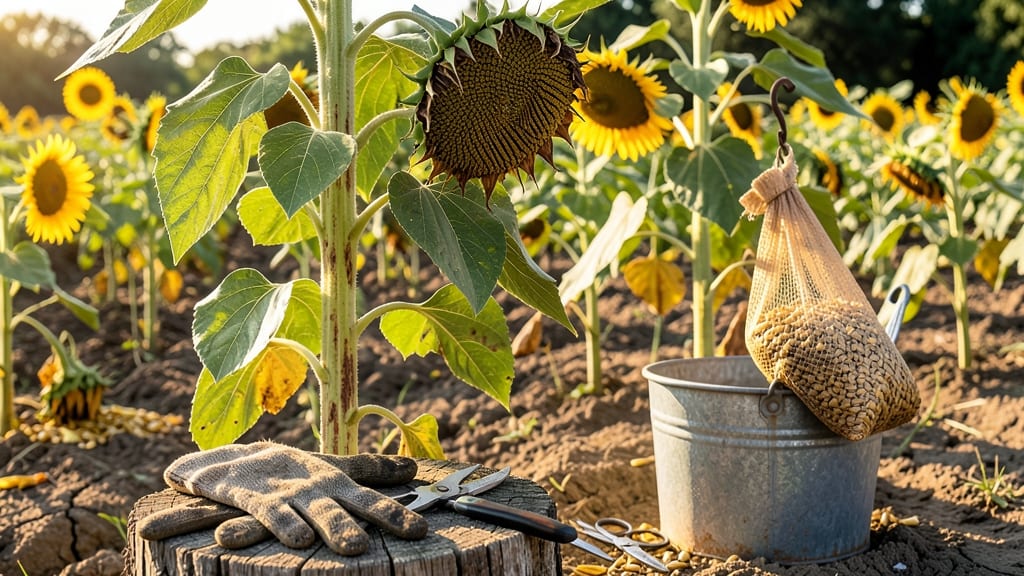
Harvesting sunflower heads for seeds at the perfect moment means the difference between a bumper crop and wasted effort — and there’s a simple back-of-hand test to nail it.
Picture this: you’ve spent months watching your 🌻 sunflowers grow, only to wonder if those seeds are ready or still waiting. Too early, and they won’t germinate; too late, and frost or rain ruins everything.
The key? Knowing when the seed head turns yellow-brown and the petals drop—plus a little tactile trick most gardeners miss.
In Zone 6a, where frost can sneak in by late October, timing matters even more. If you harvest too soon, you’ll end up with green, underdeveloped seeds. Wait too long, and the heads split open, scattering seeds everywhere.
I’ll show you exactly how to check ripeness—without guessing—and when to pull those heads before the first frost hits.
By the end, you’ll know the exact signs to look for, how to process seeds for storage, and even how to troubleshoot if your harvest gets delayed by rain. No more second-guessing—just perfectly ripe sunflower seeds ready for next year’s garden.

How to use the back-of-hand test for sunflower seed ripeness
Harvesting sunflower seeds at the perfect moment ensures maximum germination rates and flavor quality. The back-of-hand test is a simple, tactile method that gardeners swear by to determine ripeness without guesswork. This technique relies on the dryness of the seed head, which correlates directly with seed maturity.
The test works because sunflower seeds reach peak ripeness when the moisture content in the head drops to an ideal level. When the head is too moist, seeds won’t store well; when it’s too dry, seeds may already be sprouting or shriveled.
The back-of-hand provides a consistent reference for texture, making it more reliable than visual cues alone.
Before you begin, gather these tools: a sharp pruning shears, a paper bag for drying, and a sunny, dry location. Work on a clear day when humidity is low to avoid premature moisture absorption. This test is best performed in the morning hours, when dew has evaporated.
Step-by-Step Back-of-Hand Test
- 1 Check petal status: Ensure all petals have fallen off naturally. If any remain, the seed head isn’t ready.
- 2 Inspect seed head color: The back of the head should turn yellow-brown. Avoid harvesting if it’s still green or black.
- 3 Perform the back-of-hand test: Gently rub the back of your hand against the seed head. If it feels smooth and dry (like sandpaper), the seeds are ready.
- 4 Shake test: Hold the head over a paper bag and shake gently. If seeds rattle loudly, they’re ready for harvest.
- 5 Harvest immediately: Cut the seed head with 2-3 inches of stem attached. Hang upside-down in a dry, dark location for 1-2 weeks.
If the seed head feels damp or sticky during the back-of-hand test, it’s not ready. Wait 3-5 days and retest. Conversely, if the head feels too dry or papery, seeds may have already sprouted or lost viability.
This test is especially useful for dwarf varieties, which ripen faster than giant types.
Harvesting too early results in underdeveloped seeds that won’t germinate, while waiting too long can lead to bird damage or mold growth. For oil-type sunflowers, aim for a slightly firmer texture, as these seeds require higher oil content for processing.
Always harvest on a dry morning to prevent mold during storage.
Adjust your timing based on your climate zone. In cooler regions (USDA Zones 3-5), sunflowers may take 10-14 days longer to ripen. Conversely, in hot, dry climates (Zones 8-10), they may mature 2 weeks early.
Keep a harvest journal to track ripening patterns in your specific growing conditions.
After harvesting, remove seeds from the head by rubbing them between your fingers over a tray or paper bag. Discard any discolored or shriveled seeds, as these won’t store well.
Store the remaining seeds in a cool, dry place (like a glass jar) for up to 3 years if kept below 50°F.
Pro tip: If you’re unsure about ripeness, harvest a few test heads and monitor their drying progress. This gives you a baseline for future crops and helps you refine your timing. With practice, the back-of-hand test becomes second nature—just like checking a tomato’s blush for ripeness!
🌻
Sunflower seed harvesting timeline: days to maturity by variety
Sunflower varieties ripen at dramatically different rates, with giant varieties taking up to 120 days and dwarf types maturing in as few as 60 days.
Understanding these timelines helps you plan harvests and avoid frost damage. Daylight hours and climate zones also play critical roles—longer summer days in USDA Zones 7-10 accelerate ripening, while shorter days in Zones 3-6 may delay harvest by 2-3 weeks.
For confection sunflowers (like 'Autumn Beauty'), expect 85-100 days to maturity, while oil-type varieties (such as 'Mammoth') often take 100-120 days. Dwarf varieties like 'Teddy Bear' mature in just 60-75 days, making them ideal for short-season gardens.
Always check seed packets for specific variety timelines—these can vary by 10-15 days even within the same category.
| Variety Type | Days to Maturity | Climate Zones | Harvest Window | Key Notes |
|---|---|---|---|---|
| Giant (e.g., 'Mammoth') | 100-120 days | Zones 4-10 | Late Sept-Oct | Tallest; needs staking |
| Dwarf (e.g., 'Teddy Bear') | 60-75 days | Zones 3-10 | Aug-Sept | Compact; great for containers |
| Confection (e.g., 'Autumn Beauty') | 85-100 days | Zones 5-9 | Sept-Oct | Sweet seeds; frost-sensitive |
| Oil (e.g., 'Russian Giant') | 90-110 days | Zones 4-10 | Late Sept-Oct | High oil content; drought-tolerant |
In cooler regions (Zones 3-5), extend your harvest season by planting dwarf varieties first (early June) and giant types 2-3 weeks later. Succession planting ensures a staggered harvest, reducing waste.
For tropical zones (Zones 10-11), sunflowers may bolt prematurely—opt for shade cloth or partial shade to slow growth and align ripening with cooler months.
Watch for frost warnings—even hardy varieties can't survive below 25°F.
If frost threatens before harvest, cut heads and hang them upside down in a dry, dark space to finish drying. Oil-type sunflowers are slightly more frost-resistant than confection types, but neither should be left on the stem past the first light frost.
Pro tip: Mark your planting dates and use a harvest calendar to track maturity. For example, if you plant 'Mammoth' on May 15 in Zone 6, expect harvest-ready heads around September 15-20. Adjust dates 1-2 weeks earlier for Zones 7-10 and 1-2 weeks later for Zones 3-5.
Timing your harvest correctly ensures high germination rates and flavorful seeds. Whether you're growing for bird feed, culinary use, or next year's garden, knowing your variety's timeline is the key to success. Start planning now—your sunflower seeds will thank you! 🌻