
Container Gardens
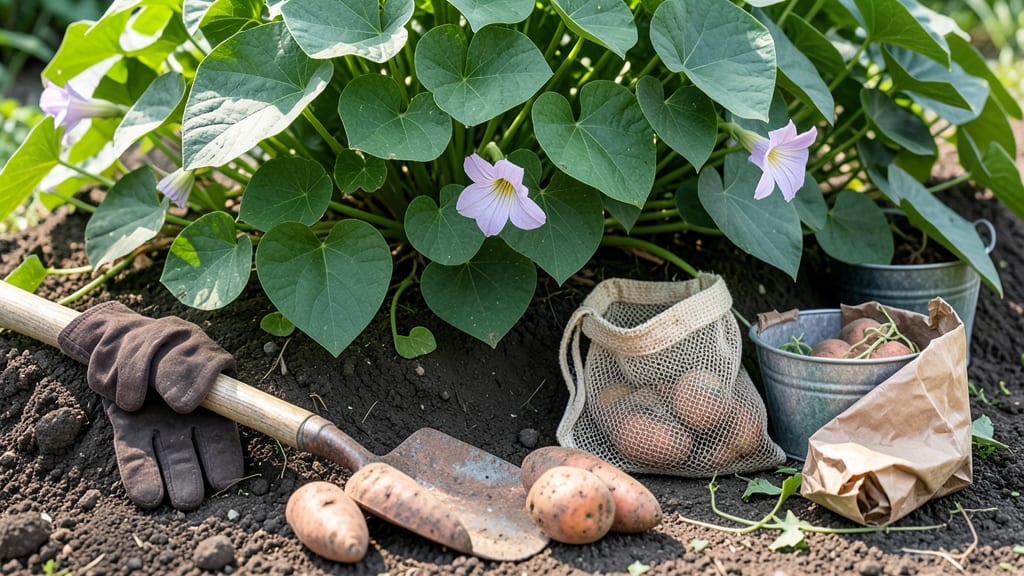
Harvest sweet potatoes in containers when the skin slips easily and the soil hardens around the roots—this is your sweet spot for flavor and size.
Sweet potatoes grown in containers can be a game-changer for small-space gardeners—but timing their harvest wrong means losing flavor and yield. Learn the exact signs to pull them at peak sweetness, from skin slippage to soil clues, before pests or frost ruin your crop.
Unlike in-ground crops, container-grown 🍠 need careful attention to soil drying and root space. If you wait too long, the roots may crack the pot; harvest too early, and you’ll get small, starchy tubers instead of the sweet, tender ones you crave.
Below, I’ll walk you through the 5 key indicators—including the "fingernail test" and leaf color shifts—that tell you it’s time to dig. Plus, how to handle post-harvest care for storage and flavor retention.

How to tell when sweet potatoes are ready to harvest in containers
Harvesting sweet potatoes at the right time in containers means the difference between sweet, flavorful roots and tough, underdeveloped ones. Unlike in-ground plants, container-grown sweet potatoes develop roots in a confined space, so their readiness signals can look slightly different.
I've learned that 5 key indicators—not just days after planting—tell you when to dig. These signs work best when your plants have 90-120 days of growth in warm conditions, but containers can speed up or slow down this timeline depending on soil depth and temperature.
First, let's address the biggest myth: harvesting by days alone is unreliable in containers. While sweet potatoes typically need 90-120 days to mature, shallow pots or cooler soil can delay root development. I always check for visual and tactile cues instead of relying on a calendar.
The good news? Containers actually make these signs easier to spot because you can see the soil surface and handle the plants more easily than in-ground crops.
Here are the 5 foolproof signs your container-grown sweet potatoes are ready to harvest, listed in order of importance:
Look for 90% of leaves turning yellow or brown and wilting naturally. In containers, this happens faster than in-ground due to limited soil volume. The vines should be crispy and dry, not just drooping from thirst.
Gently press a fingernail into the largest sweet potato. If it resists penetration (no dent) and the skin feels smooth, not rough, it's ready. In containers, test the topmost roots first since they mature fastest in shallow soil.
Push your finger 1-2 inches into the soil near the plant base. If it feels firm and dry (not crumbly), the roots have stopped growing. Containers dry out faster, so check soil moisture daily in late summer to avoid premature hardening.
Peek at the largest roots (they'll be near the soil surface in containers). Ready sweet potatoes are 6-8 inches long, firm to touch, and have a smooth skin. If they're smaller than a golf ball, wait 1-2 weeks.
The stem end (where the vine was attached) should turn from green to yellow or brown. In containers, this happens 1-2 weeks earlier than in-ground due to warmer soil temperatures. If it's still green, the roots need more time.
I once harvested my container sweet potatoes too early because I missed the soil hardness test. The roots were small, watery, and lacked sweetness—even after curing. Now, I make it a habit to check all 5 signs before digging.
Containers can trick you because the roots grow in a smaller, warmer soil volume, which speeds up maturity. That's why the skin slippage test is my top indicator—it's the most reliable way to confirm doneness without damaging the roots.
One container-specific trick I use is the "gentle wiggle test". After seeing the foliage die back, I gently wiggle the plant in its pot. If it resists movement (meaning roots are anchored), it's ready. If it pulls out easily, wait another week.
This works best in fabric or deep plastic pots where roots can grip the sides. For shallow containers, like 5-gallon buckets, I avoid this test since roots may not anchor as well.
Timing is everything when harvesting container sweet potatoes. If you wait too long, the roots can split or rot in crowded pots, while harvesting too early means bland, starchy tubers.
I always aim to harvest before the first frost (around October 15 in Zone 6a), but in containers, I might harvest 2-3 weeks earlier if the foliage dies back suddenly.
The key is to act when 3-4 of these signs appear together—that's when you'll get the sweetest, most flavorful harvest.
Pro tip: If your container has drainage holes, check the roots by gently tipping the pot to see how many have formed. In deep containers (12"+), you'll likely find larger, fewer roots, while shallow pots may have more, smaller roots.
Either way, prioritize the largest, firmest-looking roots first—they're the most flavorful and ready to eat!
🍠
Container-specific harvesting tips to avoid common mistakes
Harvesting sweet potatoes from containers requires extra care to avoid damaging delicate roots and dealing with limited soil space. Unlike in-ground plants, container-grown sweet potatoes need gentle handling and precise timing to ensure a successful harvest without losing yield or quality.
One of the biggest mistakes container gardeners make is waiting too long to harvest, which can lead to overcrowded roots or even rot. Alternatively, harvesting too early results in small, underdeveloped tubers that lack sweetness. Understanding the container-specific signs of readiness is key to avoiding these pitfalls.
⚠️ Warning: Don’t Overlook These Container Harvest Red Flags
Premature harvest signs in containers include yellowing leaves before roots mature or stunted growth due to root-bound conditions. Check for:
- Soil pulling away from container edges (roots filling space)
- Vines wilting from drought stress in limited soil
- Small, misshapen tubers (under 3 inches in diameter)
If you see these, your sweet potatoes need 2-3 more weeks to mature—or your container may be too small.
To harvest without damaging roots, start by watering the container deeply the day before to loosen the soil. Use a serrated knife or garden fork to gently slice through the soil along the container edges, creating a loose perimeter. This prevents roots from snapping during extraction.
When removing sweet potatoes, support the base of the plant with one hand while carefully tipping the container. Avoid pulling tubers by their stems—this can cause breakage. Instead, shake out excess soil and inspect roots for damage. Discard any tubers with cuts or bruises immediately to prevent rot.
After harvesting, cure sweet potatoes properly by placing them in a warm (80-85°F), humid (80-90%) environment for 5-10 days. This step enhances flavor and storage life. For container gardeners, a well-ventilated closet or even a cardboard box with a heat lamp works well.
If your container-grown sweet potatoes show yellowing leaves but tiny tubers, the issue is likely insufficient soil volume. Upgrade to a minimum 12-inch-deep container next season and amend soil with compost to improve root development.
With the right approach, container harvesting can be just as rewarding as in-ground growing!