
Vegetables
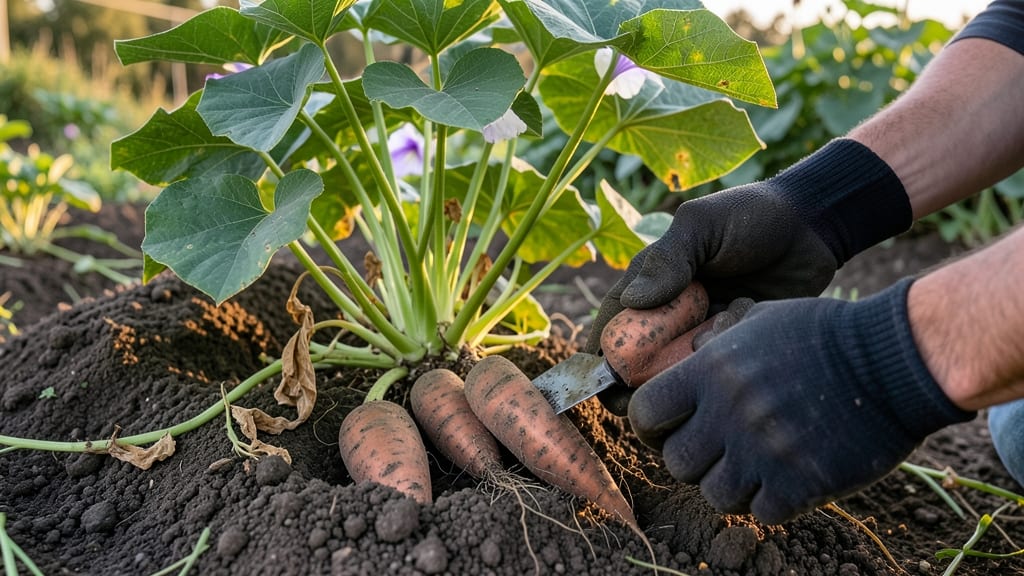
Harvest sweet potatoes in Florida when the vines yellow and die back by late October, but don’t wait too long—leaving them past December risks shriveling in the heat.
Florida’s warm climate means no frost to signal harvest time, so you’ll need to watch for leaf color and the skin slip test instead. Get it wrong, and you’ll end up with woody tubers or wasted crops.
Below, I’ll show you how to check for the right moment—including the moon phase trick that boosts sweetness—and what to do if your sweet potatoes 🍠 stay stubbornly green.
You’ll also learn how to cure and store them for months, so you’re not stuck with a bumper crop and no plan.

How to use the skin slip test & other signs for Florida sweet potato harvesting
Florida’s warm, humid climate creates perfect conditions for growing sweet potatoes, but knowing exactly when to harvest makes all the difference. Unlike northern regions, Florida’s frost-free growing season means you can extend harvests later into fall.
The key is watching for three critical signs: vine yellowing, skin toughness, and root size. Missing these cues can lead to underdeveloped tubers or over-matured, woody roots.
Don’t rely solely on days-to-maturity labels—Florida’s heat and humidity can speed up or slow down growth. Instead, combine the skin slip test with visual checks of your plants. This method works best when soil temperatures stay between 70-85°F (21-29°C), which is typical in Florida’s fall harvest window.
Let’s break down the exact steps to avoid common mistakes.
Step-by-Step Florida Sweet Potato Harvest Guide
- 1 Check Vine Color: Look for yellowing foliage that starts at the edges and moves inward. In Florida’s humidity, this happens 4-6 weeks earlier than in cooler climates. Healthy green vines mean your potatoes need more time.
- 2 Perform the Skin Slip Test: Gently press a fingernail into the skin of a tuber. If it doesn’t puncture easily and the skin slips slightly (like a ripe avocado), your sweet potatoes are ready. In Florida’s heat, this usually occurs when tubers reach 2-3 inches in diameter.
- 3 Assess Vine Condition: Wilted or dead vines signal it’s time to harvest. In Florida, vines may die back due to heat stress (90°F+ soil temps) or natural senescence. Avoid harvesting if vines are still green—this means tubers are underdeveloped.
- 4 Dig a Test Tuber: Use a garden fork to gently lift 1-2 tubers from the outer edges of the plant. Check for firmness and size. Florida’s sandy soils may produce irregularly shaped tubers—don’t discard these! Smaller tubers can still be delicious.
- 5 Adjust for Florida’s Humidity: Unlike drier climates, Florida’s high humidity can delay vine yellowing. If your vines stay green but soil temps drop below 75°F (24°C), harvest anyway—tubers won’t sweeten further and may rot in the ground.
Timing your harvest correctly prevents two common Florida-specific issues: underripe tubers (which taste bland) and over-mature roots (which become woody and tough). The skin slip test is particularly reliable in Florida because the humidity keeps skins softer longer than in drier regions.
Always harvest on a dry, sunny day to reduce soil-borne diseases like black rot, which thrives in Florida’s damp conditions.
Pro tip: In North Florida (zones 8a-9a), aim for harvests in October-November when daytime highs drop below 85°F (29°C). In South Florida (zones 10a-11), you can extend harvests into December thanks to milder winters.
If frost threatens (rare but possible in North Florida), harvest immediately—even partially mature tubers will store better than frost-damaged ones.
After harvesting, let tubers cure in the sun for 10-14 days to develop their sweetness. Place them in a well-ventilated, shaded area (like a porch or garage) where temps stay between 80-85°F (27-29°C).
Florida’s humidity makes curing tricky—avoid plastic bags, which trap moisture and cause rot. Instead, use wooden crates or mesh bags to allow airflow.
One final Florida-specific adjustment: If you’re growing sweet potatoes under black plastic mulch (common in Florida gardens to warm soil), remove the mulch 2-3 weeks before harvest.
This prevents tubers from becoming too woody due to excessive heat. The mulch helps early in the season but becomes counterproductive as harvest approaches.
Mastering these signs ensures you’ll harvest sweet, flavorful sweet potatoes every season—no more bitter or fibrous surprises! The skin slip test alone can save your entire crop from going to waste. 🍠
Best moon phases & weather conditions for Florida sweet potato harvesting
Harvesting sweet potatoes during the waxing moon (when the moon is growing brighter) can boost their sweetness and storage life. This lunar phase aligns with the plant’s natural energy, helping roots develop more sugars.
In Florida, where the moon’s influence isn’t masked by frost, this timing matters even more than in cooler climates.
After a light rain, sweet potatoes taste sweeter because the soil’s moisture triggers sugar production in the roots. However, avoid harvesting after heavy storms or hurricanes—waterlogged soil can cause rot or uneven growth. Florida’s unpredictable weather means you’ll need to stay flexible with your harvest schedule.
Here’s how Florida’s climate affects timing, with key differences between North and South regions:
| Region | Best Moon Phase | Ideal Weather | Harvest Window |
|---|---|---|---|
| North Florida | Waxing moon (Oct-Nov) | After light rain, 70-80°F | Late Oct - Dec 15 |
| South Florida | Waxing moon (Sept-Oct) | Dry, 80-85°F, no hurricanes | Sept 15 - Nov 30 |
| Both Regions | Avoid full moon | No heavy rain 24 hrs prior | Before Dec 31 (heat stress) |
In North Florida, cooler nights in late October signal the start of harvest season. Aim for a waxing moon between October 15 and November 15, when soil temperatures stay above 65°F. If a hurricane warning arrives, harvest early—wind damage can uproot tubers or crack them.
South Florida’s extended growing season lets you harvest as early as mid-September, but watch for drought stress. If leaves curl or soil cracks, water deeply 2-3 days before harvesting to sweeten the roots. Never harvest during hurricane season (June-Nov) unless absolutely necessary—flooding ruins crops.
After harvesting, cure sweet potatoes for 10 days in a warm, humid space (80-85°F) to develop their flavor. Skip curing if you’re storing them short-term, but never refrigerate—cold temperatures turn starches to sugar, making them taste bland.