
How To
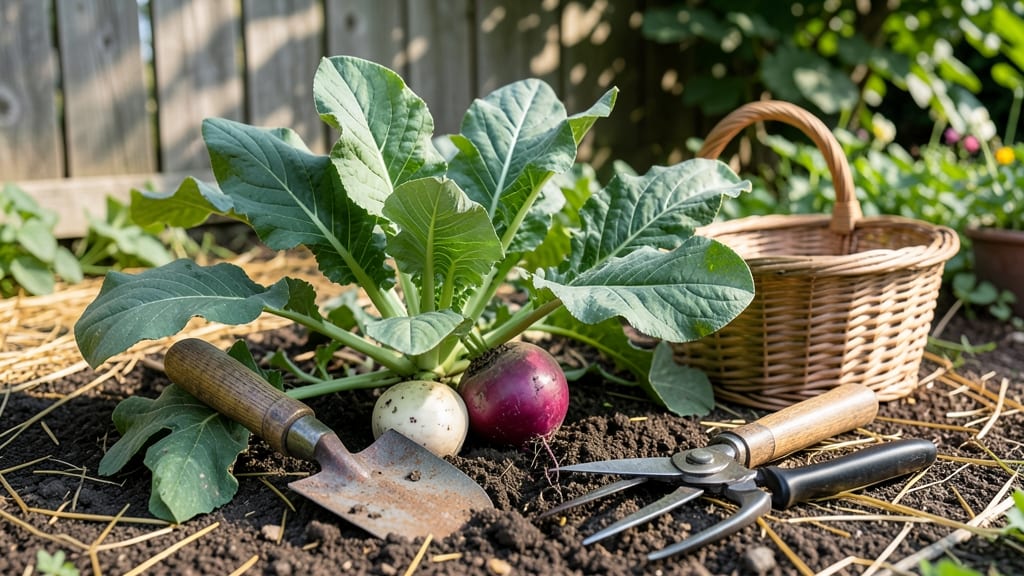
Harvesting turnips at the right time turns your garden into a crisp, sweet treasure 🥕 — but wait too long, and you’ll end up with tough, bitter roots that even a good recipe can’t save.
Turnips are a gardener’s treasure—crisp, sweet, and packed with flavor—but timing their harvest wrong can turn your delicious crop into bitter, woody disappointment.
You’ll know they’re ready when the roots reach 1-2 inches in diameter and the greens stand 6-12 inches tall, vibrant and full. A gentle tug should pull them free from the soil without resistance, proving they’re at peak perfection.
In this guide, I’ll walk you through three tactile tests to nail the harvest window, plus how to adjust for your planting season and storage tips to keep those turnips fresh for weeks.

3 Tactile tests to determine perfect turnip harvest time
Nothing beats the satisfaction of pulling a perfectly ripe turnip from the soil—crisp, sweet, and ready to enjoy. But knowing when to harvest turnips can be tricky if you're relying solely on days since planting.
These three simple tactile tests let you assess readiness with your hands, ensuring your turnips are harvested at their peak flavor and texture.
Turnips are versatile—you can harvest them young for tender baby turnips or wait for mature roots with fully developed greens. The key is paying attention to root size, leaf color, and finger pressure.
Skip these tests, and you risk turnips that turn woody or bitter, ruining your harvest before you even taste them.
Gently press the soil around the turnip root. If it lifts easily with light pressure, it’s ready. For baby turnips, aim for ½-inch diameter—they’ll feel soft like a tennis ball. Mature roots should resist slightly but still yield.
Use your thumb and forefinger to measure the turnip’s width. Baby turnips are ready at 1 inch, while mature varieties should be 2-3 inches across. Over-sized roots (4+ inches) lose sweetness and become tough.
Check the greens’ vibrancy. Young leaves should be deep green, while mature turnips develop slightly yellowing outer leaves. If the center leaves wilt or bolt (send up flower stalks), harvest immediately—the roots will turn pithy.
For baby turnips, focus on the first two tests. Harvest when roots are ½ to 1 inch wide—they’re perfect for salads or quick cooking. Mature turnips, like Purple Top White Globe, need all three tests.
Wait until roots are 2-3 inches and greens reach 6-12 inches tall for storage-friendly roots.
Timing matters beyond size. Harvest in the morning when soil is cool, and use a fork to loosen the earth before pulling. This prevents damage to the roots. If your turnips are still small after 60 days, check soil nutrients—low nitrogen can stunt growth.
Don’t ignore the greens, either. Turnip tops are edible and packed with nutrients. If the leaves start yellowing at the base, it’s a sign the roots are ready. But if the entire plant bolts (sends up a flower stalk), the roots will become tough and inedible.
Overlooking these tactile cues can lead to woody, bitter turnips. I’ve learned the hard way—once, I waited too long, and my turnips tasted like cardboard. Now, I rely on these tests to guarantee a harvest that’s as delicious as it is satisfying.
Pro tip: Store harvested turnips in a cool, dark place (like a root cellar or fridge) for up to 2 weeks. For longer storage, leave a few roots in the ground, covering them with mulch to protect from frost.
Master these three tests, and you’ll never second-guess your turnip harvest again. Your taste buds—and your dinner table—will thank you.
Turnip harvest timing: days to maturity by variety
Knowing exactly when to harvest turnips depends on the variety you're growing, as some mature faster than others. For example, baby turnips like Tokyo Cross can be ready in just 25-30 days, while larger varieties like Purple Top White Globe take 50-60 days.
Understanding these timelines helps you avoid bitter, woody roots that ruin your harvest.
Soil temperature plays a critical role in turnip maturity. Cooler soils (50-60°F) slow growth, extending harvest times by 1-2 weeks, while warmer soils (65-75°F) speed up maturity. Spring-planted turnips often need longer to mature due to cooler early-season temperatures, while fall crops benefit from warmer soil and faster growth.
Here’s a quick reference for common turnip varieties and their ideal harvest windows, including seasonal adjustments for spring and fall planting:
| Variety | Days to Maturity | Spring Planting Adjustment | Fall Planting Adjustment | Root Size at Harvest |
|---|---|---|---|---|
| Purple Top White Globe | 50-60 days | +7-10 days (cooler soil) | -5 days (warmer soil) | 2-3 inches diameter |
| Tokyo Cross | 25-30 days (baby) | +3-5 days (cooler soil) | -2 days (warmer soil) | 1-1.5 inches diameter |
| Hakurei | 35-40 days | +5-7 days (cooler soil) | -3 days (warmer soil) | 1.5-2 inches diameter |
| Golden Ball | 45-55 days | +8-10 days (cooler soil) | -4 days (warmer soil) | 2-2.5 inches diameter |
For spring planting, start checking turnips for harvest 2 weeks before the variety’s expected maturity date, especially if your soil stays cool. In contrast, fall-planted turnips often mature faster, so monitor them closely to avoid overgrowth.
Use a soil thermometer to track temperatures—aim for 60°F or warmer for optimal growth speed.
Pro tip: If you’re growing turnips for their greens first, harvest the leaves when they reach 6-8 inches tall, leaving the roots to grow larger for later harvest.
This two-stage approach maximizes your yield and extends your harvest window by 2-3 weeks. Just be sure to water consistently to keep the roots tender.
Always harvest turnips on a dry, sunny day to prevent soil from clinging to the roots, which can cause rot. Store them in a cool, humid place (like a root cellar) for up to 2 weeks to preserve their crisp sweetness.
With the right timing, you’ll enjoy turnips at their peak—just like fresh-picked perfection from your garden!