
Vegetables
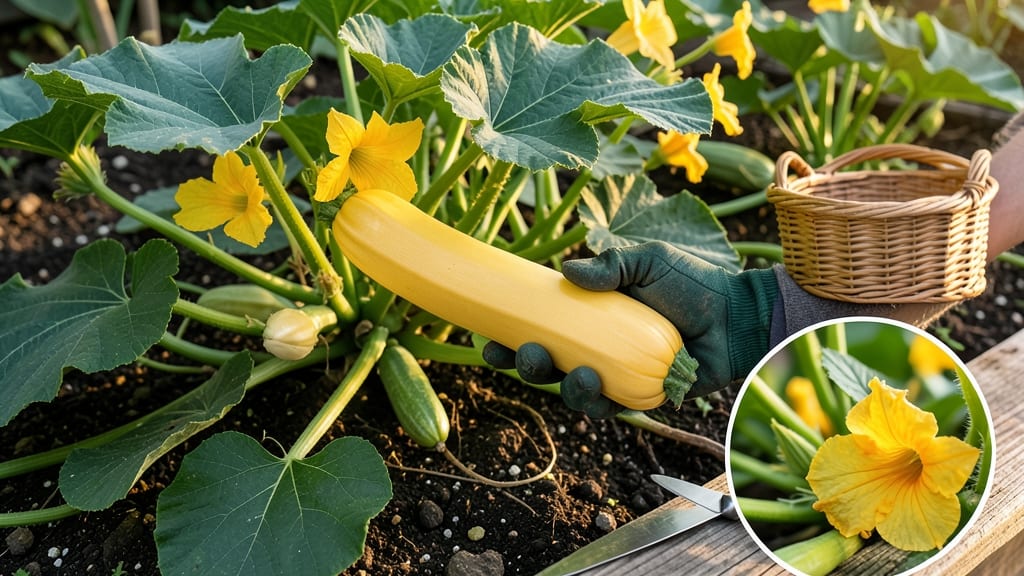
Harvesting yellow zucchini 🍆 at the right moment transforms a meal from ordinary to extraordinary—when the fruit is just 6-8 inches long, glossy, and firm with a hint of give.
Picture this: you slice into a zucchini that’s still tough and seedy, or worse, you wait too long and end up with a bitter, overgrown monster that’s barely edible. That’s the difference between a perfect harvest and a wasted garden effort.
Most gardeners miss the window because they don’t know what to look for beyond size. The 3-finger test is the secret—wrap your fingers around the zucchini and check for firmness, color depth, and stem readiness.
I’ll show you exactly how to nail it every time, so you’re picking at peak flavor and texture.
From July through September in Zone 6a, timing is everything. Learn the signs of readiness, how to adjust for your climate, and why harvesting regularly keeps your plants producing like crazy instead of bolting into bitter disappointment.
The 3 finger test: exact method to harvest yellow zucchini at peak ripeness
Harvesting yellow zucchini at the perfect moment transforms your garden bounty into a tender, flavorful prize. The 3 finger test is my go-to method for pinpointing ideal ripeness—it’s foolproof and works every time.
This simple technique combines size, texture, and stem flexibility to guarantee you never pick zucchini too early (underdeveloped) or too late (woody and bitter).
Why does this method work so well? Because yellow zucchini grows rapidly—sometimes 3-4 inches in just 24 hours—and waiting too long turns the flesh tough and seedy. The 3 finger test accounts for this speed by giving you a tactile way to check ripeness without guessing.
Plus, it’s faster than measuring with a ruler and more accurate than relying on color alone.
Before you grab your pruners, here’s what you’ll need: a sunny morning (when zucchini is firmest), a sharp knife or pruners, and your three fingers—yes, just your fingers! This test works on all yellow zucchini varieties, from ‘Golden Zucchini’ to ‘Defender’. Let’s break it down step by step.
Step-by-Step 3 Finger Test for Yellow Zucchini
-
Step 1: Check the Size
Gently grasp the zucchini near its neck (stem end). If it’s 6-8 inches long, it’s ready. Anything smaller (under 4 inches) is too young, and anything larger (over 10 inches) risks bitterness. -
Step 2: Test the Texture
Press your three fingers lightly into the skin. If it gives slightly—like pressing a ripe avocado—but doesn’t dent, it’s perfect. Hard or rubbery zucchini needs more time; mushy spots mean it’s overripe. -
Step 3: Inspect the Stem
Look for a dry, papery stem where the zucchini meets the vine. Gently bend it—if it snaps cleanly, the zucchini is ready. A green, flexible stem means it’s not ripe yet; a rotting or brown stem means it’s past its prime. -
Step 4: Confirm the Color
The skin should be a bright, even yellow (no green streaks). Some varieties, like ‘Bright Yellow’, deepen in color as they ripen, while others stay pale if picked too early. A glossy sheen is another sign of readiness. -
Step 5: Harvest with Care
Use a sharp knife or pruners to cut the zucchini, leaving a 1-inch stem attached. This prevents disease and encourages the plant to produce more fruit. Avoid pulling—it can damage the vine.
"The 3 finger test is your secret weapon for zucchini perfection—no more guessing!"
Pro tip: If you’re harvesting in hot summer months, zucchini ripens faster—sometimes in as little as 48 hours. Check your plants every other day to avoid missing the window.
In cooler climates, like USDA Zone 5, growth slows, so you can stretch harvests to every 3-4 days.
What if your zucchini fails the test? Don’t panic! A pale green zucchini that’s too small can be left on the vine to mature, but it’ll develop more seeds and tougher skin.
Overripe zucchini (soft, large, or seedy) can still be used in soups or bread—but it’s best to avoid this by staying on top of harvests. The key is consistency.
Harvesting at peak ripeness isn’t just about flavor—it’s about encouraging your plant. When you pick zucchini regularly, the plant redirects its energy to producing more flowers and fruit instead of letting existing zucchini overgrow.
I’ve seen one zucchini plant yield 20+ harvests in a season just by sticking to this method!
Store your freshly harvested zucchini in a paper bag in the fridge for up to 5-7 days. The bag traps ethylene gas, which slows ripening. For longer storage, wrap whole zucchini in damp paper towels and refrigerate. Avoid washing until you’re ready to use them—moisture speeds up spoilage.
Now that you’ve mastered the 3 finger test, you’re ready to enjoy zucchini at its best: tender, sweet, and seedless. Whether you’re grilling, spiralizing, or stuffing them, perfect timing makes all the difference. Happy harvesting! 🌱
Yellow zucchini harvest timeline: stages from seed to table
Understanding the yellow zucchini growth stages helps you predict harvest times and adjust care. From seed to table, these plants progress through distinct phases influenced by climate and sunlight.
In warm regions, you might harvest as early as 45 days, while cooler zones may take up to 60 days for optimal ripeness.
After germination (5-10 days), your zucchini plants enter the vegetative stage, where they focus on leaf and vine growth. This phase lasts about 3-4 weeks before flowering begins. The first blooms signal the start of fruit development, and this is when your harvest window truly opens.
Here's a quick reference for each growth stage and when to expect key milestones:
| Stage | Days After Planting | Key Actions | Climate Notes |
|---|---|---|---|
| Germination | 5-10 | Keep soil moist, provide warmth | Slower in cool soil (<60°F) |
| Vegetative Growth | 14-28 | Fertilize lightly, ensure full sun | Faster growth in hot climates |
| Flowering | 28-35 | Hand-pollinate if needed, watch for blooms | More blooms in warm, dry weather |
| Early Fruit | 35-45 | Begin checking for 6-inch zucchini | Faster growth in southern climates |
| Peak Harvest | 45-60 | Harvest 2-3 times per week to encourage production | Slower in northern regions |
During the peak harvest window (typically July-September in most zones), yellow zucchini grow rapidly. In warm climates like Zone 9-10, you might harvest every 3-4 days, while cooler zones (Zone 4-6) may only need harvesting every 5-7 days.
Adjust your frequency based on how quickly the fruit matures.
If you notice your zucchini growing too large (over 8 inches), it's time to harvest more frequently. Oversized squash becomes woody and seedy, losing its tender texture. The key is to stay ahead of the plant's production by checking vines every 2-3 days during peak season.
As summer winds down, your yellow zucchini plants will slow production. This is your cue to harvest any remaining fruit and prepare for fall storage. In cooler climates, you might only get 6-8 weeks of harvest time, while warm regions can extend this to 10+ weeks.