
How To
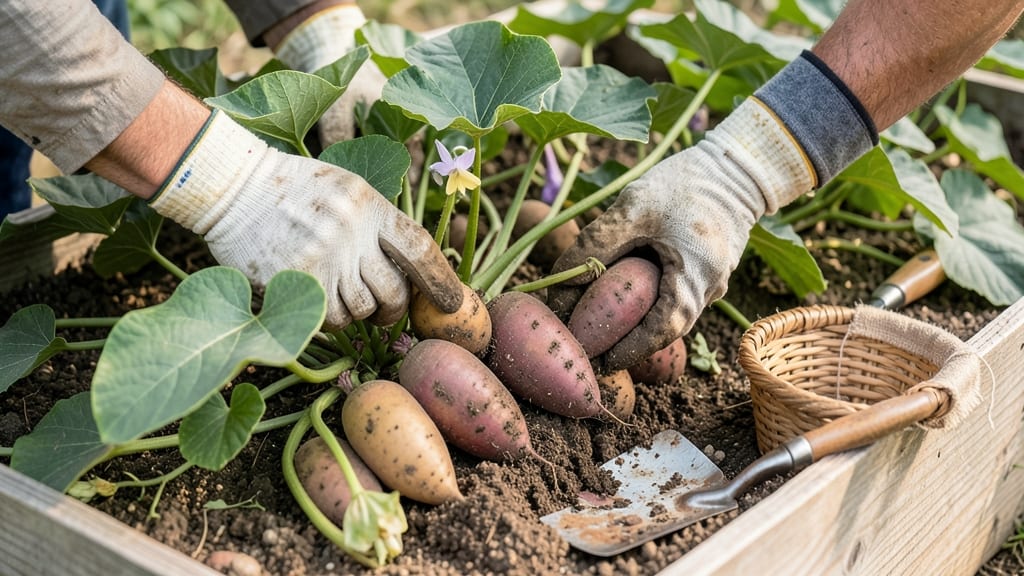
To tell when to harvest sweet potatoes, watch for three key signals: vines yellowing, skin toughening, and tubers reaching 3–6 inches—missing these means woody, small yields.
Sweet potatoes left too long in the ground turn starchy and woody, while harvesting too early means small, underdeveloped tubers—getting the timing right makes all the difference for a perfect harvest.
You’ll know it’s time when the leaves yellow and die back naturally, the skin resists your fingernail, and the tubers are firm and plump. These visual cues, paired with soil conditions and frost risk, ensure you pull them at peak sweetness.
Below, I break down the exact steps to check for readiness, adjust for your climate, and prepare them for storage—so you never guess again.

5 Key signs your sweet potatoes are ready for harvest (with visual cues)
Knowing when to harvest sweet potatoes can feel like guessing—until you spot these clear visual cues. Unlike regular potatoes, these tubers thrive when left in the ground longer, but overstaying turns them woody and tough.
The secret? Watch for these 5 key signs that scream "harvest time!"—each one tells you exactly what to look for in your garden beds.
First, let’s talk about the skin slip test, the most reliable way to check readiness. When the tuber skin slips off easily when you gently tug it, that’s your green light.
But before you dig, confirm with these other 4 visual signals to avoid harvesting too early or too late. Timing matters—sweet potatoes need 90–140 days to reach peak sweetness and texture.
Healthy green vines fade to straw-colored or brown as they naturally wilt and dry. This signals the plant is redirecting energy to the tubers below.
Press a fingernail into the tuber skin. If it doesn’t puncture easily, the skin has toughened—this means the sweet potato is fully mature.
Dig up a test tuber to check size. Smaller than 2 inches? Wait longer. Larger than 6 inches? They may become woody—harvest soon.
Sweet potatoes prefer consistent moisture but signal readiness when the soil near the roots feels slightly dry. This often happens 2–3 weeks before frost.
A sudden drop in leaves (not from pests or disease) means the plant is shutting down. This is nature’s way of saying, "Dig me up!"
Don’t ignore the skin color change—this is your first clue. Early in the season, sweet potato skins are green or light tan, but as they mature, they develop a deep orange, red, or purple hue depending on the variety.
For example, 'Beauregard' turns a vibrant orange, while 'Georgia Jet' develops a rich red skin. These colors indicate higher sugar content and better flavor.
Pro tip: If you’re in a short-season climate, prioritize the vine yellowing and soil dryness signs over tuber size. Sweet potatoes can still taste sweet even if they’re smaller than ideal—just avoid letting them freeze in the ground, which ruins their texture forever.
A light frost turns tubers mushy and inedible, so harvest 2–3 weeks before the first expected frost date.
Here’s what to avoid: Harvesting when tubers are still soft or when the vines are only partially yellow. Soft-skinned sweet potatoes bruise easily and won’t store well. Instead, wait until the skin feels firm to the touch—like a ripe avocado.
This firmness means the starch-to-sugar conversion is complete, giving you that perfect sweet, creamy texture we all love.
Once you’ve confirmed all 5 signs, it’s time to dig carefully. Use a garden fork to loosen the soil around the plant, then gently lift the tubers to avoid scrapes or cuts.
Handle them like eggshells—any damage speeds up spoilage. After harvesting, let them cure in warm conditions (80–85°F) for 5–10 days to develop their full sweetness. This step is non-negotiable for the best flavor!
Regional differences matter too. In warm climates like Florida or California, sweet potatoes can stay in the ground until November or December because frost isn’t a threat. But in cooler zones (like USDA Zone 5 or colder), aim to harvest by early October to avoid frost damage.
Always check your local frost dates and adjust accordingly.
Remember, sweet potatoes are not like regular potatoes—they need time to sweeten. Rushing the harvest means small, bland tubers, while waiting too long risks woody, tough roots. By mastering these 5 visual cues, you’ll nail the perfect harvest every time—no guesswork required. Happy digging!
Harvesting sweet potatoes by season: best times for spring vs fall planting
Timing your sweet potato harvest depends entirely on when you planted them, as spring and fall plantings have very different windows. Spring-planted sweet potatoes mature later in the season, while fall-planted varieties often ripen faster due to warmer soil temperatures.
Understanding these differences helps you avoid frost damage or underdeveloped tubers.
In most regions, spring-planted sweet potatoes take 90–140 days to mature, meaning they’ll be ready for harvest in late summer to early fall. If you’re in a cooler climate like Zone 5 or 6, aim to harvest before the first frost—typically by mid-October.
Meanwhile, fall-planted varieties (like those started in July) may mature in as few as 70–90 days, giving you a harvest window in late summer.
| Planting Time | Mature Days | Harvest Window | Key Cues |
|---|---|---|---|
| Spring (May–June) | 90–140 days | Late August–October | Vines yellow, skin toughens |
| Fall (July–August) | 70–90 days | Late August–September | Leaves wilt, tubers 3+ inches |
| Early Varieties | 70–90 days | July–August | Skin resists fingernail, vines dry |
| Late Varieties | 120–140 days | September–October | Frost risk imminent |
Soil temperature plays a huge role in sweet potato development. Warm soil (above 65°F) speeds up growth, while cooler temperatures slow it down. If you’re in a short-season climate, opt for early-maturing varieties like ‘Beauregard’ or ‘Georgia Jet,’ which can be harvested in 70–90 days.
These varieties are ideal for fall plantings because they avoid late-season frost risks.
For spring plantings, monitor your local frost dates and adjust your harvest timeline accordingly. If frost is predicted within 2–3 weeks, harvest immediately—even if the tubers aren’t fully mature. Underground tubers are more frost-resistant than the vines, but prolonged cold will still damage them.
In warmer climates like Zones 8–10, you can extend your harvest window into November or even December.
One trick I use is to plant a mix of early and late varieties to stagger my harvest. This way, I get fresh sweet potatoes over a longer period, reducing waste and ensuring a steady supply.
For example, plant ‘Covington’ (early) alongside ‘Bonita’ (late) to cover both summer and fall harvests. Always check the seed packet for days-to-maturity, as this varies by variety.
Finally, don’t wait too long—sweet potatoes left in the ground past their prime become woody and tough, losing their sweet flavor. The moment the vines yellow and die back, grab a fork and gently lift the tubers.
Cure them in a warm, humid space for 10 days to develop their signature sweetness. This process is key to storing them successfully for months.